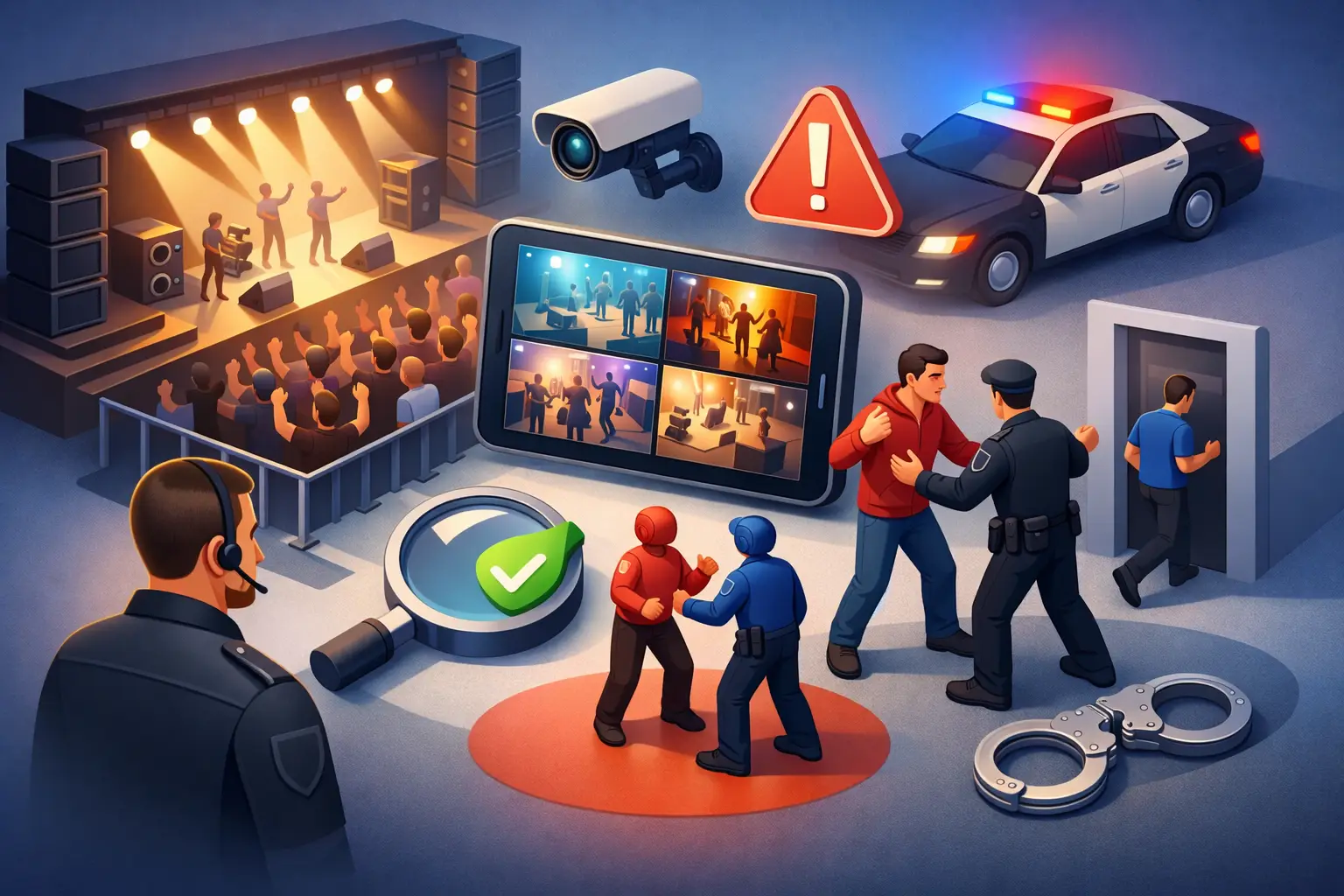
How to Reduce Venue Incidents Before They Escalate
A venue incident rarely begins at the moment security is called. It often starts earlier: a queue left unmanaged, an overserved patron, an unclear entry rule, a blocked exit, or a staff member who is unsure who to contact. Knowing how to reduce venue incidents means identifying these pressure points before they become safety, service, or reputation issues.
For venue operators, the objective is not to create an intimidating environment. It is to run a controlled, welcoming operation where guests understand expectations, staff can act with confidence, and emerging problems are addressed early. The right security approach protects people while helping the venue keep trading.
How to Reduce Venue Incidents With Prevention
Prevention starts with a realistic view of how your venue operates during its busiest and most demanding periods. A quiet weekday service and a sold-out Friday night may require entirely different controls. Security planning should account for expected attendance, the customer profile, alcohol service, entertainment, event timing, weather, parking, neighboring properties, and access to public transport.
Walk the venue as a guest would. Look for places where people naturally gather, become frustrated, or lose visibility of staff. Entry points, smoking areas, restrooms, bars, stairwells, pickup zones, and exits are common friction points. A clear physical layout, visible staff presence, appropriate lighting, and controlled access can reduce opportunities for conflict without disrupting the guest experience.
It also helps to review previous incident reports rather than relying on memory. Patterns matter. If disputes regularly occur near closing time, outside the main entrance, or after a specific type of event, those trends should shape the staffing plan and operating procedures. A record of minor concerns can reveal a larger risk before it affects someone’s safety.
Match Security Coverage to Actual Risk
Understaffing is one of the fastest ways to turn manageable behavior into a serious incident. One security officer may be sufficient for a low-footfall lobby or restaurant service, but not for a crowded nightclub, concert, or venue with multiple entrances. Coverage should reflect the number of guests, the size and configuration of the site, the nature of the event, and the likelihood of alcohol-related or crowd-related issues.
More personnel are not always the answer. Placement and supervision are just as important. A trained professional positioned at entry can set expectations early, while another team member may be needed to monitor a high-traffic internal area or provide a rapid response. Supervisors should have a clear view of operations and the authority to adjust coverage when conditions change.
Visible security is a deterrent, but it should feel professional rather than confrontational. Licensed personnel who are calm, well-presented, and familiar with the venue can reassure legitimate guests while discouraging disruptive behavior.
Set Clear Rules Before Guests Enter
Many disputes are avoidable when venue rules are communicated consistently. Entry conditions, identification requirements, dress expectations, bag policies, prohibited items, re-entry rules, and behavior standards should be clear at the point where guests make decisions. Signage helps, but it cannot replace a respectful explanation from trained staff when needed.
Consistency is essential. If one guest is admitted with an item that another guest is asked to leave behind, staff may create an argument that did not need to happen. The same applies to intoxication management and refusal of entry. Teams should understand the policy, apply it fairly, and know when to call a supervisor instead of debating with a guest.
A respectful refusal process can protect both the venue and the individual. Staff should avoid public arguments, keep language factual, offer practical options where appropriate, and request support early if a person becomes agitated. The goal is to reduce tension, not win an exchange.
Train Every Team Member to Spot Escalation
Security cannot be the only department responsible for venue safety. Hosts, servers, bartenders, managers, cleaners, and event staff are often closest to early warning signs. They may notice a patron becoming distressed, a dispute building between groups, repeated attempts to obtain service, or someone entering an area they should not access.
Teams need a simple reporting process that works under pressure. Staff should know who to contact, what information to provide, and how to describe the location accurately. A message such as “security needed” is less useful than “two guests arguing near the west bar, one appears intoxicated, no physical contact yet.” Clear communication lets the response team arrive prepared.
Training should cover de-escalation as well as reporting. Tone of voice, body position, personal space, active listening, and the ability to offer choices can all lower the temperature of a situation. Staff should never be expected to physically intervene beyond their training or role. Promptly involving qualified security protects employees and limits unnecessary risk.
Manage Alcohol, Capacity, and Crowd Movement
For hospitality and entertainment venues, alcohol service is closely tied to incident prevention. Responsible service procedures should work alongside security operations, not separately from them. Bar teams need confidence to slow or refuse service, while security staff should be available to support those decisions discreetly.
Capacity control also requires active management. A room can be technically within its maximum occupancy while still becoming difficult to manage because of a congested bar, a popular performer, poor line flow, or a sudden change in weather that pushes people indoors. Monitor density in real time, not only at the door. If movement slows, visibility drops, or guests are being pressed into narrow spaces, take action before the atmosphere changes.
Queue management deserves the same attention. Long waits and unclear entry procedures can create frustration before guests even reach the venue. Use defined lines, visible directions, adequate staffing, and a fair screening process. For major events, separate guest, staff, VIP, vendor, and emergency access routes where possible.
Build a Response Plan That Staff Can Use
Even well-run venues will face incidents. The difference is whether the response is controlled, timely, and documented. Every venue should have practical procedures for medical concerns, aggressive behavior, theft, unauthorized access, lost children or vulnerable persons, evacuation, and contact with emergency services.
A plan that exists only in a binder is not enough. Staff should rehearse key actions, including who takes control, who contacts emergency services, who communicates with guests, and who preserves access for responders. Short pre-shift briefings are particularly valuable before high-attendance events, special performances, or periods of elevated risk.
There is a balance to maintain. Overreacting to minor conduct issues can create alarm and damage the guest experience. Waiting too long can allow a small issue to become a fight, injury, or emergency. Escalation thresholds should be clear, and supervisors should be available to make measured decisions.
Document Incidents and Improve the Next Shift
Accurate reporting is a core part of risk management. After an incident, record what occurred, when and where it happened, who was involved, actions taken, injuries or damage observed, and whether outside agencies were contacted. Reports should be factual, timely, and free from assumptions or inflammatory language.
The value of documentation is not limited to compliance or potential claims. It gives venue management evidence to improve operations. Review reports regularly for repeated triggers, staffing gaps, layout concerns, policy failures, and training needs. Where camera systems are in use, ensure procedures exist for preserving relevant footage promptly and handling it appropriately.
A professional security partner can add discipline to this process through site-specific instructions, incident reporting, trained licensed personnel, and scalable coverage for routine operations or major events. Broadsafe Group approaches venue protection as an operational function: one that supports guest safety, staff confidence, and continuity of service.
The most effective venue safety programs are built shift by shift. Start with the next busy period: identify where tension is most likely to develop, brief the team on who owns each response, and make sure qualified support is already in the right place before the doors open.