What Does Event Security Do at Events?
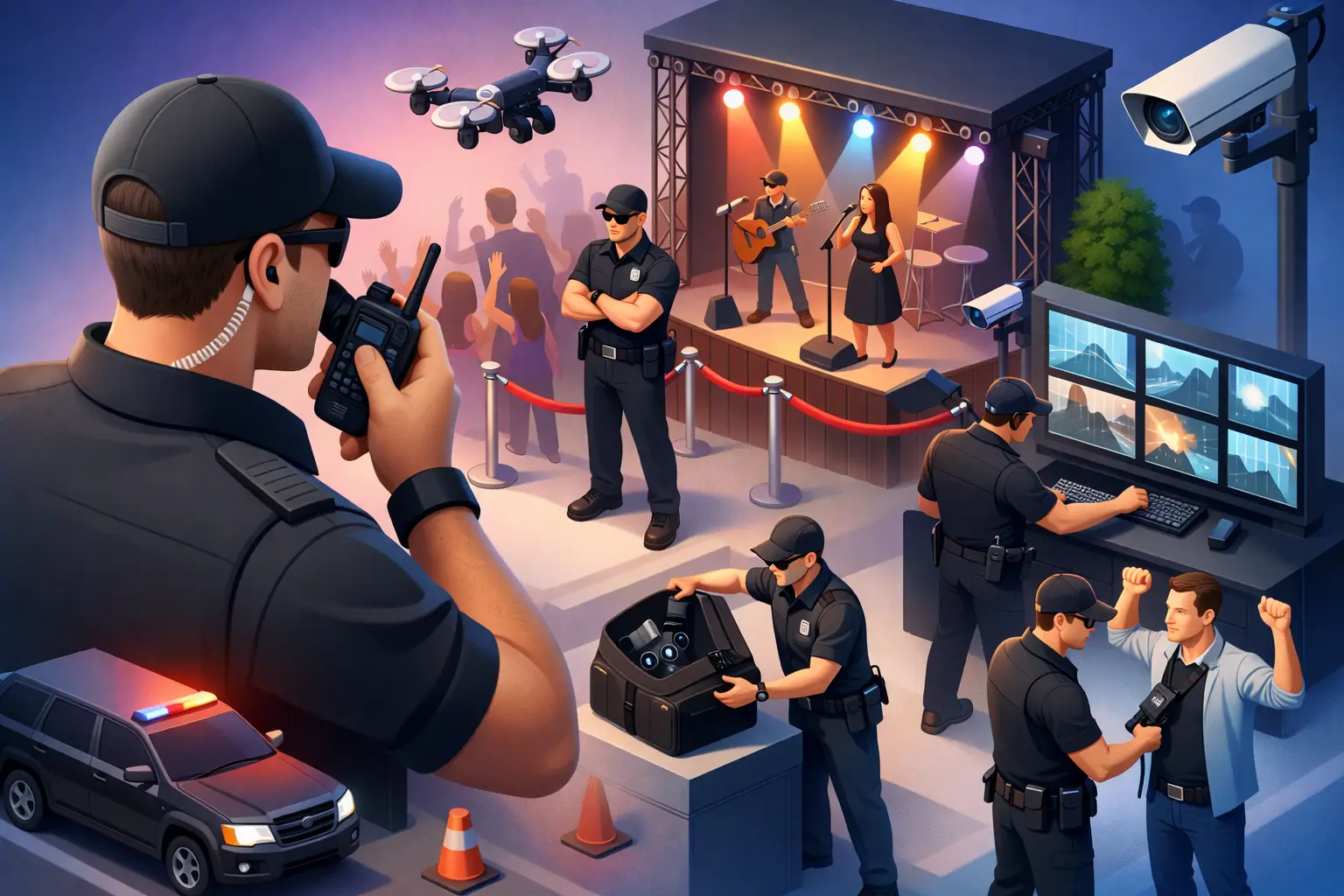
A sold-out concert can turn chaotic fast. A corporate launch can be disrupted by one aggressive guest. A festival gate can back up in minutes if entry screening is poorly handled. When clients ask what does event security do, the short answer is this: event security protects people, controls risk, and helps the event run as planned.
That answer matters because event security is not just about putting guards at the door. For venue operators, event organizers, and business decision-makers, security is part of operations. It supports safety, compliance, crowd movement, incident response, asset protection, and the overall guest experience. When it is done properly, most attendees barely notice it. When it is done poorly, everyone does.
What does event security do before the event starts?
A professional event security team begins work well before doors open. The first responsibility is assessing the event itself. That includes the size of the crowd, the venue layout, access points, alcohol service, VIP attendance, performer requirements, emergency exits, and known risk factors. A low-key business function and a late-night live music event may both need security, but not in the same way.
Planning is where many of the real protections are built. Security teams help determine how many personnel are required, where they should be positioned, what entry procedures are appropriate, and how incidents should be escalated. They also coordinate with event management, venue staff, and sometimes emergency services so everyone understands roles and response procedures.
This pre-event stage is also where visible gaps tend to appear. A venue may have strong front-door coverage but poor backstage control. An organizer may have ticket scanning covered but no practical plan for queue management. A capable provider identifies those weaknesses early and adjusts the security plan to suit the environment rather than forcing a generic staffing model onto every event.
Crowd control is one of the core functions
If there is one task most people associate with event security, it is crowd control. That is accurate, but crowd control is more than standing in a high-visibility uniform and telling people where to go. It involves reading crowd behavior early, guiding movement, preventing bottlenecks, and stepping in before frustration becomes aggression.
At concerts, sporting events, licensed venues, and public activations, crowd density can change quickly. Entry lines can swell. Bar areas can become flashpoints. Exits can become congested after a headline act finishes. Event security monitors these pressure points in real time and works to keep movement orderly and safe.
Good crowd control is proactive. It uses clear communication, calm direction, and visible presence to reduce tension. Physical intervention may sometimes be necessary, but it should never be the first tool. Experienced personnel know how to de-escalate issues before they affect the broader event.
Access control protects more than the front gate
Another major answer to what does event security do is access control. That means managing who can enter the site, who can enter restricted areas, and under what conditions. This applies to guests, contractors, performers, staff, media, and VIPs.
At the public entry point, security may check tickets, monitor bag screening, enforce entry conditions, and identify prohibited items. Inside the venue, access control extends to loading zones, green rooms, control rooms, alcohol service areas, cash-handling points, and staff-only sections. Without that layer of control, unauthorized access can create safety issues, theft risks, reputational damage, and operational delays.
For some events, access control is fairly straightforward. For others, especially multi-zone venues or events with high-profile guests, it requires disciplined coordination and tight perimeter management. The right approach depends on the event profile, the venue, and the consequences of unauthorized movement.
Event security handles incidents when they happen
No event operator wants incidents, but responsible planning assumes they can happen. Security personnel are there to respond quickly and professionally when they do. That may involve removing an intoxicated patron, managing an altercation, assisting with a medical emergency, securing an area after a spill or hazard, or responding to suspicious behavior.
The value is not only in the response itself but in the speed and structure of that response. A trained team can assess the situation, contain disruption, protect bystanders, and communicate with the right stakeholders without adding confusion. That protects the event, the venue, and the people attending.
There is a clear difference between a guard who simply reacts and a professional team that follows procedure under pressure. Licensed personnel should understand reporting lines, incident documentation, escalation thresholds, and legal boundaries. That matters for liability as much as it does for safety.
What does event security do for compliance and duty of care?
Event organizers and venue managers often focus on security as a visible deterrent, but there is another side to it: compliance and duty of care. Depending on the event type, location, and licensing conditions, security may play a direct role in meeting venue obligations and supporting responsible operations.
For licensed venues and alcohol-focused events, security often helps monitor patron behavior, support responsible service environments, and manage refusals or removals. For corporate and public events, the role may be more focused on access management, emergency procedures, and workplace safety alignment. In every case, security supports a safer operating environment and provides documented accountability when issues arise.
This is where professionalism matters. Decision-makers are not just hiring a physical presence. They are engaging a partner that may affect insurance exposure, incident outcomes, guest welfare, and the reputation of the event itself. A licensed, insured, standards-aligned provider brings more confidence to that equation than an ad hoc staffing solution.
The guest experience is part of the job
Some organizers worry that too much security creates a hostile atmosphere. In reality, well-managed security often improves the guest experience. People feel more comfortable when entry is organized, conflicts are handled quickly, and staff presence is calm and professional.
The best event security teams know how to be visible without being heavy-handed. They give directions, assist lost guests, help manage queues, respond to concerns, and maintain order without dominating the environment. At premium events, hospitality venues, and corporate functions, that balance is especially important. Security should support the brand experience, not work against it.
That said, the right tone depends on the event. A family-friendly daytime activation calls for a different posture than a late-night entertainment venue with a higher risk profile. Good providers adjust their approach without compromising control.
Not every event needs the same level of security
One of the most common mistakes in event planning is assuming all events need the same security model. They do not. The staffing, positioning, and procedures should reflect real conditions rather than guesswork.
A private corporate event may need discreet access control and executive protection. A music festival may require entry screening, roaming crowd controllers, stage-front coverage, and emergency coordination. A hotel function may need low-profile personnel who can manage guest issues without disrupting service. A nightclub event may need a stronger focus on patron management and incident intervention.
This is why tailored planning matters. Overstaffing can inflate costs without adding real value. Understaffing can leave dangerous gaps. The right security deployment sits between those extremes and is shaped by risk, venue complexity, crowd behavior, and event objectives.
What to look for in an event security provider
If you are evaluating providers, experience is only one part of the picture. Licensing, training, insurance profile, and operational discipline matter just as much. You want personnel who understand both prevention and response, and a company that can scale to the demands of your event without losing control of service quality.
It also helps to look for providers that operate with clear procedures and strong accountability. That includes briefing processes, reporting standards, communication protocols, and a practical understanding of venue operations. Security should fit into the broader event plan, not operate as an isolated function.
For organizations managing events across multiple cities or venue types, consistency matters too. A provider like Broadsafe Group is built around that expectation, with licensed personnel, tailored security planning, and a service model designed for clients who need reliability as much as visibility on the ground.
When event security is planned and delivered properly, it does more than respond to trouble. It creates structure, reassurance, and control in environments where a lot can change quickly. That is what clients are really investing in – not just guards, but confidence that the event can proceed safely, professionally, and without avoidable disruption.