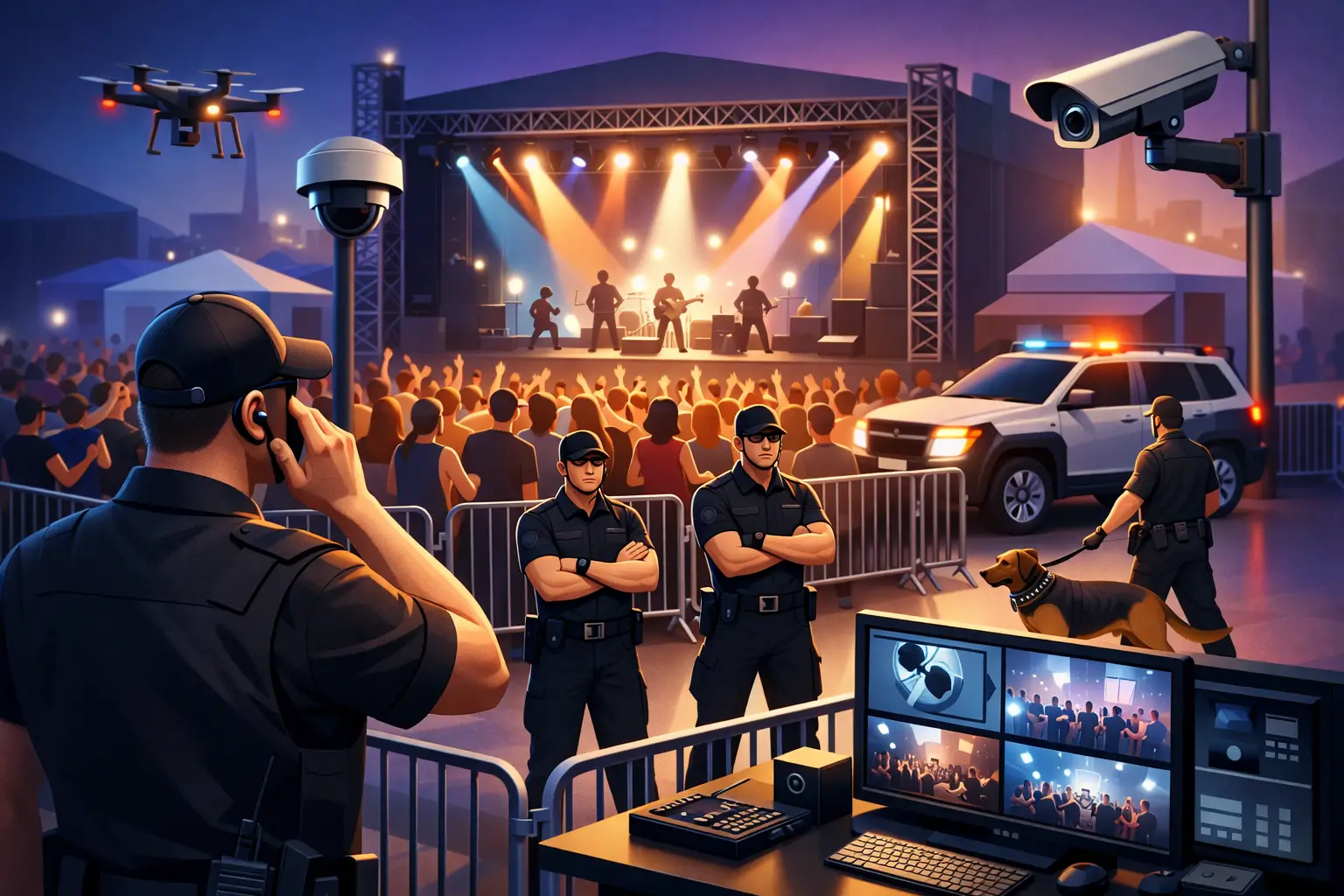
Concert and Event Security That Holds Up
A sold-out room can shift from controlled to chaotic in minutes. One bottleneck at the gate, one unmanaged VIP arrival, or one poorly handled ejection can put guests, staff, performers, and the venue’s reputation at risk. That is why concert and event security is not just about placing guards at entrances. It is about building a visible, disciplined operation that keeps the event moving safely from load-in to final exit.
For venue operators, promoters, hospitality groups, and event managers, the challenge is rarely a lack of awareness. It is execution. Security has to be present without disrupting the guest experience, firm without escalating tension, and scalable enough to match the size, audience profile, and risk level of each event. The difference between an average provider and a dependable security partner usually shows up long before doors open.
What concert and event security actually covers
Many buyers still think in simple terms – entry checks, bag screening, and a few staff near the stage. In practice, effective concert and event security covers a wider operating picture. It includes perimeter control, access management, credential verification, crowd monitoring, alcohol-related incident response, backstage protection, emergency coordination, and safe venue evacuation if required.
That scope changes based on the event. A corporate launch with invited guests has a different risk profile from a late-night music event, a festival with multiple entry points, or a venue hosting a high-profile performer. Audience behavior, venue layout, nearby transport access, alcohol service, weather exposure, and artist requirements all affect how security should be deployed.
The strongest approach starts with assessment, not assumptions. If a provider gives a staffing number without asking detailed operational questions, that should raise concern. Security works best when the plan is shaped around real conditions on site.
Why planning matters more than headcount
Adding more personnel can help, but headcount alone does not solve weak planning. A smaller, properly briefed team with clear supervisory structure will often outperform a larger group with vague roles and poor communication. Event environments move quickly. Teams need to know not only where to stand, but what to watch, when to intervene, and who makes decisions under pressure.
Pre-event planning should cover arrival patterns, gate procedures, restricted areas, crowd movement points, staffing rosters, escalation pathways, and emergency contingencies. It should also account for client priorities. Some events require a stronger deterrent presence. Others need a lighter touch that protects the guest experience while maintaining control.
There is always a balance to strike. Highly visible security can reassure guests and discourage misconduct, but too aggressive a posture can create friction at premium or hospitality-led events. The right model depends on the audience and the venue environment.
The briefing that sets the tone
A proper briefing is where standards become action. Officers need to understand the run sheet, expected crowd behavior, restricted access zones, communication channels, and reporting procedures. They also need clarity on service expectations. At live events, professionalism matters as much as enforcement. Guests remember how staff speak to them, how issues are handled, and whether the venue felt organized.
This is especially important when multiple stakeholders are involved. Promoters, venue teams, production crews, hospitality staff, and artist management may all have different priorities. Security has to operate as the stabilizing function between them.
Crowd control is where experience shows
Crowd control is one of the clearest tests of event security capability. It is not just about responding when a situation turns difficult. It is about reading the room early enough to prevent pressure points from developing in the first place. Queue buildup, overserved guests, crowd surges near the stage, blocked exits, and disputes at access points are often predictable if the team is experienced and attentive.
Good crowd control relies on positioning, observation, and communication. Officers must understand flow patterns and know how to redirect people calmly before frustration builds. They also need confidence in dealing with intoxication, non-compliance, and emotionally charged situations without creating unnecessary confrontation.
This is where licensing and training matter. So does temperament. Not every guard is suited to live event work. Concert audiences can be energetic, impatient, or highly reactive. Security personnel need a measured presence, sound judgment, and the ability to act decisively without losing control of the interaction.
Backstage, VIP, and restricted access risks
Public-facing areas get the most attention, but many serious issues begin behind the scenes. Unauthorized access to dressing rooms, loading docks, production zones, and service corridors can expose performers, crew, and venue operations to avoidable risk. Credential control needs to be more than a quick visual check. It requires consistency, clear zoning, and officers who are comfortable challenging people when access is not authorized.
VIP movement adds another layer. A high-profile guest or performer can attract attention fast, especially when arrival details leak or crowds gather near entry points. In those cases, concert and event security may need to integrate close protection, route management, secure holding areas, and coordinated escort procedures.
The right response depends on profile and exposure. Some events need discreet executive-style coverage. Others benefit from a stronger visible presence to manage crowd behavior and reduce opportunistic approaches. The key is tailoring the posture to the environment rather than applying the same model to every assignment.
Compliance, documentation, and accountability
For many buyers, security is not only about physical presence. It is also about reducing liability. If an incident occurs, the quality of reporting, supervision, and procedural compliance matters. Venue operators and event organizers need confidence that guards are properly licensed, insured, and supported by a provider with clear operating standards.
That is one reason procurement-minded clients look beyond price. A lower hourly rate may appear attractive, but it can come with inconsistent staffing, poor supervision, weak reporting, or officers who are not suited to the assignment. Those gaps tend to surface when the event is busiest and the consequences are highest.
A professional provider should be able to demonstrate how it manages staff competency, incident reporting, escalation, and workplace safety. Alignment with recognized standards such as ISO 9001 and ISO 45001 is relevant because it signals a more disciplined approach to quality and safety management. It does not replace operational performance, but it supports accountability.
What to look for in a security partner
Choosing a provider for live events is not the same as hiring static site coverage. Event work is dynamic. Staffing demands can change at short notice, guest profiles can shift, and incidents often require fast judgment rather than routine observation. That makes reliability and supervision non-negotiable.
Look for a partner that asks detailed questions about your venue, audience, timing, and operational risks. Look for evidence of scalable staffing, clear communication, and an ability to support both front-of-house and restricted areas. Insurance profile, licensing, and training should be easy to verify, not buried in vague promises.
It also helps to assess how the company thinks about service. The best teams understand that security supports the event as a whole. They protect people and property, but they also protect brand reputation, customer confidence, and operational continuity. That broader mindset is often what separates a basic labor supplier from a serious security company.
Broadsafe Group works with that standard in mind – combining licensed personnel, tailored deployment, and operational discipline for venues and events that cannot afford guesswork.
Concert and event security works best when it fits the venue
No two venues operate the same way. A theater, stadium, hotel ballroom, outdoor festival site, and nightclub all require different security planning. Entry flow, alcohol service, acoustic spill, emergency access, neighborhood sensitivity, and staffing coordination can change the entire deployment model.
That is why the most effective security plan is specific to the site, not copied from the last event. A provider should be willing to adapt based on layout, audience mix, event timing, and stakeholder expectations. Sometimes that means stronger gate screening and perimeter coverage. Sometimes it means more roaming supervisors, backstage control, or dedicated response officers near likely friction points.
When the security plan matches the venue and the crowd, the result is noticeable. Guests feel guided rather than managed. Staff know who to call and what to expect. Problems get contained earlier. And the event has a much better chance of finishing the way it started – organized, safe, and under control.
If you are planning a live event, the right security decision is usually not the cheapest one or the fastest one. It is the one that gives you confidence that when the crowd arrives, your operation will hold up.