Manned Guarding vs Mobile Patrols for Your Site
A security incident rarely follows a convenient schedule. It may begin with an unauthorized person at a loading dock, an access card used after hours, a disturbance in a parking area, or an alarm activation when the site is empty. The decision between manned guarding vs mobile patrols determines who is available, how quickly they can act, and how visibly your organization protects its people, property, and reputation.
For site managers, facility teams, venue operators, and business owners, the right answer is not simply the service with the lowest hourly cost. It is the security model that matches the risk, operating hours, public exposure, and response requirements of the site.
The fundamental difference
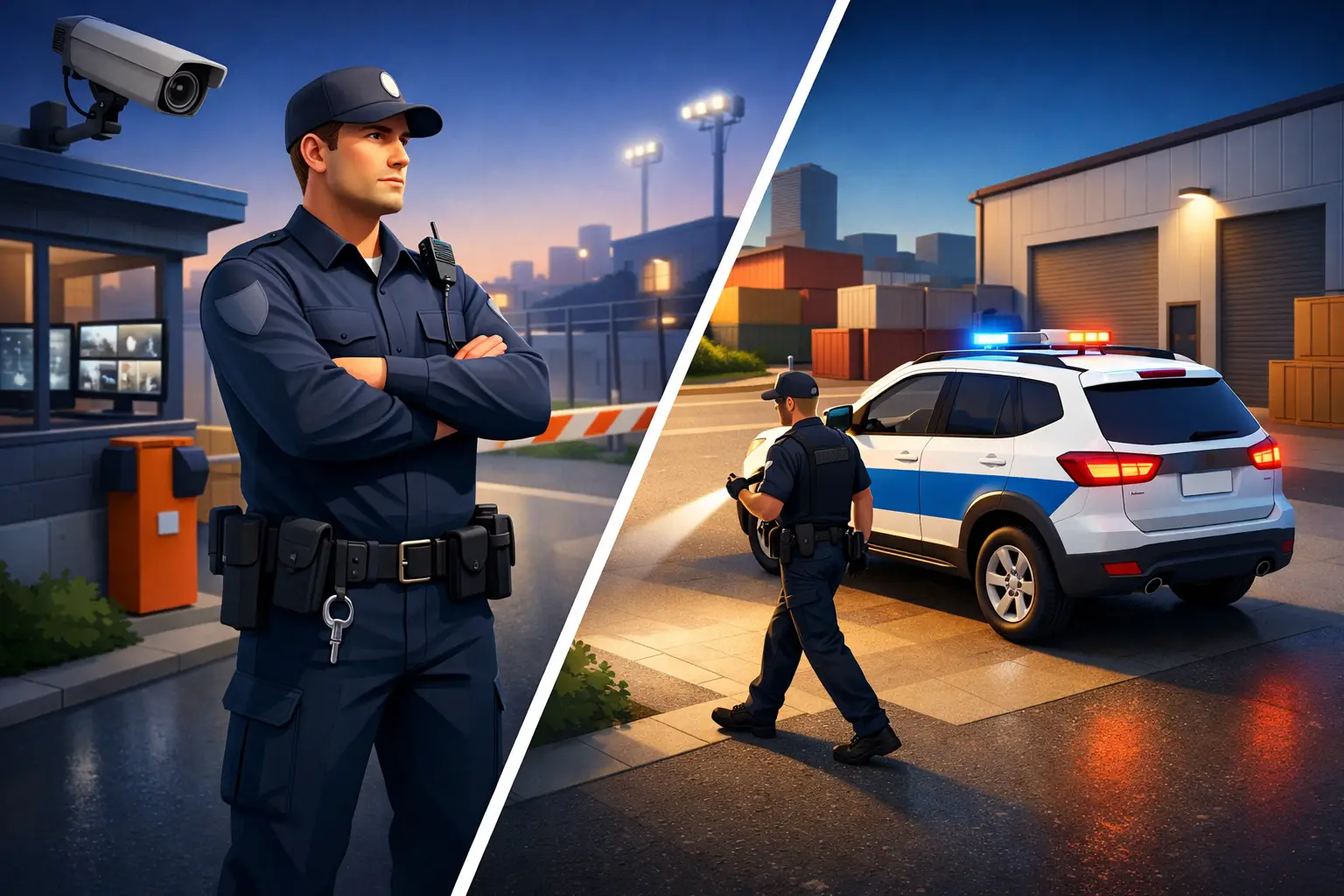
Manned guarding places a licensed security professional at your location for an agreed shift or continuous coverage period. The guard remains on site to monitor access, conduct patrols, observe activity, assist staff and visitors, manage incidents, and follow site-specific procedures.
Mobile patrols involve security officers visiting one or more locations at scheduled intervals, randomized times, or in response to alarms and incidents. Patrol officers inspect key areas, check doors and gates, identify irregularities, document their findings, and escalate issues as required.
Both services create a valuable security presence. The distinction is consistency. A static guard provides dedicated, immediate coverage at one location. A mobile patrol provides periodic visibility and verification across a site or portfolio of sites.
When manned guarding is the stronger choice
Manned guarding is designed for locations where security needs to be continuously available. This is often the right approach for corporate offices with active reception areas, hospitals, hotels, retail environments, construction projects, logistics facilities, clubs, and venues managing large numbers of guests.
A dedicated officer can control entry points, verify credentials, receive deliveries, monitor CCTV feeds, manage visitor sign-in, and maintain a consistent understanding of the site’s daily operations. That familiarity matters. A guard who knows the staff, building layout, emergency exits, contractor routines, and recurring risks can spot behavior or conditions that do not look right.
Visible guarding also offers a strong deterrent. People are less likely to test access controls, damage property, steal equipment, or cause disruption when they know an officer is present. For customer-facing sites, the guard can also serve a practical service role by directing visitors, supporting staff during difficult interactions, and helping create a calm, orderly environment.
Continuous coverage is especially valuable when an incident requires immediate judgment. A fight at a venue entrance, an aggressive customer, a medical emergency, or an unauthorized person attempting to access a restricted area cannot always wait for a patrol vehicle to arrive. An on-site officer can take early action, contact emergency services where necessary, and provide clear incident reporting to management.
The trade-off is cost. Dedicated staffing requires paid coverage for every scheduled hour, including breaks, shift changes, and the appropriate level of supervision. For lower-risk sites that are vacant overnight, this may exceed what the site genuinely needs.
Situations that call for a static presence
Manned guarding is generally the better fit when your site has regular public access, valuable assets, known security concerns, complex access requirements, or a duty to protect staff and visitors throughout operating hours. It is also well suited to events where crowd behavior, entry screening, VIP movement, and rapid response must be managed in real time.
Where mobile patrols deliver better value
Mobile patrols are often effective for commercial properties, vacant buildings, industrial yards, construction sites after hours, storage facilities, and multi-site operations. These environments may not need a guard stationed on location all night, but they still benefit from professional checks and an unpredictable security presence.
During a patrol visit, an officer can inspect perimeter fencing, gates, doors, windows, lighting, and designated high-risk areas. They can identify signs of forced entry, trespass, vandalism, fire hazards, water leaks, or equipment left unsecured. The visit creates an auditable record that the property was checked, which can support internal accountability and incident follow-up.
Randomized patrol timing is one of the model’s key advantages. A patrol that arrives at the same time every night becomes predictable. A professionally managed schedule should make it harder for potential offenders to determine when the site is unattended.
Mobile patrols can also be paired with alarm response procedures. If an alarm is triggered, a trained officer can attend the location, assess the situation, secure the premises where appropriate, and notify the agreed contacts or emergency services. This can reduce the burden on business owners and managers who would otherwise need to respond personally in the middle of the night.
The limitation is equally clear: a mobile officer is not permanently on site. If an incident starts between visits, the response time depends on the officer’s location, traffic conditions, and the nature of the callout. Mobile patrols are therefore best used where intermittent checks are proportionate to the risk rather than where constant intervention is required.
Manned guarding vs mobile patrols: the decision factors
The most effective security plan begins with a realistic assessment of what could happen on site, not an assumption that one service is always better. Start with the hours when people, assets, and access points are most exposed. A busy hospitality venue has a different risk profile from a fenced warehouse, and a corporate reception has different needs from an unoccupied construction project.
Consider the value and portability of assets. High-value inventory, tools, technology, vehicles, and sensitive records may justify dedicated coverage, particularly if they are easy to remove or have been targeted previously. Also consider the cost of disruption. A break-in that delays a worksite, closes a venue, damages equipment, or compromises customer confidence can cost far more than the immediate loss.
Access complexity is another deciding factor. Multiple entrances, contractors, deliveries, staff shifts, visitor traffic, and restricted zones usually benefit from a guard who can actively manage movement. A single locked building with no public access may be better served by patrol checks and alarm response.
Finally, assess your response expectations. If a concern needs to be addressed within seconds or minutes, static guarding provides the closest protection. If the objective is regular inspection, deterrence, and a professional response to alarms, mobile patrols can be a more cost-conscious model.
A combined model is often the practical answer
Many organizations do not need to choose one service exclusively. A blended approach can provide stronger protection while keeping staffing aligned with actual risk.
For example, a corporate facility may use manned guarding during business hours to manage reception, visitor access, and employee safety, then move to mobile patrols after closing. A construction site may have a static officer during periods of major deliveries or high-value works, supported by overnight patrols on quieter days. An event venue may require a full on-site team during a performance, followed by patrol coverage once equipment is secured and guests have left.
This approach works because risk changes over time. Security should be able to scale up during peak periods, special events, renovations, incidents, or seasonal demand, then scale back when the exposure is lower.
What quality service should look like
Whether you select static guards, mobile patrols, or both, the provider’s operating standards matter as much as the service label. Effective security requires licensed personnel, clear site instructions, reliable communication, documented patrol activity, incident reporting, and escalation procedures that your team understands.
Ask how officers are briefed on your site and how changes to operations are communicated. Clarify who will be contacted after an incident, what authority the officer has to secure an area, and how reports will be delivered. For public-facing sites, also ask about experience in de-escalation, customer service, crowd management, and working alongside venue or facilities staff.
A dependable security partner should not force your operation into a generic roster. Broadsafe Group develops tailored coverage around site conditions, operating hours, access needs, and the level of visible protection required. The goal is practical coverage that supports business continuity without creating unnecessary friction for staff or visitors.
The right choice becomes clearer when you walk the site after hours and ask a direct question: if something happens here tonight, do we need someone already on the ground, or do we need regular professional checks and a defined response? The answer should shape the security plan, the budget, and the confidence your team carries into the next working day.