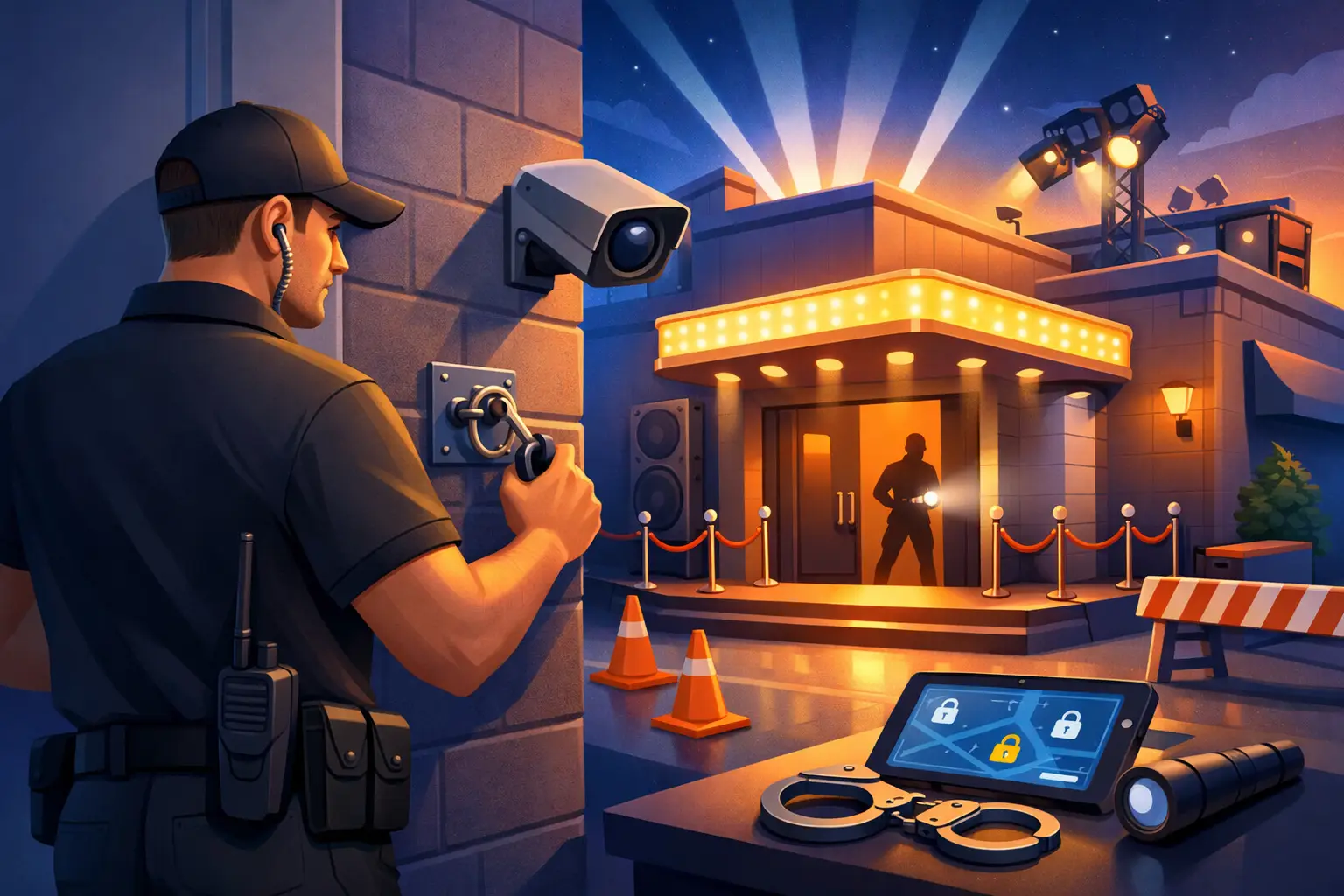
How to Secure a Venue Before Doors Open
A venue can feel under control during a quiet walkthrough and become a very different environment once doors open, lines form, alcohol is served, and a crowd arrives at once. Knowing how to secure a venue means planning for that change before it happens. The objective is not to make guests feel policed. It is to create a safe, welcoming operation where staff know their responsibilities, threats are identified early, and incidents are handled decisively.
For venue operators, event organizers, and facilities teams, security is a business-continuity function. A poorly managed entry point, an unmonitored loading dock, or an unclear emergency procedure can affect people, reputation, revenue, and compliance in minutes.
Start With a Venue-Specific Risk Assessment
Effective venue security starts with the site, not a generic guard roster. A 200-person restaurant, a nightclub with late-night trading, a corporate conference center, and a live music venue face different risks even when their headcounts are similar.
Walk the property at the same time of day your event or operation will run. Review public entrances, staff doors, emergency exits, parking areas, restrooms, green rooms, cash-handling points, loading zones, elevators, stairwells, and any area where people can gather without clear oversight. Consider what changes after dark, during shift changes, or when deliveries arrive.
Your assessment should identify likely threats and the consequences if they occur. These may include unauthorized access, theft, intoxicated or aggressive behavior, overcrowding, medical incidents, fire, vandalism, harassment, lost children, suspicious items, and vehicle access concerns. High-profile events may also require planning for unwanted attention toward speakers, performers, executives, or VIP guests.
Risk assessment is not about assuming the worst will happen. It is about deciding where preventive controls will have the greatest effect. A side entrance that is rarely used may need to remain locked. A poorly lit parking area may require improved lighting, cameras, patrols, or all three. An event with a young audience may need more visible entry screening and a clear welfare response plan.
How to Secure a Venue With Clear Zones and Access Rules
Once risks are understood, divide the venue into practical security zones. Most venues need at least a public area, a staff-only area, and a restricted area. Larger sites may also include a loading zone, control room, cash office, VIP area, backstage space, or secure storage area.
Each zone should have a defined access rule. Ask three questions: who is allowed in, how will they be identified, and who is responsible for challenging unauthorized access? If the answers are unclear, the zone is not secure.
Public entry should be managed so guests understand where to queue, where screening occurs, and where tickets or credentials are checked. Staff-only doors should not become informal shortcuts during busy periods. Restricted spaces require tighter controls, such as credentials, key control, visitor logs, escorts, or electronic access records.
Physical measures matter, but they work best when paired with staff discipline. A locked door provides little protection if employees routinely prop it open. Likewise, cameras help investigate incidents, but they do not replace alert personnel who can act while an issue is developing.
Place Security Staff Where They Can Prevent Problems
Security staffing should be based on duties and decision points, not simply a preferred number of guards. The right coverage depends on venue layout, expected attendance, operating hours, alcohol service, event profile, and local requirements.
A well-designed deployment often includes visible personnel at primary entrances, patrol coverage for exterior and low-traffic areas, and staff positioned near locations where friction is most likely to occur. In a hospitality setting, that may be the entrance, bar, restroom corridor, or exit. At a concert, it may include the queue, pit barrier, backstage route, and performer arrival point.
Assign every officer a defined post, reporting line, break arrangement, and escalation authority. They should know who has the final operational decision if admission must be paused, an area needs to be cleared, or emergency services are called. Ambiguity creates delays when time matters most.
Licensed security professionals also need a clear briefing before every shift or event. Cover expected attendance, event schedule, guest profile, prohibited items, known concerns, emergency exits, medical resources, communication channels, and the process for documenting incidents. A short, disciplined briefing is more valuable than assumptions made at the door.
Build Entry Screening Around the Guest Experience
Entry is where security and customer service meet. Guests should see an organized process, clear signage, professional staff, and a consistent approach to admission. Confusion at entry can quickly create crowd pressure, arguments, and missed security checks.
Set the screening standard in advance. Depending on the risk profile, it may involve ticket verification, age checks, bag inspection, metal detection, credential checks, or a simple visual assessment by trained personnel. The level of screening should be proportionate. Over-screening can slow arrivals and frustrate guests, while under-screening may expose the venue to preventable risks.
Design the queue so it does not block sidewalks, vehicle routes, emergency access, or neighboring businesses. Use barriers where needed and keep an accessible route available. If guests are waiting outside, provide active observation rather than treating the line as outside the venue’s responsibility.
Security staff should be trained to communicate calmly and respectfully, particularly when refusing entry or enforcing a condition of admission. A firm explanation, consistent policy, and early supervisor support can prevent a minor disagreement from becoming a public confrontation.
Control Capacity, Movement, and Crowd Behavior
A venue is not secure simply because it is full of security personnel. It is secure when people can enter, move, queue, and exit without unsafe congestion. Maintain accurate attendance counts and respect the site’s legal occupancy limit. Do not rely on visual estimates when the venue is nearing capacity.
Watch for pressure points: narrow corridors, stairwells, bar lines, merchandise areas, restrooms, exits, and spaces near a stage or speaker. These areas may require barriers, one-way movement, additional staff, or periodic checks. The best control is often simple operational design, such as opening a second service point or redirecting a line before it blocks an exit.
For events involving alcohol, coordinate security with bar and floor staff. Staff should know how to report signs of intoxication, harassment, fighting, or suspected drug activity quickly and discreetly. Security can then intervene early, assess the situation, and use the least confrontational effective response.
Prepare for Emergencies Before You Need To Act
Every venue needs a written emergency plan that is understood by the people who will carry it out. The plan should cover fire and evacuation, medical emergencies, severe weather, violence, suspicious items, utility failures, and situations that require sheltering in place.
Keep emergency exits clear, unlocked where required, visible, and usable. Check them before opening, not after an incident begins. Confirm that extinguishers, first-aid resources, emergency lighting, radios, and public-address systems are available and functioning.
Your plan should identify who calls emergency services, who meets responders, who manages guest communication, and who checks restrooms or restricted spaces during an evacuation. Establish a meeting point and a process for accounting for staff. For large events, coordinate procedures with venue management, production teams, medical providers, and local emergency agencies where appropriate.
Run practical exercises. A tabletop discussion can reveal gaps in roles and communications, while a controlled drill can expose issues with exits, crowd flow, or radio coverage. The goal is not perfection. It is ensuring people can act with confidence instead of waiting for instructions they never received.
Use Technology to Support, Not Replace, People
Cameras, access control, alarm systems, incident-reporting tools, and two-way radios can strengthen venue security when they are properly maintained and actively used. Camera views should cover entrances, cash areas, corridors, exterior approaches, and other risk points without creating blind spots that go unnoticed.
Before an event, test communications across the full venue, including parking areas, basements, loading docks, and backstage locations. Agree on plain-language radio procedures so staff can report a concern without confusion. Protect recordings, visitor information, and incident reports through appropriate access controls and retention practices.
Technology provides visibility and evidence. Trained people provide judgment, communication, and immediate intervention. A dependable security plan needs both.
Document Incidents and Improve the Next Shift
Security work should produce useful operational intelligence, not just a response in the moment. Record incidents consistently, including the time, location, people involved, actions taken, witnesses, injuries, police or medical attendance, and any follow-up required.
Review patterns after each event or operating period. Repeated door disputes may indicate unclear entry conditions. Theft reports may point to a gap in patrols or access control. A recurring crowd bottleneck may require a layout change rather than more guards.
A professional security partner can bring structure to this process through licensed personnel, site instructions, incident reporting, and scalable coverage. Broadsafe Group approaches venue protection as a tailored operational service, recognizing that visible deterrence, calm customer interaction, and accountable reporting must work together.
The strongest venue security plan is one your team can carry out under pressure. When the right people, procedures, access controls, and communication are in place before doors open, guests are free to focus on why they came – and your operation is better prepared for whatever the day brings.