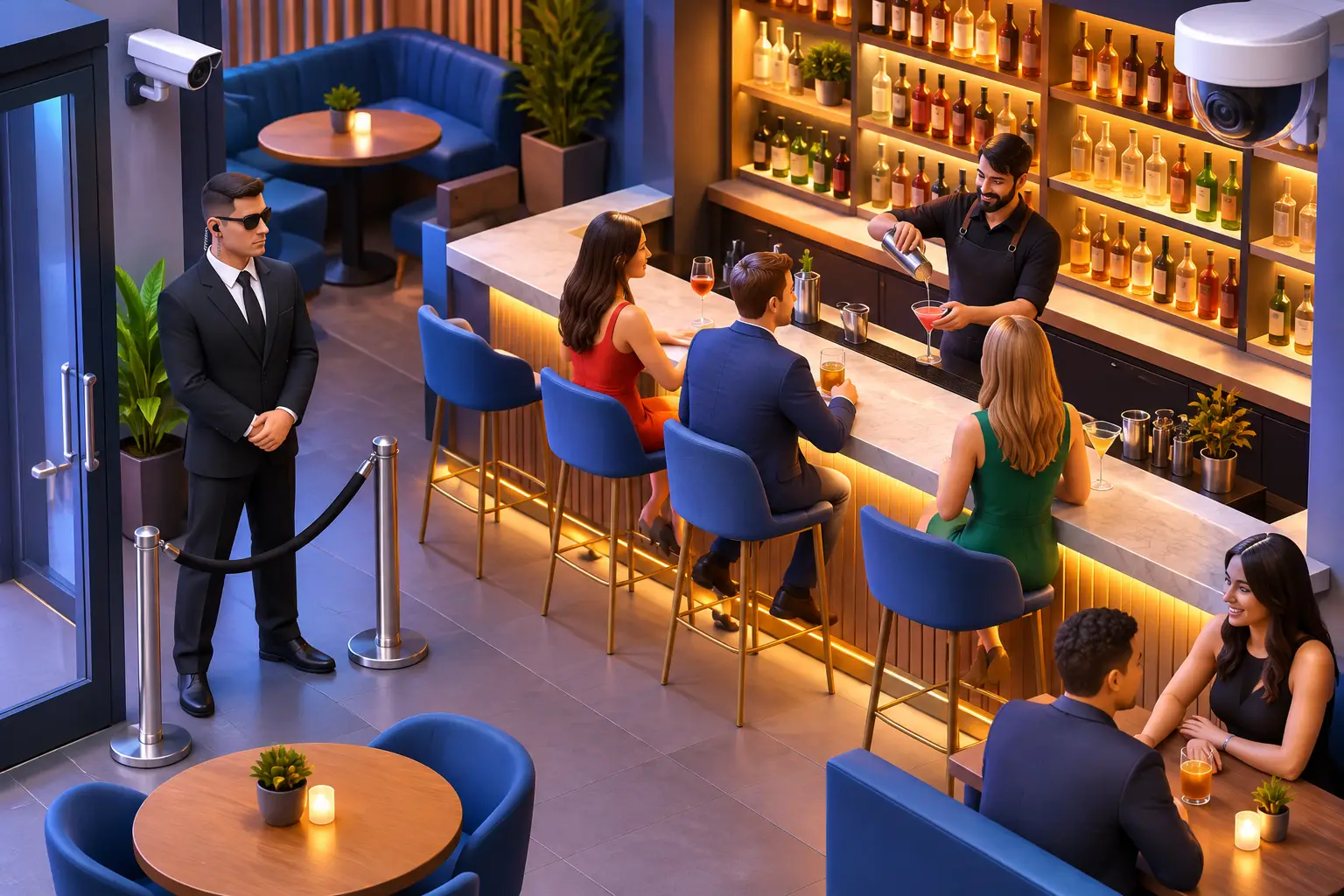
10 Best Bar Security Practices That Protect Guests
The most difficult moments in a bar rarely begin as obvious security incidents. A disagreement at the door, an overserved guest, a blocked exit, or a delayed response to a spill can escalate quickly in a crowded room. The best bar security practices give venue operators a disciplined way to prevent those moments, protect guests and staff, and keep service moving without making the venue feel unwelcoming.
For owners and operations managers, security is not simply about placing a guard at the entrance. It is a coordinated operating standard involving door procedures, floor coverage, staff communication, responsible alcohol service, incident documentation, and trained decision-making. The right approach protects your people, your license, your reputation, and your ability to trade confidently.
Start With a Venue-Specific Security Plan
Every venue has a different risk profile. A neighborhood cocktail bar with 60 seats needs a different approach than a late-night nightclub, sports bar, rooftop venue, or entertainment precinct location. Security coverage should be based on operating hours, capacity, customer demographics, floor layout, alcohol service model, past incidents, nearby transport, and the events on your calendar.
Walk the site before building the plan. Identify where guests queue, where staff may be isolated, how people move between the bar, restrooms, smoking areas, and exits, and where conflict is most likely to develop. Pay close attention to blind spots, bottlenecks, poorly lit areas, cash-handling points, and any location where a guest could become separated from friends.
A practical plan assigns clear responsibilities. Management should know who has authority to refuse entry, stop service, call emergency services, speak to media if necessary, and authorize an ejection or temporary closure. Security personnel should know their patrol areas, radio channels, escalation process, and the venue’s expectations around customer service.
Build procedures around real scenarios
Generic post orders are not enough. Your team should rehearse the situations that are most plausible at your venue: an intoxicated guest refusing to leave, a fight near the bar, suspected drink tampering, a medical emergency, a missing patron, aggressive behavior in a restroom area, or a crowd surge at closing time.
The objective is not to turn staff into security specialists. It is to ensure that everyone can recognize risk early, alert the right person quickly, and avoid making a difficult situation worse.
Control Entry Without Creating Friction
Entry is where a venue sets the tone. Effective door staff are visible, calm, professional, and consistent. They should welcome appropriate guests while conducting required identification checks, applying dress or behavior policies fairly, monitoring intoxication, and identifying groups that may need closer observation once inside.
Consistency matters. A guest who is denied entry without a clear, respectful explanation may become confrontational. Staff should communicate decisions briefly and avoid debating policy in front of a growing line. When a refusal is necessary, move the conversation away from the entrance where practical, keep personal space, and have a second trained team member nearby.
Door teams also need a reliable method for tracking capacity. Counting people casually or relying on memory creates unnecessary risk during busy periods. Use a clear occupancy process that accounts for entries, exits, private areas, and event changes. If the venue reaches its safe operating limit, staff must be empowered to pause entry until numbers reduce.
Create Visible Security Coverage Inside the Venue
A security presence should not disappear once guests pass the door. Regular, purposeful floor patrols help staff spot changing behavior before it becomes a confrontation. The most effective officers are approachable enough for guests to seek help, yet alert enough to notice tension, harassment, excessive intoxication, suspicious conduct, or unsafe crowd movement.
Patrol patterns should cover more than the main bar area. Restrooms, outdoor patios, stairwells, parking areas, side exits, and smoking zones often require closer attention because they are less visible to managers and other staff. Coverage can change through the night. A patio may be low risk early in the evening but become a pressure point near closing when guests gather, smoke, and arrange transport.
Good security personnel work closely with bartenders, servers, hosts, and managers. Bar staff often see the earliest indicators of trouble: a guest ordering repeated drinks for someone else, an argument building across a table, a person being followed, or a customer becoming unsteady. They need a fast, discreet way to call for support without leaving their station or escalating concern in front of patrons.
Make De-Escalation the Default Response
Physical intervention may occasionally be necessary to protect people from immediate harm, but it should never be the first tool used for routine noncompliance. Calm communication, clear boundaries, and timely intervention resolve many incidents before they become physical.
Security staff should use direct language, explain what behavior needs to stop, and offer a reasonable next step. For example, a guest may be asked to lower their voice, move away from another patron, take a break outside with a friend, or leave the venue. Avoid sarcasm, threats, crowding the person, or allowing several staff members to speak over one another.
It also depends on the risk. A cooperative guest who is intoxicated but nonviolent can often be managed with patience and a safe transport plan. A person making threats, attempting to start a fight, or carrying a weapon requires immediate escalation under the venue’s emergency procedures. Security teams should be trained to assess behavior, not make assumptions based on appearance, age, or group identity.
When a removal is required, use enough trained personnel to control the situation safely, follow applicable local laws and licensing requirements, and prioritize moving the incident away from other guests. Once outside, do not simply leave a vulnerable or heavily intoxicated person unattended. Consider whether medical assistance, police, a sober companion, or safe transportation is needed.
Document Incidents While Details Are Fresh
Incident reporting is one of the most overlooked bar security practices. A report is not paperwork for its own sake. It creates an accurate record that helps management identify repeat issues, support staff, respond to complaints, meet insurer requirements, and defend decisions if an incident is later questioned.
Reports should be completed as soon as practical and use factual language. Record the date, time, exact location, people involved, observed behavior, actions taken, witnesses, staff members present, injuries, property damage, and whether emergency services were contacted. Avoid speculation or labels that cannot be supported by what staff actually saw or heard.
Management should review reports regularly, not just after a major incident. Repeated conflicts in one area, frequent refusals at a particular time, or recurring issues involving a promotion can reveal an operational problem that needs attention. Security intelligence is most useful when it changes staffing, layout, training, or service decisions.
Use Cameras and Lighting as Operational Tools
Cameras are valuable when they support an active security process. Position coverage at entrances, registers, bars, high-traffic areas, exits, and exterior approaches. Make sure cameras are functioning, time settings are accurate, and authorized managers know how to preserve footage following an incident.
Technology has limits. Cameras do not replace trained staff on the floor, and footage may not prevent an immediate event. Their value comes from deterrence, real-time awareness where monitoring is available, and reliable evidence after the fact.
Lighting deserves the same attention. Dim lighting may suit the atmosphere in guest areas, but entrances, stairs, restrooms, exits, parking areas, and staff corridors must remain safely visible. Maintain clear sightlines, keep emergency exits unobstructed, and check that signage can be seen during normal operating conditions.
Train the Entire Team, Not Just Security Staff
Security is strongest when bartenders, servers, hosts, managers, and contracted officers operate from the same playbook. Training should cover responsible alcohol service, recognizing intoxication, harassment response, emergency communications, evacuation roles, suspicious behavior, and when to contact security or emergency services.
Short pre-shift briefings are highly effective. Discuss expected attendance, reservations, sports broadcasts, performers, promotions, known issues from the previous shift, staffing gaps, weather, and transport disruptions. These details help a team prepare for the night actually ahead of them rather than relying on a static plan.
When engaging a security provider, venue operators should confirm that personnel are appropriately licensed where required, insured, professionally presented, and experienced in hospitality environments. The lowest hourly rate can become expensive if officers lack judgment, do not communicate well with staff, or create a poor guest experience. A capable partner should be able to adjust coverage for special events, high-risk periods, VIP visits, and changing operational needs.
Review Security After Every Major Service Period
The best bar security practices improve through review. After a busy weekend, event, or serious incident, take ten minutes with key staff to ask what worked, where communication broke down, and what should change before the next shift. Small adjustments, such as relocating a staff member, changing a queue barrier, improving radio discipline, or revising a closing procedure, can prevent larger problems later.
A safe bar is not one that feels heavily controlled. It is one where guests can relax because staff are attentive, decisions are consistent, and help arrives before a concern becomes a crisis.