Best Crowd Control Strategies for Safer Events
A crowd can change character in minutes. A concert entrance backed up by delayed ticket scanning, a packed bar after a sporting event, or an unexpected protest near a corporate facility can quickly create pressure points that affect safety, guest experience, and operations. The best crowd control strategies anticipate those moments before they become incidents, using visible leadership, clear movement plans, and trained personnel who know when to guide, when to intervene, and when to escalate.
For venue operators, event organizers, and facilities teams, crowd control is not simply about placing guards at doors. It is a coordinated safety function that protects people, supports staff, preserves access routes, and helps a business maintain control of its environment without creating unnecessary friction for legitimate guests.
Start With a Site-Specific Risk Assessment
Effective crowd control begins well before the first guest arrives. The operating environment matters: a festival field, hotel lobby, nightclub, retail launch, stadium concourse, and corporate event each create different risks. A plan that works for a seated conference may fail completely at a high-energy live performance where guests arrive in concentrated waves.
Assess expected attendance, arrival and departure patterns, age profile, alcohol service, weather exposure, parking, nearby transport, emergency exits, and any known VIP, performer, or public-interest factors. Also consider what happens outside the formal venue boundary. Lines that spill onto a sidewalk, rideshare pickup areas, and smoking zones can become unmanaged gathering points if they are not included in the plan.
The assessment should identify crowd density thresholds and likely pinch points. Entry screening, ticket resolution desks, restrooms, merchandise areas, stairwells, elevators, and food service lines all deserve attention. The goal is not to eliminate every queue. It is to make waiting orderly, visible, and less likely to spill into circulation routes or emergency access areas.
Design Movement, Not Just Barriers
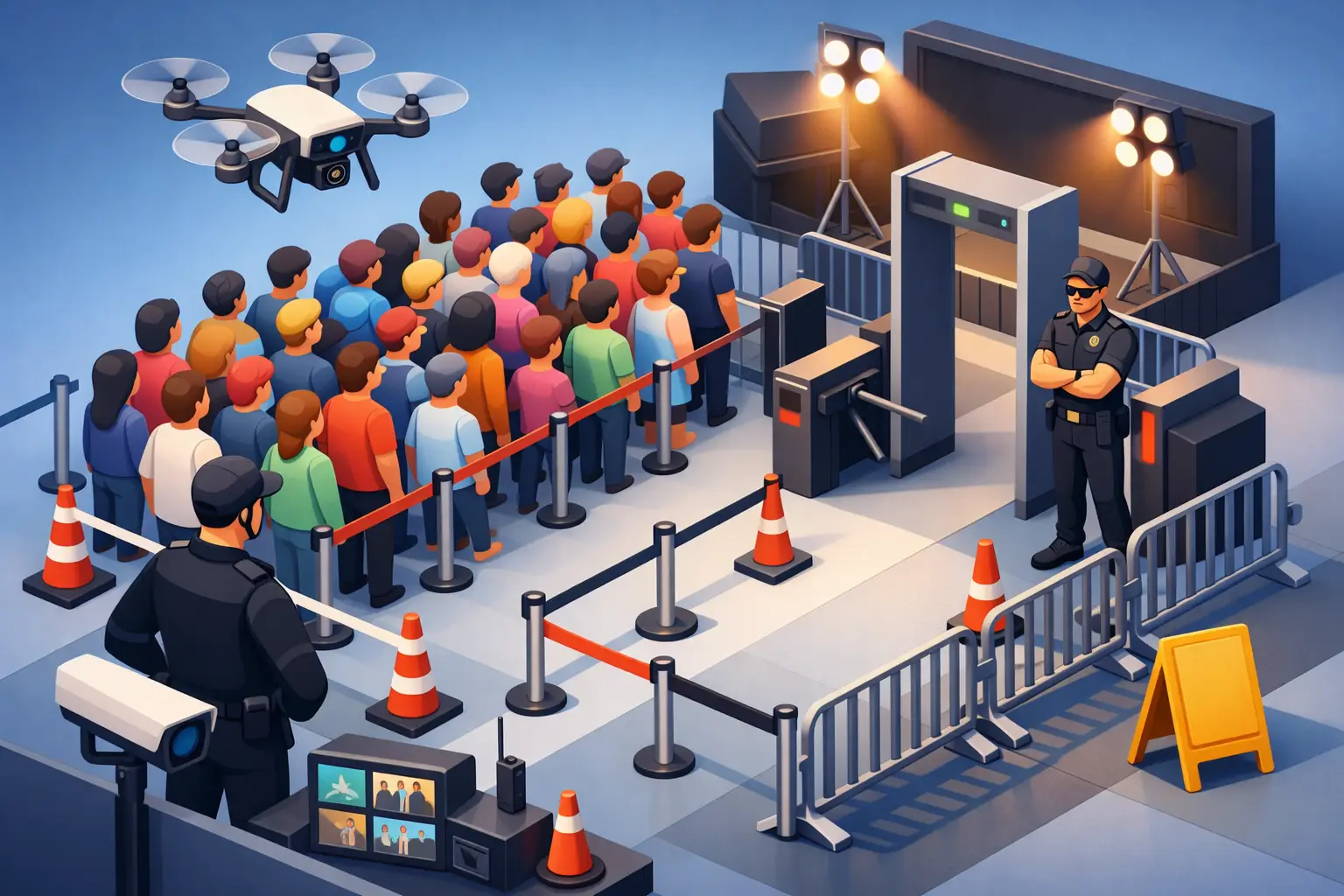
Barricades, stanchions, fencing, and signage are useful tools, but they do not manage behavior on their own. People need to understand where to go, what is expected of them, and what happens next. Clear pathways and straightforward instructions reduce hesitation, which is often what causes congestion in the first place.
Entry and exit routes should be separated wherever practical. Guests arriving should not have to push past people leaving, and staff should retain a clear route to respond to an issue without moving against the flow of the crowd. In larger venues, staggered release times, designated pickup zones, and visible wayfinding can reduce the surge that occurs when an event ends.
Physical controls must also be proportionate. Too many barriers can make a venue feel restrictive and can create bottlenecks if a route narrows unexpectedly. Too few controls leave staff relying on verbal direction alone. The right balance depends on attendance, layout, crowd behavior, and the consequences of a breach or disruption.
Keep Emergency Routes Open at All Times
Emergency exits, fire lanes, access points for medical responders, and evacuation paths cannot be treated as overflow space. They need active monitoring, particularly when a site is busy. Equipment, temporary furniture, parked vehicles, and informal lines can block a route faster than many operators expect.
Security personnel should know which gates can be opened, who has authority to make that decision, and how to communicate the change immediately. A route that is technically available but unknown to staff is not a reliable emergency route.
Use Trained Personnel Where Decisions Matter
The strongest crowd control plan can unravel if personnel are posted without clear roles, authority, or communication. Licensed security professionals bring value when they are positioned where judgment is required: at access points, within dense areas, near high-risk zones, and at locations where staff need a rapid response.
A visible presence can deter disorderly conduct, but professionalism matters as much as visibility. Guards should be approachable, calm, and capable of delivering concise directions without escalating a tense interaction. For hospitality venues, this may mean recognizing early signs of intoxication or conflict. For corporate facilities, it may mean managing visitor access discreetly while maintaining a professional front-of-house experience.
Briefings should cover more than post assignments. Teams need to understand the event schedule, expected crowd profile, prohibited items, emergency procedures, escalation contacts, radio channels, medical support arrangements, and any persons or areas requiring additional protection. A guard who knows the operational intent behind a post is better equipped to act decisively when conditions change.
The Best Crowd Control Strategies Depend on Communication
Crowd control is often won or lost through communication. Guests need timely information, staff need consistent instructions, and security teams need a reliable way to report developing issues. Conflicting directions from different team members can create frustration and reduce compliance, especially when the crowd is already under pressure.
Use clear, plain-language messaging at the point of need. If an entrance is closed, direct people to the alternative entrance before they reach the closure. If bag checks are required, communicate that before guests join the line. If an area is at capacity, explain where guests can wait or where they can go instead.
Internal communication should be structured, not constant radio chatter. Teams need agreed codes or plain-language procedures for medical incidents, aggressive behavior, lost children, suspicious items, access breaches, and evacuation. Supervisors should receive updates on crowd density, line growth, staffing gaps, and environmental changes so they can reposition resources before a minor issue becomes a major one.
Build an Escalation Path That Staff Can Follow
Not every difficult interaction requires physical intervention. In many situations, a calm explanation, a change of queue, or the involvement of a supervisor will resolve the concern. However, staff must also know when verbal management is no longer sufficient.
An escalation path should define who handles first contact, when a supervisor attends, when management is notified, and when emergency services should be called. It should account for the safety of bystanders as well as the individual involved. The priority is to stabilize the situation, create space, and avoid drawing a larger crowd toward the incident.
Monitor Conditions in Real Time
A crowd plan should be active throughout the operation. Attendance levels, weather, transport delays, performer schedules, alcohol consumption, and local activity can all change the risk profile after doors open. Supervisors should conduct regular checks rather than assuming the original staffing map remains appropriate.
Technology can support situational awareness, including CCTV, access-control data, incident reporting tools, and communication systems. However, technology does not replace experienced personnel on the ground. Cameras may show that a line is growing, but trained staff can identify why it is growing and redirect people before frustration spreads.
For high-footfall sites, it is useful to assign someone to monitor the wider perimeter as well as internal areas. A venue may appear controlled inside while queues, conflicts, or unauthorized gathering develop outside. Managing that transition zone helps protect the business reputation and maintains safer access for guests, staff, and neighboring properties.
Train for Calm, Consistent Intervention
Crowd control requires restraint. Overly forceful or inconsistent responses can turn a manageable issue into a public incident, while delayed action can allow aggressive behavior to affect others. Personnel need training in conflict de-escalation, situational awareness, customer service, emergency response, and lawful operating procedures relevant to their duties.
Post-event reporting is equally valuable. Record attendance patterns, incidents, staffing changes, response times, and points where the layout or process caused confusion. These details turn each event or shift into practical intelligence for the next one. They also give management a clearer basis for staffing decisions, vendor accountability, and continuous improvement.
For organizations managing recurring events, hospitality operations, or public-facing sites, a trusted security partner can bring consistency across locations and shifts. Broadsafe Group supports tailored security coverage with licensed personnel and disciplined operational planning, helping clients align protection measures with their venue, audience, and business priorities.
A well-managed crowd should not feel heavily controlled. Guests should experience clear direction, respectful service, and confidence that someone is paying attention. When the plan is built around prevention, communication, and capable people, safety becomes part of the experience rather than an interruption to it.