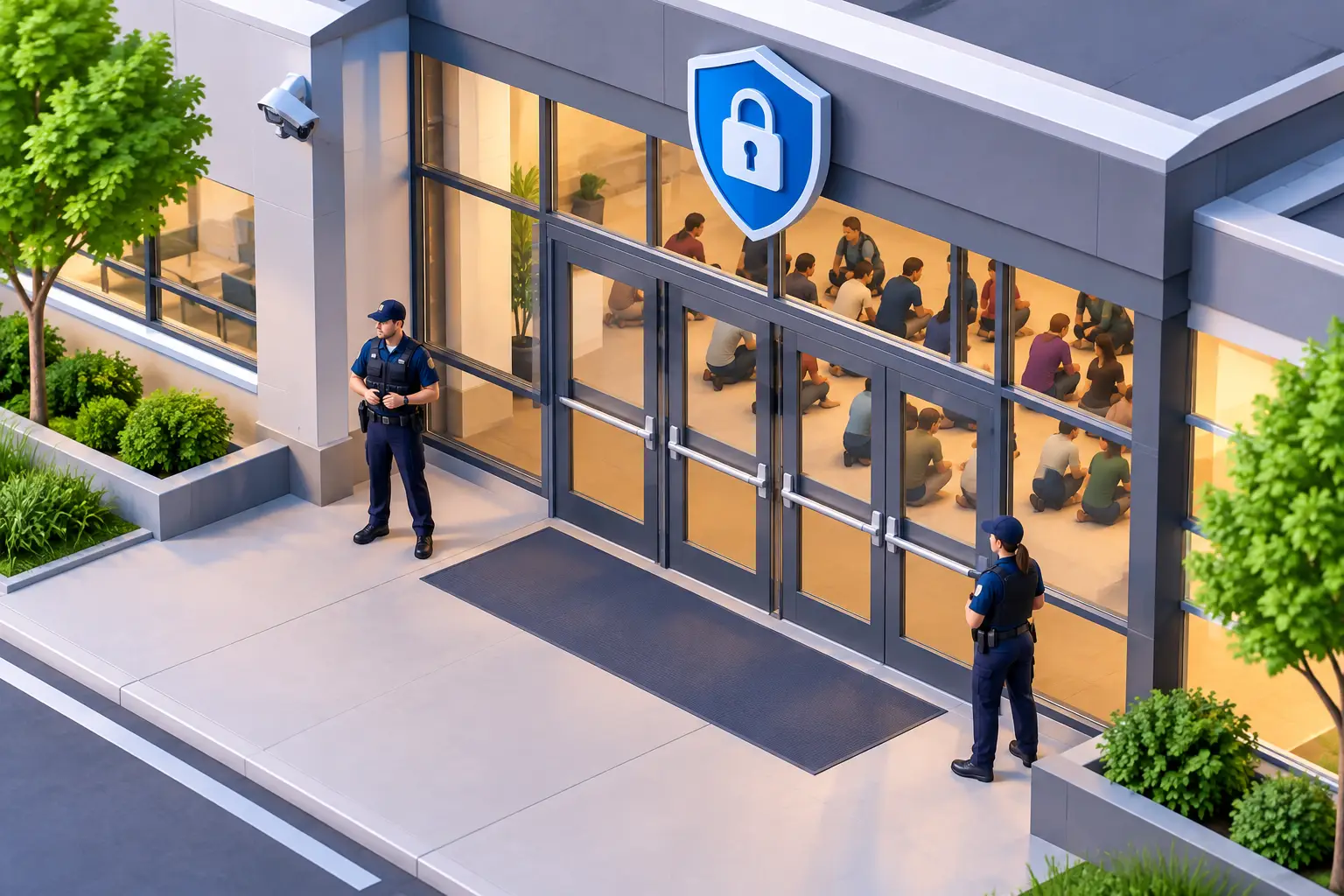
Venue Lockdown Procedures That Protect People
A crowded room can become a high-risk environment in seconds. Whether the trigger is an active threat, violent person, suspicious package, severe disturbance, or police direction, venue lockdown procedures give staff a disciplined way to protect people before confusion takes control.
For venue operators, event organizers, hospitality groups, and facilities managers, a lockdown plan should not sit untouched in a compliance folder. It must be practical enough for a duty manager to activate, clear enough for front-of-house staff to follow, and flexible enough to work across different operating conditions. A nightclub at peak capacity, a corporate office, a hotel lobby, and an outdoor concert require different responses, even when the core objective is the same: reduce exposure to danger and support emergency responders.
What a Venue Lockdown Is Designed to Do
A lockdown is the controlled restriction of movement within and around a site because an identified or suspected threat makes normal entry, exit, or public access unsafe. It is not simply closing the front door. A properly managed lockdown can involve securing internal areas, directing people away from exposed spaces, pausing admissions, accounting for staff, and maintaining communication with law enforcement or emergency services.
The correct response depends on the threat location and nature. If danger is inside a building, people may need to move away from it, evacuate through a safe route, or shelter in secured rooms. If the threat is outside, bringing people indoors and controlling access may be safer. This is why procedures must give staff decision-making principles rather than relying on one rigid instruction for every incident.
A well-designed plan also recognizes a hard truth: protecting life comes before protecting property, revenue, or the event schedule. Staff should never be expected to confront an armed or violent threat unless they are specifically trained, authorized, and equipped to do so.
Build Venue Lockdown Procedures Around Real Risks
Generic plans often fail at the point of use because they do not reflect the venue’s layout, staffing levels, clientele, or hours of operation. Start with a site-specific risk assessment. Consider public entrances, loading docks, parking areas, emergency exits, stairwells, elevators, backstage areas, cash rooms, kitchens, and any place where people could become trapped or exposed.
For hospitality venues, alcohol service, late-night crowds, and conflict at entry points may shape the response. At a concert or festival, crowd density, temporary fencing, multiple gates, and open public spaces require particular attention. Corporate sites may need to address visitor management, access cards, delivery personnel, and threats directed at a specific employee or executive.
Your plan should identify who has authority to initiate a lockdown. This may be the venue manager, security supervisor, event control lead, or another designated person. Authority needs to be clear, but the process should not create delay. If the designated lead is unavailable and there is an immediate threat, trained personnel must understand when they can act to protect life.
Define the Trigger and the Initial Action
Staff need plain-language triggers. Examples may include a credible report of a weapon, an active assault, an unattended item with concerning indicators, an external threat nearby, or instructions from police. Avoid vague language such as “activate lockdown if needed.” Under pressure, people need to know what “needed” looks like.
The initial action should be equally clear: notify emergency services, alert the responsible on-site lead, secure or avoid affected areas, and communicate a simple instruction to staff and guests. The message may be “lockdown in effect, move away from the main entrance and follow staff directions.” Do not share unverified details that could create panic or compromise police operations.
Assign Roles Before the Incident
A lockdown response works best when every person understands their role before an emergency occurs. Security personnel may control access points, monitor surveillance, establish a safe perimeter where possible, and relay information to responders. Managers can make operational decisions, maintain an incident log, and communicate with owners or corporate leadership.
Front-of-house teams have a different responsibility. They may guide guests to safer areas, stop admissions, keep exits clear when evacuation is required, and avoid opening secured doors to unknown people. Back-of-house teams must know how to secure kitchens, stockrooms, offices, staff entrances, and service corridors.
For larger venues, establish an incident command structure. One person should coordinate the response, while others manage communications, guest movement, access control, and liaison with emergency services. This reduces duplicate instructions and prevents well-intentioned staff from working at cross-purposes.
Contract security should be included in the same briefing and exercise program as venue employees. A security team cannot operate effectively if it does not know the venue’s floor plan, alarm systems, emergency exits, staff-only areas, or management escalation process. Likewise, venue staff need to understand the security team’s commands and reporting channels.
Control Access Without Creating New Hazards
Securing doors is a central part of a lockdown, but it is not the only consideration. Fire exits, emergency egress routes, and accessibility requirements still matter. Doors should never be blocked in a way that prevents people from escaping an immediate danger, and staff should not lock themselves into an area that could become unsafe.
Access control should focus on preventing unauthorized entry into protected spaces while preserving safe options for occupants. Depending on the venue, this may involve locking electronic access doors, positioning trained security at key points, closing gates, stopping elevators at a secure level, or moving people away from glass-fronted entrances.
Visibility is another trade-off. In some incidents, keeping guests out of sight from an external threat is appropriate. In others, moving people into a confined area may increase risk. Site plans should identify safer rooms and alternate routes, but staff must be prepared to adapt based on what they can see, hear, and verify at the time.
Make Communication Short, Reliable, and Redundant
A lockdown can fail when instructions are delayed, inconsistent, or impossible to hear over a busy venue. Use more than one communication method. Radios are useful for security and management, while public-address systems, staff messaging platforms, alarms, and direct verbal instructions can reach different groups.
Prewritten messages remove pressure from the person making the announcement. Keep them calm and direct. State the action required, not a long explanation. For example: “Attention staff and guests: a security lockdown is in effect. Please remain calm, move to the nearest safe area, and follow staff instructions.”
Staff should know that emergency calls require precise information: venue name, exact address, nature of the threat, location within the site, injuries, descriptions of involved people, and the safest responder entry point. Assign someone to meet emergency services only when doing so is safe and directed by the incident lead.
Train for Judgment, Not Just Compliance
A printed procedure is only the starting point. Staff need briefings, scenario training, and drills that reflect the venue’s actual operations. Drills should include day and night conditions, high-occupancy periods, staff shortages, and situations where the primary entrance or control room is unavailable.
Training does not need to be theatrical to be effective. A tabletop exercise can expose unclear responsibilities. A walk-through can reveal that a supposedly secure room has no working lock, poor radio coverage, or no safe way to communicate. A live drill may show that temporary workers do not recognize the alarm or that a manager has no current staff contact list.
After every exercise or real incident, conduct a short review. Ask what information was missing, where people hesitated, which doors or systems failed, and whether guest instructions were understood. Update the plan, document corrective actions, and retrain staff where needed. This is how a procedure becomes dependable rather than merely documented.
Plan for the Moment After Lockdown
Lockdown does not end simply because the immediate threat appears to have passed. Only law enforcement or the designated incident commander should authorize reopening, evacuation, or a return to normal operations. Prematurely reopening doors can expose people to a continuing threat or interfere with an active investigation.
The recovery phase may include medical assistance, welfare checks, staff accountability, preservation of CCTV footage, incident reporting, witness management, and communication with families, clients, or media. For a business, there may also be operational decisions around reopening, refunding guests, rescheduling an event, or arranging additional security coverage.
The strongest venue lockdown procedures are calm, site-specific, and practiced. When people know who leads, where to move, how to communicate, and when to wait for direction, a venue is better positioned to protect its guests, staff, reputation, and continuity when every second matters.