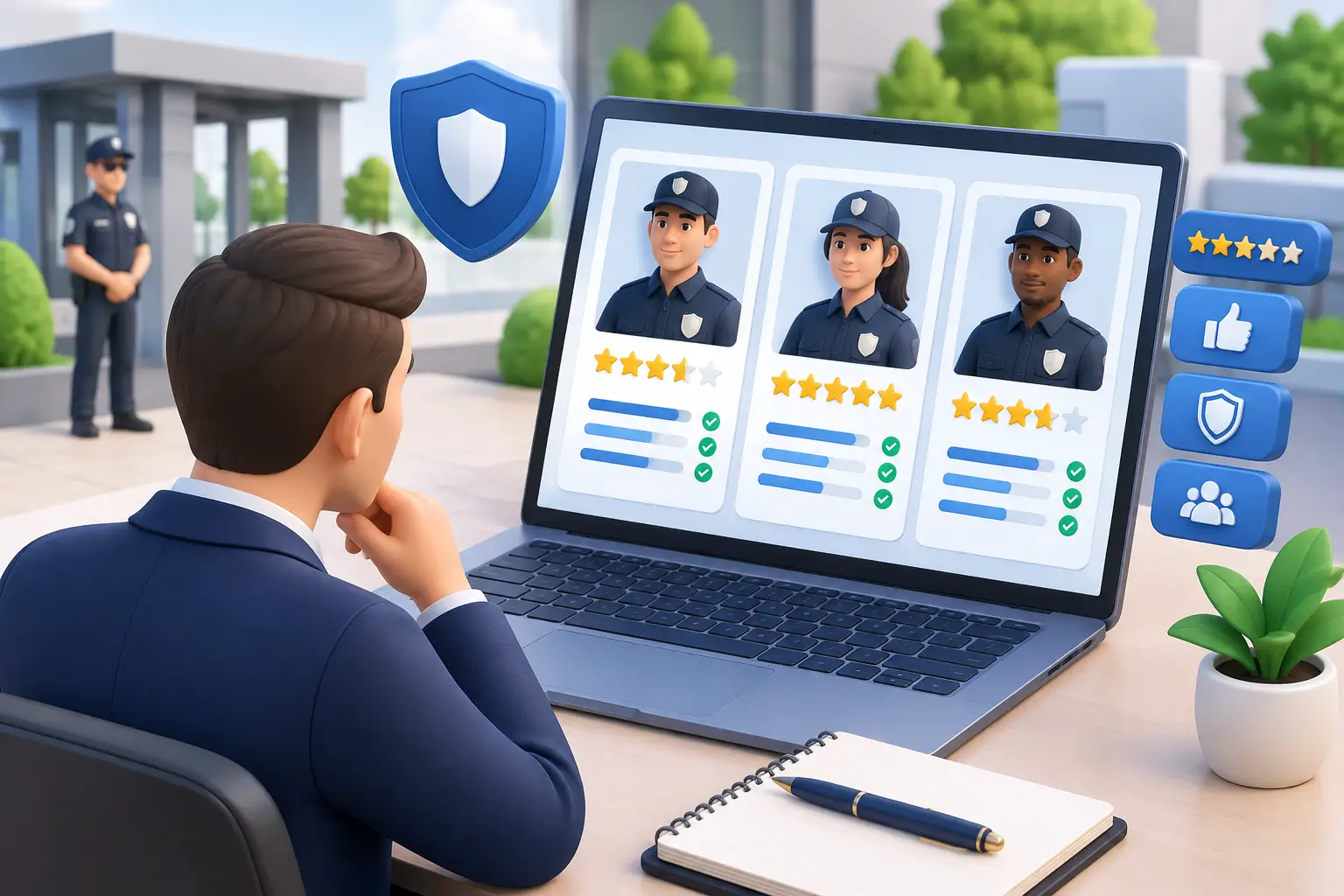
How to Read Guard Service Ratings Before You Hire
A low price can look attractive on a security quote until a guard arrives late, lacks site knowledge, or cannot respond appropriately when an incident occurs. Guard service ratings can help separate dependable providers from suppliers that only appear capable on paper. The key is knowing what a rating actually reflects and what it leaves out.
For property managers, venue operators, event organizers, and corporate teams, security is not a standard commodity. The right provider protects people, assets, operations, and reputation. A rating is one useful signal, but it should support a disciplined hiring decision rather than replace one.
What Guard Service Ratings Can Tell You
Ratings generally reflect a customer’s overall experience with a security provider. Positive feedback may point to professional conduct, punctual coverage, clear communication, visible presence, and a team that follows instructions. Repeated comments about these areas are more valuable than a vague five-star score.
Read the written feedback closely. A review that says guards were “great” offers less insight than one that explains how the provider managed access control, handled an aggressive patron, maintained incident logs, or accommodated a last-minute staffing change. Specificity is evidence. It shows the reviewer had a real operational experience to assess.
Patterns matter more than isolated complaints. Even well-run providers can encounter a service issue, especially during complex events or rapidly changing site conditions. The concern is a repeated pattern of late arrivals, unprofessional behavior, poor communication, unexpected guard substitutions, or invoices that do not match the agreed scope.
Also consider the type of work behind the reviews. A provider with excellent ratings for a small retail site may still need to demonstrate relevant experience before taking on a concert, nightlife venue, executive protection assignment, construction site, or multi-location corporate contract. Security requirements are shaped by risk, foot traffic, operating hours, alcohol service, public access, and emergency procedures.
How to Compare Guard Service Ratings Fairly
Start by checking whether the feedback is recent. Security operations change with leadership, staffing levels, training programs, and local demand. Reviews from several years ago may show a company’s history, but recent feedback is a better indicator of its current delivery standards.
Next, look at volume alongside the average score. A perfect rating based on a handful of reviews can be encouraging, but it does not carry the same weight as consistently strong feedback from a broad customer base. On the other hand, a provider with many reviews may have served more complex clients and a wider range of sites, which naturally creates more varied feedback.
Pay attention to how the company responds to criticism. A professional response does not need to disclose operational details, but it should show accountability. Look for a calm, factual approach that acknowledges concerns, invites direct follow-up, and demonstrates a commitment to improvement. Defensive or dismissive replies can be a warning sign, particularly when the complaint involves safety, conduct, or billing.
Finally, identify whether reviewers describe outcomes that matter to your operation. For a hospitality venue, that may mean respectful door management and effective de-escalation. For a commercial property, it may mean reliable patrols, visitor screening, and detailed reporting. For an event, it may mean orderly entry, crowd flow, emergency coordination, and a visible but customer-conscious security presence.
Ratings Should Never Replace Due Diligence
A rating cannot confirm that every guard assigned to your site is properly licensed, briefed, insured, and capable of performing the role. Those questions require direct verification before the contract begins.
Ask prospective providers how they recruit, vet, train, and supervise personnel. Request clarity on the process for matching guards to your environment. A close-protection assignment requires a different skill set from a lobby post, while crowd control at a large event demands experience with behavior management, access points, escalation pathways, and public safety protocols.
You should also confirm licensing requirements for the jurisdictions where work will be performed, along with insurance coverage and documentation. Providers that operate with disciplined systems should be comfortable explaining their compliance practices, reporting procedures, incident escalation process, and chain of responsibility.
For higher-risk operations, ask how the provider manages fatigue, shift handover, relief coverage, and emergency call-outs. These details rarely appear in public ratings, yet they often determine whether security coverage holds up when an event runs late, an employee calls out, or an incident requires immediate support.
Questions That Reveal Service Quality
During the evaluation process, ask for examples that relate directly to your site. The goal is not to catch a provider out. It is to determine whether they have a practical operating model and can communicate it clearly.
Useful questions include:
- How do you conduct a site assessment before assigning guards?
- What information is included in post orders and shift briefings?
- How are incidents documented, reported, and escalated to the client?
- What supervision is available after normal business hours?
- How do you replace an unavailable guard without disrupting coverage?
- What training and experience do you require for this type of assignment?
The answers should be concrete. Be cautious if a provider relies on broad assurances without explaining the people, procedures, and oversight behind them. Security is delivered in real time by people making judgment calls, so management visibility and clear communication matter as much as the number of guards on a roster.
Watch for Ratings That Do Not Tell the Full Story
Not every public review is reliable. Some feedback may relate to a misunderstanding, an issue outside the provider’s control, or a customer expectation that was never included in the agreed scope. Conversely, polished testimonials alone should not be treated as proof of operational capability.
A more balanced approach is to compare ratings with references, a written scope of work, and the provider’s willingness to tailor coverage. If the assignment is significant, speak with a current or former client whose operation resembles yours. Ask about consistency, reporting quality, guard presentation, responsiveness, and how the provider handled a difficult situation.
Price should be assessed in the same context. An unusually low hourly rate may indicate reduced supervision, limited training, inadequate relief capacity, or personnel who are not suited to the assignment. The least expensive quote can become the costliest option if it creates exposure to theft, injury, disorder, reputational damage, or interruption to business operations.
Build Ratings Into a Smarter Selection Process
The strongest hiring decisions use ratings as one part of a broader scorecard. Consider public feedback, relevant experience, licensing, insurance, staffing depth, reporting standards, responsiveness, and the provider’s understanding of your specific risk profile. Weight each category based on the consequences of failure at your location.
For example, a quiet office may prioritize professionalism, access control, and reliable reporting. A busy entertainment venue may place greater weight on crowd management, de-escalation, and late-night supervisory support. A high-profile event may require discreet personnel, coordinated entry procedures, and clear communication with event leadership. The best-rated company overall is not automatically the best fit for every assignment.
Broadsafe Group approaches security planning with this operational focus: aligning licensed personnel and site-specific procedures with the environment being protected. That is the standard worth looking for from any security partner – not simply a favorable score, but the ability to deliver accountable coverage when it matters.
Before signing a contract, take the time to test the evidence behind the rating. A provider that welcomes detailed questions, defines responsibilities clearly, and demonstrates control over its staffing and response processes is far more likely to protect your operation with the consistency your people and customers expect.