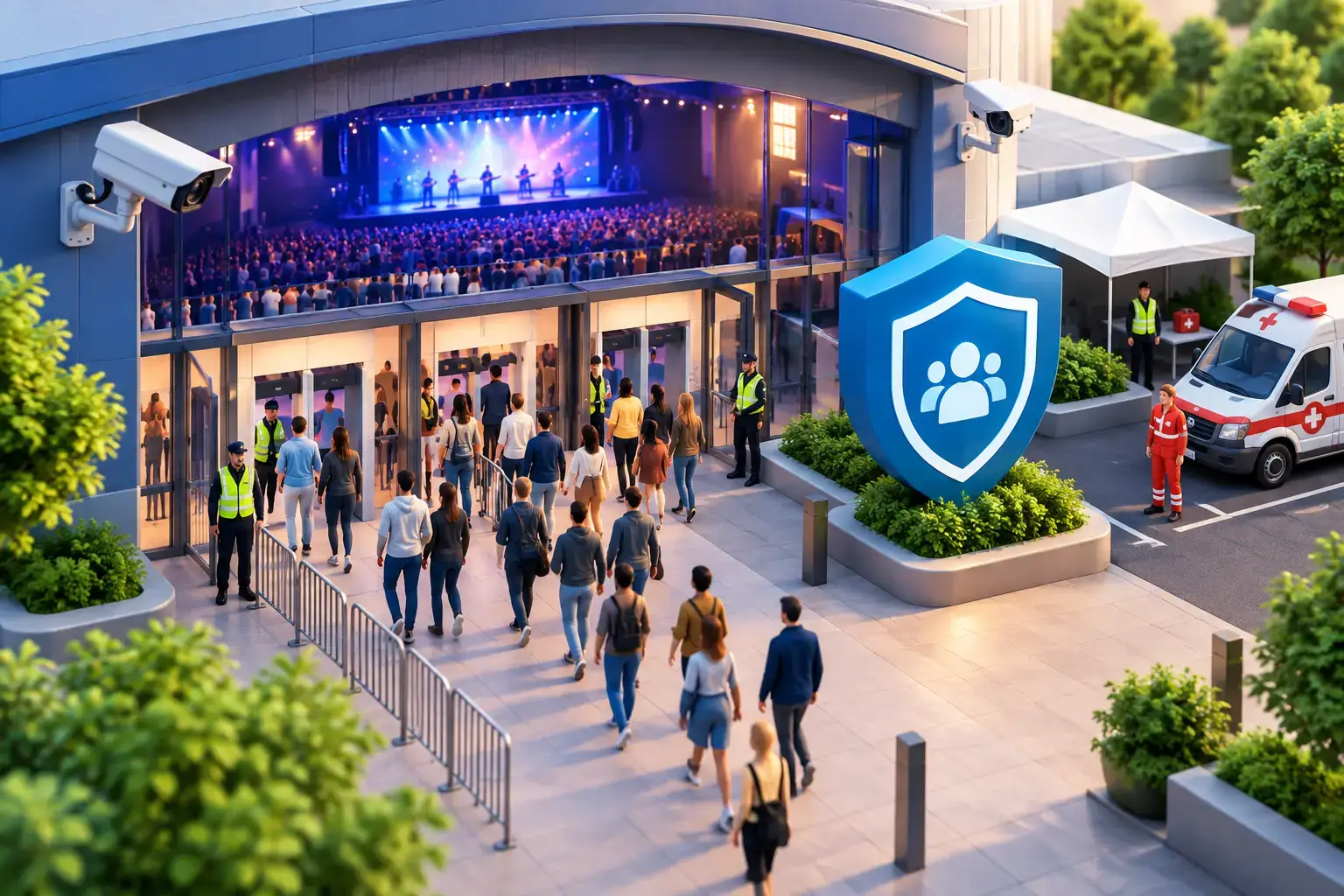
Venue Safety That Protects People and Reputation
A crowded entrance, a frustrated guest, a medical incident near the bar, or an unattended bag can change the tone of a venue in seconds. Venue safety is not simply about having a visible guard at the door. It is the coordinated work of protecting people, managing behavior, responding early to risk, and keeping operations moving without compromising the guest experience.
For venue operators, safety is also a business continuity issue. A poorly managed incident can affect staff confidence, customer trust, licensing obligations, insurance exposure, and the reputation built over years. The right security approach gives managers practical control over unpredictable environments.
What Effective Venue Safety Looks Like
Effective venue safety begins well before doors open. It considers the physical layout, the expected audience, crowd size, service hours, alcohol service, access points, nearby transport, emergency exits, and the type of event being held. A quiet corporate function needs a different approach from a late-night nightclub, a hotel lobby, a concert venue, or a high-profile private event.
The goal is not to make every visitor feel watched. It is to create an environment where people feel welcome, staff know who to call, and unacceptable behavior is identified before it becomes a larger problem. Professional security presence can be calm and customer-focused while still providing a clear deterrent.
A strong plan also recognizes that no two shifts are identical. Weather, event programming, public holidays, a headline performer, social media attention, or an unexpected increase in attendance can alter risk quickly. Security staffing and procedures must be able to adjust without confusion.
Start With a Site-Specific Risk Assessment
Generic security coverage often leaves important gaps. A site-specific assessment identifies how people enter, move through, and leave the venue, then considers what could interrupt that flow or place people at risk.
Managers should examine entry and exit points, blind spots, cash-handling areas, loading docks, restrooms, parking areas, elevators, stairwells, and emergency routes. They should also consider where lines may form, where conflicts are most likely to arise, and whether staff can summon help quickly.
Risk assessment is not a one-time document filed away after opening day. It should be reviewed when the venue changes its layout, hosts a different type of event, extends trading hours, introduces new technology, or experiences an incident. Lessons from minor disruptions can prevent serious failures later.
For example, a venue that regularly sees congestion at bag check may need more than an additional screening point. It may need clearer guest communication, barriers that preserve emergency access, revised queue management, and staff positioned to spot agitation before it turns into confrontation.
Put the Right People in the Right Positions
Security coverage is most effective when personnel are deployed with a clear purpose. Door staff may manage access, identification checks, dress requirements, refusals, and initial guest interactions. Floor security can monitor crowd behavior, support staff, identify hazards, and respond to emerging concerns. Mobile patrols may be more appropriate for large sites with multiple entrances, parking facilities, or separated event spaces.
The quality of personnel matters as much as headcount. Licensed, properly trained officers bring judgment, communication skills, and the ability to remain composed under pressure. They understand that a firm response does not need to be provocative and that respectful communication often resolves issues before physical intervention is required.
There is a trade-off to consider. Understaffing may reduce immediate costs but can leave employees isolated, slow response times, and poor visibility in critical areas. Overstaffing without a defined deployment plan can be equally inefficient. The right level depends on the venue’s risk profile, attendance, schedule, layout, and operational requirements.
Make Communication Part of the Security Plan
A venue can have capable security officers and still struggle if communication is inconsistent. Front-of-house teams, bartenders, supervisors, event organizers, facilities staff, and security personnel need a shared understanding of how to raise concerns and who makes decisions during an incident.
Clear communication channels help staff report issues such as intoxication, harassment, a spill creating a slip hazard, a guest in distress, suspicious behavior, or an access-control failure. Staff should not have to guess whether a concern is “serious enough” to report. Early reporting gives security teams more options and reduces the likelihood of escalation.
Briefings before each shift or event are especially valuable. They can confirm expected attendance, special guests, known risks, staff roles, emergency procedures, radio protocols, and any changes to the venue layout. A short, disciplined briefing can prevent confusion when the pressure rises.
Guest communication matters too. Visible signage, clearly marked exits, published entry conditions, and calm explanations at access points establish expectations early. When people understand the rules before a problem occurs, enforcement is more likely to be accepted.
Prepare for Incidents Without Creating Panic
Every venue should have practical procedures for common incidents. These may include medical emergencies, aggressive behavior, intoxication, fire alarms, evacuations, lost children, property theft, unauthorized access, and severe weather. The best procedures are clear enough to use under stress and tailored to the people who will actually carry them out.
Response plans should establish who contacts emergency services, who controls access, who communicates with guests, who protects evidence where relevant, and who documents what happened. In a serious incident, these responsibilities cannot be improvised.
De-escalation should sit at the center of incident response. A trained officer can use positioning, tone, active listening, and clear boundaries to reduce tension. However, de-escalation is not a promise that every situation can be resolved verbally. When there is an immediate threat to people, security personnel must act within their training, authority, and local legal requirements to protect those present.
Post-incident reporting is equally important. Accurate records help venue management understand what happened, identify patterns, support insurance or legal processes, and improve future procedures. Reports should be factual, timely, and free from assumptions.
Technology Supports People, Not the Other Way Around
Cameras, access-control systems, alarms, visitor logs, and two-way communications can strengthen venue operations. They improve visibility, provide evidence, and help managers monitor large or complex environments. Yet technology only works when it is maintained, properly positioned, and supported by trained staff who know how to use it.
A camera pointed at an entryway does not replace an officer who can recognize distress, give directions, or intervene early. Similarly, access control can limit unauthorized entry, but credentials must be managed carefully and doors must not obstruct emergency egress.
The most reliable approach combines physical security, trained personnel, clear procedures, and appropriate technology. This is particularly valuable for venues with multiple operating areas, VIP guests, high-value assets, or variable event schedules.
Protect Staff as Well as Guests
Venue teams are often expected to handle difficult interactions while maintaining excellent service. That makes staff safety a critical part of the overall plan. Employees need confidence that security will respond quickly when a guest becomes abusive, refuses to leave, or threatens others.
Training can help employees recognize warning signs, avoid unnecessary confrontation, preserve personal space, and report concerns promptly. It should also make clear that staff are not expected to manage violent or high-risk situations alone.
Security personnel should work as an extension of venue operations, not as a separate function that appears only when something goes wrong. When guards know the site, understand the service standards, and build rapport with staff, they can prevent issues earlier and respond with greater precision.
Choose Accountability Over a Basic Guard Presence
A security provider should offer more than people in uniform. Venue operators need a partner that can assess risks, recommend suitable coverage, provide appropriately licensed personnel, communicate clearly, and adapt to changing requirements.
Ask how the provider supervises staff, handles incident reporting, verifies licensing, manages shift coverage, and supports escalation. Credentials, insurance, and alignment with recognized quality and occupational health and safety standards are practical indicators of accountability, but they should be supported by consistent on-site performance.
Broadsafe Group approaches venue security as an operational responsibility: matching trained personnel and tailored procedures to the real conditions of each site. Whether coverage is needed for a hospitality venue, corporate location, live event, or high-profile gathering, the focus should remain on prevention, professional conduct, and dependable response.
A safe venue is not one where incidents never occur. It is one where people know their role, risks are addressed early, and the response is controlled when the unexpected happens. That level of preparation protects more than a single shift – it protects the confidence people place in your business.