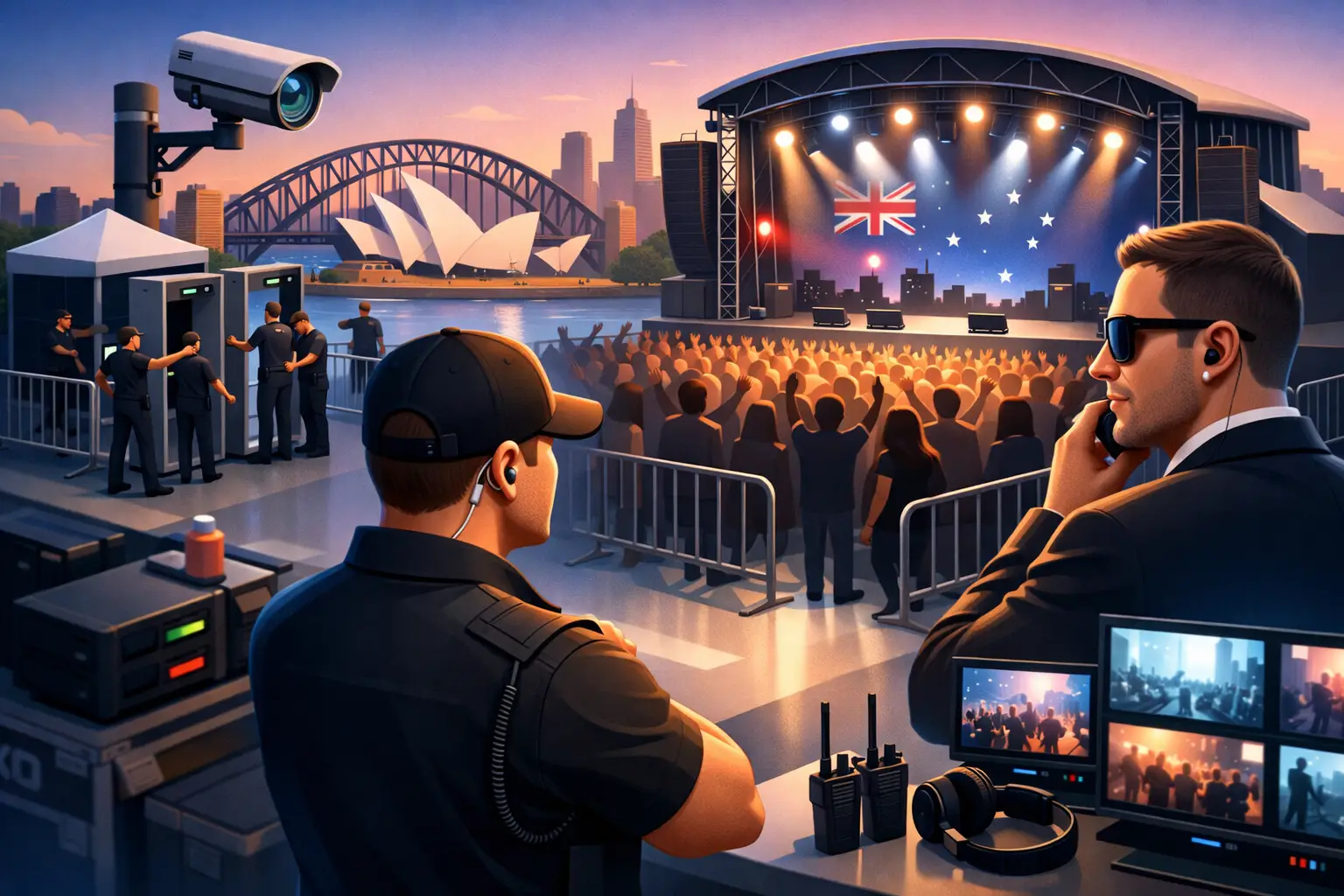
Australian Concert and Event Security
A sold-out show can shift from orderly to unstable in minutes. One gate delay, one overcrowded bar line, one aggressive patron, or one poorly managed VIP arrival can put pressure on the entire venue. That is why australian concert and event security is not a box-ticking exercise. It is an operational function that protects people, supports compliance, and keeps the event moving without unnecessary disruption.
For venue operators, promoters, and operations teams, the real question is not whether security is needed. It is whether the security plan matches the event’s actual risk profile. A low-capacity corporate function, a multi-stage music festival, and a late-night hospitality event each require different staffing models, entry procedures, escalation paths, and communication protocols. Strong security is built around those differences, not forced into a generic guard roster.
What australian concert and event security actually covers
Effective event security starts well before doors open. It includes risk assessment, site familiarization, access control planning, crowd management strategy, incident response preparation, and coordination with venue management and event stakeholders. On event day, it extends to bag checks, patron screening, ticketing support points, perimeter monitoring, stage-front control, back-of-house protection, and safe crowd movement across entry, exit, and high-traffic zones.
That scope matters because live events create layered risks. Some are obvious, such as intoxication, disorderly conduct, trespassing, or attempted gate rushing. Others are less visible but just as serious, including bottlenecks at egress points, miscommunication between teams, unsecured restricted areas, or a delayed response to a medical or behavioral incident. A capable security team is expected to anticipate these pressure points instead of reacting after they have already affected safety or operations.
For many clients, security also plays a brand protection role. Guests may not remember every operational detail of an event, but they will remember whether they felt safe, whether queues were controlled, and whether staff handled tense situations professionally. Security presence should be visible enough to deter problems while remaining calm, disciplined, and respectful toward patrons.
Why planning matters more than headcount
A common mistake in event planning is treating security as a numbers issue alone. More guards do not automatically mean better coverage. What matters is placement, briefing quality, supervisor oversight, and the alignment between staffing and venue dynamics.
A front gate with inexperienced screening personnel can create delays that frustrate attendees and increase tension before entry. A stage barrier without trained crowd control staff can expose performers, crew, and patrons to avoidable risk. A VIP zone without controlled access can quickly become a reputational issue. In each case, the weakness is not simply a lack of personnel. It is the wrong deployment model.
Professional security planning looks closely at attendance forecasts, venue layout, alcohol service, artist profile, event schedule, emergency exits, and nearby environmental factors. It also considers how the event is likely to change over time. Crowd behavior at 6 p.m. is rarely the same as crowd behavior at 10:30 p.m. Security operations should account for that shift, with clear command structure and the ability to reposition resources if conditions change.
Crowd control is where experience shows
Concerts and public events are dynamic environments. Noise levels are high, lighting conditions can be inconsistent, and decision-making windows are short. Crowd control in this setting is not about confrontation. It is about presence, positioning, communication, and timing.
Experienced personnel know how to identify early signs of crowd compression, agitation, or line breakdown before those issues escalate. They understand how to manage patron expectations at checkpoints, how to maintain clear access routes, and how to support a safe atmosphere without creating unnecessary friction. This is especially important in venues where alcohol service, celebrity appearances, or limited-capacity areas can heighten crowd sensitivity.
It also requires judgment. A heavily visible posture can be appropriate at high-risk entry points or after a disturbance, but the same approach may feel excessive at a corporate entertainment event or family-friendly public gathering. Good security teams adjust their presence to the environment while maintaining control of the site.
High-risk zones deserve special attention
Not every area of an event carries the same exposure. Entry gates, exits, bars, stage-front barriers, loading areas, artist access points, and temporary credential checkpoints tend to attract the most pressure. These zones need clearly assigned staff, direct radio communication, and supervisors who can make fast decisions.
Back-of-house protection is often underestimated. Credential misuse, unauthorized access, equipment interference, and privacy breaches can all begin behind the scenes. For events with performers, public figures, or executive guests, access discipline is essential. A polite but firm security presence protects both safety and confidentiality.
The value of licensed, insured, standards-aligned security
For procurement teams and venue operators, credentials are not a marketing extra. They are part of risk control. Licensed personnel, strong insurance coverage, and alignment with recognized management standards indicate that a provider takes accountability seriously.
That does not mean credentials alone guarantee performance. They should be viewed as a baseline, not the finish line. The real value comes when those foundations are matched by proper supervision, site-specific briefing, incident documentation, and consistent service delivery. Clients need a provider that can operate professionally under pressure, not simply one that can fill shifts.
This is where disciplined security partners stand apart. They understand reporting lines, maintain operational consistency, and support clients with tailored coverage rather than generic assumptions. For organizations running recurring events or managing multiple venues, that consistency becomes even more important over time.
Choosing the right provider for concert and event work
Not every security company is built for live events. Static guarding experience, while valuable, does not always translate into effective event operations. Concert and event environments require a different pace, stronger crowd engagement skills, and tighter coordination with promoters, venue teams, and hospitality staff.
When assessing a provider, clients should look at more than availability and price. The better questions are practical. How does the provider brief staff for each site? Who supervises the team during peak periods? How are incidents recorded and escalated? Can the provider scale for larger attendance or high-profile guests? How quickly can they adapt if an event schedule changes or risk conditions shift on the day?
It is also worth looking at presentation and professionalism. Security officers are part of the guest-facing environment. Their conduct affects patron experience, staff confidence, and the reputation of the venue or event organizer. Calm communication, controlled responses, and a disciplined appearance all matter.
For businesses that need both physical coverage and broader operational support, there can be added value in working with a partner that understands service delivery at an enterprise level. Broadsafe Group reflects that model by combining licensed security capability with a wider operational mindset shaped by accountability, responsiveness, and standards-driven delivery.
Security should support the event, not overshadow it
The best event security is often noticed in subtle ways. Entry moves efficiently. Restricted areas stay restricted. Staff know who to call. Small issues are resolved before they become major disruptions. Guests feel safe without feeling managed at every step.
That balance takes planning, experience, and the right personnel on the ground. It also takes an understanding that every event has its own rhythm, audience profile, and operational pressure points. A one-size-fits-all approach may look efficient on paper, but it often creates gaps where they matter most.
Australian concert and event security works best when it is tailored, licensed, and professionally led. For venues, promoters, and operations teams, that means choosing a provider that can protect people, preserve order, and support the event’s success from first entry to final exit.
When the crowd is building, schedules are tight, and reputation is on the line, dependable security is not just there to respond when something goes wrong. It is there to help the entire event run the way it should.