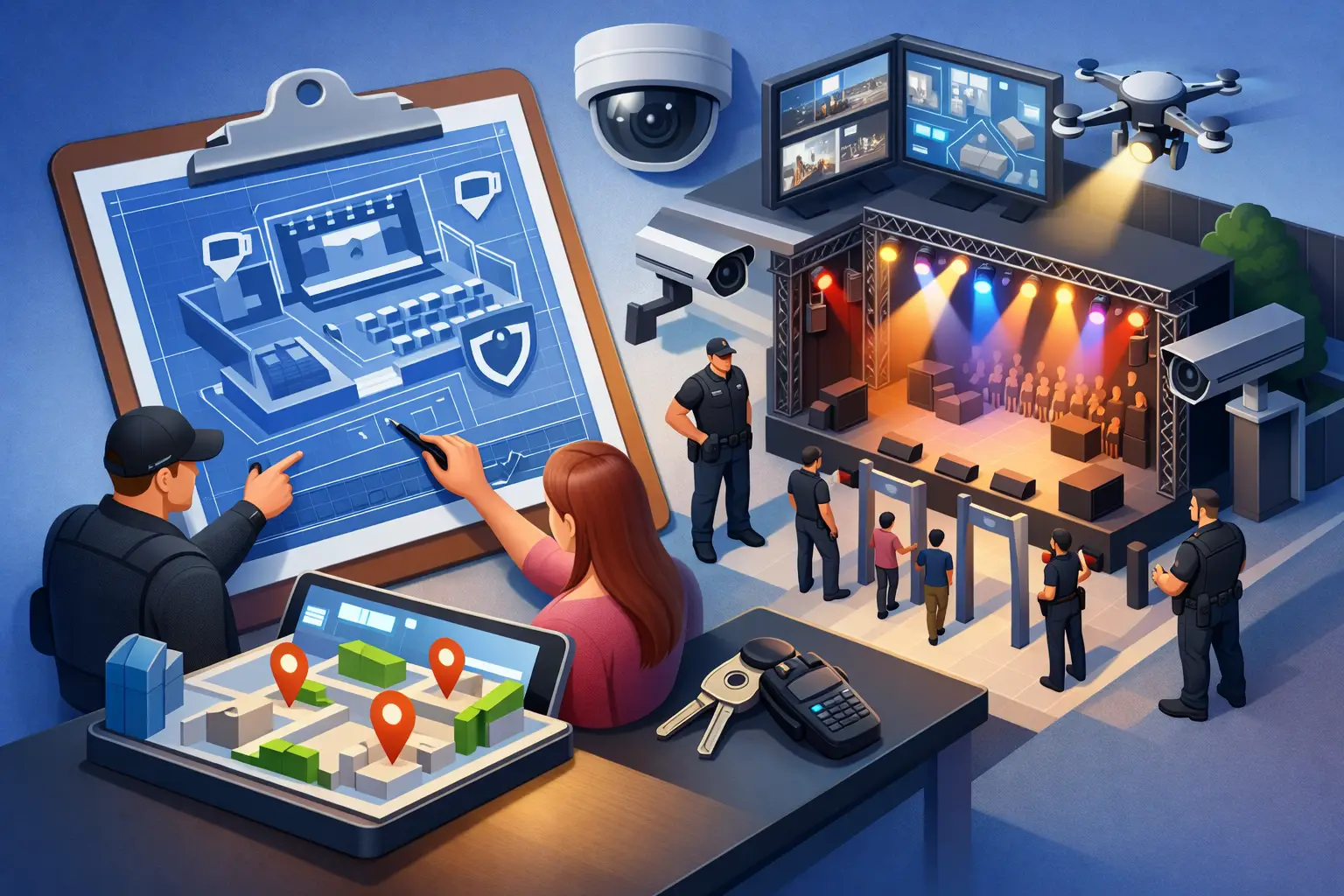
Best Security for Live Venues Starts With Planning
A sold-out room can change character in minutes. A delayed headline act, a medical emergency near the stage, an unplanned queue at the entry, or an intoxicated guest can place pressure on staff and affect everyone’s experience. The best security for live venues is not simply a visible guard presence. It is a planned, licensed, and well-led operation that protects patrons, performers, staff, property, and the venue’s reputation at the same time.
For venue operators and event organizers, security should support the show rather than overshadow it. Guests need to feel welcome, performers need controlled access, and management needs confidence that the team can respond calmly if conditions change. That outcome depends on the right people, clear procedures, and a security plan built around the realities of the specific venue.
What the Best Security for Live Venues Looks Like
There is no universal staffing model for every concert, club night, theater performance, or festival. A 300-person comedy venue has different risks from a large outdoor music event, and a corporate awards night calls for a different approach than a late-night hospitality venue. The right security program begins with a practical risk assessment, not a standard roster copied from the last event.
A capable provider considers the audience profile, expected attendance, venue layout, entry points, alcohol service, performer requirements, public transport access, neighboring businesses, and local licensing obligations. They also consider what can happen after the event, when guests leave at once, rideshare traffic builds, and staff are finalizing cash-up or securing equipment.
Security should be visible where deterrence is needed and discreet where guest experience matters most. At the front door, a professional presence sets expectations before a problem begins. Near the stage, backstage, loading dock, and cash-handling areas, teams need sharper access control and clear authority. The objective is not to make a venue feel restrictive. It is to create order without adding friction for legitimate guests, crew, and staff.
Start With a Venue-Specific Security Plan
The strongest event security plans are written for the event in front of you. Before doors open, venue management and the security lead should agree on attendance forecasts, staffing positions, communication channels, emergency roles, escalation procedures, and the people authorized to make operational decisions.
This planning stage should identify high-pressure points. Entry queues, ticket scanning areas, bag-check locations, bars, bathrooms, smoking areas, merchandise lines, and exits all deserve attention. A congestion point that seems minor during setup can become a safety issue once guests arrive.
Define roles before doors open
Every team member should know their post, reporting line, break arrangements, and response responsibilities. Door staff may be responsible for admission standards and early behavior intervention, while floor staff monitor crowd movement, welfare concerns, and restricted access. A supervisor should remain available to coordinate incidents and communicate directly with venue management.
Clear roles reduce contradictory instructions. They also prevent a common failure point: too many people responding to one incident while another area is left unattended.
Plan for the whole event lifecycle
Security coverage should not start at the first guest arrival or end when the performer leaves the stage. Load-in periods can involve valuable equipment, contractors, and open access points. Pre-event checks help secure staff-only areas, emergency exits, barriers, and communications equipment before the public enters.
At closing, security teams may need to manage staggered departures, protect staff as they leave, monitor parking areas, and help maintain a calm transition outside the venue. For some sites, post-event static guarding is appropriate while equipment remains onsite or crews complete pack-down.
Crowd Control Is More Than Managing Capacity
Crowd control is often associated with breaking up confrontations, but its most effective form is preventative. Experienced personnel watch for changes in crowd density, agitation, intoxication, blocked pathways, and behavior that could escalate. Early, respectful intervention can resolve a concern before it affects other guests or requires removal.
Placement matters. A team standing in the wrong location may miss an emerging problem, while an appropriately positioned officer can improve visibility and guide crowd flow without confrontation. Security should have clear sightlines to entrances, exits, stage-front areas, and spaces where guests may become isolated or vulnerable.
Capacity management also requires discipline. The venue’s approved occupancy limit is not a flexible commercial target. Door counts must be accurate, staff must understand when to pause entry, and exits must remain clear throughout the event. Where a venue uses multiple rooms or zones, each area may require separate monitoring rather than relying on a single building-wide number.
Control Access Without Slowing the Guest Experience
Live venues often have several categories of people moving through the site: ticket holders, artists, touring crew, venue staff, contractors, vendors, media, VIP guests, and delivery personnel. Treating all access as identical creates delays and makes unauthorized movement easier.
A practical access-control system separates public, staff, performer, and operational areas. Credentials should be simple to recognize, consistently checked, and limited to the level of access required. Backstage access deserves particular care because it can involve artist welfare, valuable equipment, confidential schedules, and heightened privacy expectations.
For VIP or high-profile appearances, a dedicated protection plan may be required. This can include secure arrival and departure routes, designated waiting areas, controlled guest lists, and close coordination between venue management, event organizers, and personal protection personnel. The level of coverage should match the actual risk profile, not the perceived status of the guest.
Choose Licensed People With the Right Temperament
A security uniform alone does not make an event safer. Live venue work calls for licensed personnel who can communicate clearly, read situations accurately, and remain composed when guests are upset or conditions become unpredictable.
The best teams combine authority with service. They understand that a guest who has been denied entry, asked to leave, or redirected from a restricted area may be frustrated. Firm boundaries are necessary, but calm language and professional conduct can reduce the chance of escalation.
Venue operators should look beyond headcount when choosing a provider. Ask how personnel are selected for crowd-facing roles, how supervisors are deployed, how incident reporting is handled, and how the company manages last-minute staffing changes. Insurance coverage, documented procedures, and alignment with recognized quality and occupational health and safety standards also provide useful indicators of operational accountability.
Broadsafe Group approaches venue security with licensed personnel, tailored deployment planning, and a disciplined focus on protecting people, premises, and business continuity. That is particularly valuable when an event requires a mix of door supervision, crowd control, backstage protection, and static coverage.
Communication Determines the Response
Even a highly experienced team can be undermined by poor communication. Security staff, venue managers, bar teams, production crew, first aid personnel, and event organizers need an agreed method for reporting issues quickly and accurately.
Radios can be effective, but only if the team uses clear language and avoids unnecessary traffic. Staff should know the location names used on site, the process for requesting assistance, and who takes control of a serious incident. A security supervisor should provide management with timely updates so decisions are made with facts rather than assumptions.
Incident reporting matters after the immediate issue is resolved. Accurate records can support follow-up with staff, insurers, authorities, or future event planning. They also help identify recurring risks, such as a poorly lit exit, a frequently disputed entry rule, or a bar area that becomes overcrowded at a predictable time.
Prepare for Emergencies Without Creating Alarm
A credible live venue security plan accounts for medical incidents, fire alarms, severe weather, aggressive behavior, lost persons, suspicious items, and evacuation. The goal is not to expect the worst at every event. It is to make sure people know what to do if the unexpected occurs.
Emergency procedures must be realistic for the venue. Staff need to understand available exits, assembly areas, emergency equipment locations, and the chain of command. Security should coordinate with venue leadership rather than act in isolation, especially when decisions may affect audience movement or the continuation of a performance.
Training and pre-event briefings create confidence. When staff have already discussed likely scenarios, they are less likely to freeze, overreact, or work at cross-purposes during an incident. Guests may never see this preparation, but they will feel its effect in a calmer, more controlled response.
Measure Security by More Than Incidents
A quiet event does not necessarily mean the security plan was excessive. Often, it means the team prevented issues through good positioning, visible professionalism, and early communication. Equally, a high number of removals does not automatically prove effective control. It may signal inconsistent entry screening, insufficient staffing, or poor crowd-management practices earlier in the night.
After each event, review what worked. Look at entry times, queue patterns, incident types, staff feedback, communication gaps, and any areas where guests or employees felt unsafe. Small operational improvements can make the next event safer and easier to manage.
The right security partner gives venue leaders more than coverage on a roster. It gives them the confidence to host ambitious events, welcome guests professionally, and make sound decisions when pressure rises.