Event Security vs Crowd Control Explained
A sold-out concert can look calm right up until the wrong pressure point appears – a bottleneck at entry, an agitated guest near the bar, or a surge toward the stage after a headline act starts. That is where the difference between event security vs crowd control stops being a wording issue and becomes an operational one. For venue operators and event organizers, understanding that difference helps shape staffing, reduce risk, and protect both patrons and reputation.
What event security vs crowd control actually means
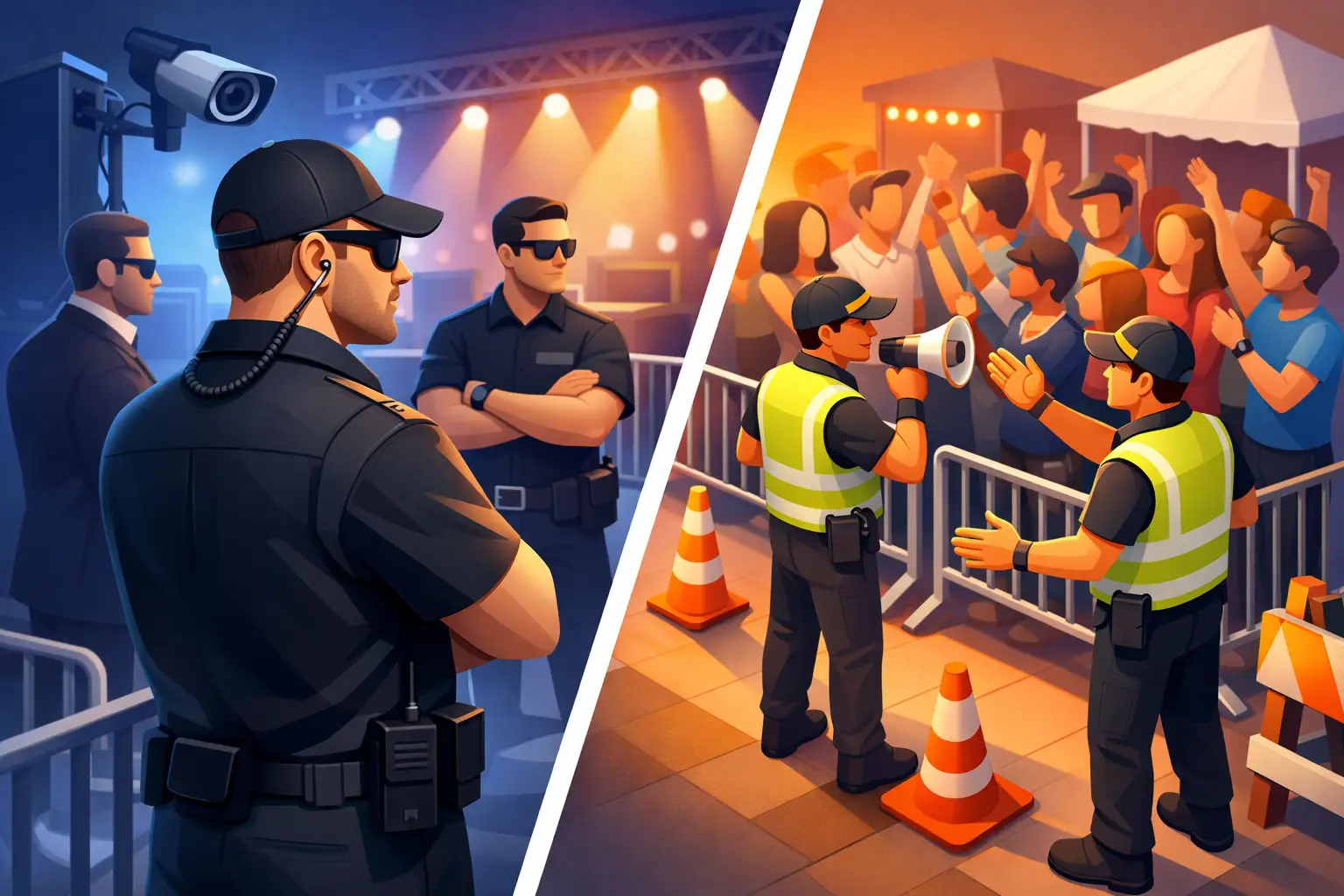
Event security is the broader protective function. It covers the people, procedures, and response capability used to prevent incidents, enforce site rules, manage threats, and support safe event operations from setup to pack-down. That can include bag checks, access control, VIP protection, perimeter monitoring, incident response, asset protection, and coordination with venue management or emergency services.
Crowd control is more specific. It focuses on how people move, gather, queue, enter, exit, and behave within a space. The goal is to keep crowd density manageable, prevent congestion, reduce flashpoints, and maintain order without escalating tension. In practical terms, crowd control is often one part of a larger event security plan.
That distinction matters because many events need both, but not always in the same proportion. A corporate conference with restricted areas may lean more heavily on security protocols and access management. A music festival with multiple stages and alcohol service may require far more active crowd movement management across the day.
Event security is about risk, authority, and response
When clients ask for event security, they are usually asking for licensed personnel who can help protect the event as a whole. That means more than standing at an entrance. It means assessing vulnerabilities, assigning coverage based on event profile, monitoring behavior, controlling who gets access to restricted areas, and responding decisively when something goes wrong.
The security function is tied to accountability. A professional team works within clear post orders, escalation procedures, and reporting lines. For organizers, that provides more than visible presence. It creates structure around duty of care, documentation, and incident handling.
This is especially relevant for events with higher exposure, such as celebrity appearances, corporate functions, nightlife venues, major public gatherings, or any site with cash handling, alcohol, valuable equipment, or invited guests. In these environments, the job is not only to keep people moving smoothly. It is to deter misconduct, identify risk early, and intervene lawfully and professionally when required.
Crowd control is about flow, behavior, and prevention
Crowd control starts with a simple question: how will people actually move through this environment? That includes arrival patterns, queue formation, choke points, exits, food and beverage lines, restrooms, transport pickup zones, and the areas most likely to attract surges.
A crowd control-focused team pays close attention to density and momentum. They are watching for the small signs that often come before larger disruption – frustration in a queue, patrons clustering around a blocked accessway, guests pushing forward near a barrier, or confusion caused by unclear wayfinding.
Good crowd control is not just reactive. It is preventative. Positioning staff correctly, communicating clearly, opening or closing access points at the right time, and redirecting foot traffic early can prevent the kind of pressure build-up that turns manageable situations into safety incidents.
At some events, this can be the difference between a strong guest experience and a failed one. Guests may never notice a well-executed crowd plan, but they will notice long unmanaged lines, overcrowded walkways, and inconsistent entry handling.
Where the two overlap
In live event environments, event security and crowd control work side by side. In fact, separating them too rigidly can create gaps.
Take front-of-stage coverage at a concert. Crowd control is needed to monitor density, identify pressure zones, and keep guest movement safe. But if someone becomes aggressive, tries to breach a restricted area, or needs to be removed, that becomes a security matter. The same team may handle both functions, but the objectives are different.
The overlap is also clear at entry points. Queue management is crowd control. Credential verification, screening, and refusal of entry are security functions. At closing time, directing patrons toward exits is crowd control, while dealing with disorderly conduct outside the venue is security.
This is why experienced providers build staffing plans around the actual event environment, not just the label used in a quote request. Asking for crowd control when the event really needs layered security coverage can leave organizers underprepared. Asking for heavy security where a lighter traffic-management approach would work can add cost without solving the real issue.
When you need more event security than crowd control
Some events require a stronger security posture because the primary risks are not related to crowd density. Private corporate functions, VIP appearances, executive roadshows, product launches, and invitation-only events often fall into this category. The main concerns may be unauthorized access, credential misuse, theft, disruptive individuals, or protection of high-profile guests.
In these settings, the team needs to be polished, alert, and capable of handling access enforcement without disrupting the tone of the event. Discretion matters. So does professionalism. The right officers protect the space while preserving the client experience.
Venues with multiple restricted zones also tend to need stronger event security coverage. Back-of-house areas, production rooms, green rooms, cash offices, loading docks, and control rooms all require disciplined monitoring. That work is not crowd control in the narrow sense. It is site protection.
When crowd control becomes the main priority
Other events are defined by volume and movement. Public festivals, sporting events, concerts, nightlife activations, street events, and large hospitality gatherings often need crowd control at the center of the staffing plan.
Here, the pressure points are predictable but fast-moving. Entry peaks can be sharp. Alcohol service can change guest behavior as the event progresses. Weather, transit delays, or lineup changes can create sudden surges in one area. The role of trained personnel is to keep the environment stable before tension escalates.
This is where planning matters as much as headcount. A smaller team in the right positions can outperform a larger team deployed poorly. Sightlines, communication channels, barrier placement, and supervisor oversight all affect outcomes.
Why terminology can lead to under-staffing
One of the most common problems in event planning is treating crowd control as if it is a lower-level substitute for security. It is not. Nor is event security simply a more expensive version of crowd management. Each has a purpose, and most public-facing events need a blend of both.
If an organizer only budgets for crowd control staff without considering access enforcement, incident reporting, restricted-area protection, or emergency response support, the plan may look adequate on paper and fail in practice. On the other hand, assigning security officers without a clear crowd movement strategy can still leave you exposed to congestion and disorder.
The better approach is to start with risk, not labels. Consider attendance, audience profile, venue layout, alcohol service, ingress and egress patterns, performer profile, event duration, and whether the event includes VIPs, cash points, or sensitive back-of-house operations. From there, the staffing model becomes clearer.
What organizers should ask before hiring
Before confirming a provider, ask how they assess the balance between event security and crowd control for your type of event. The answer should be specific. A dependable partner should be able to explain where they would position personnel, what the likely pressure points are, how they handle escalation, and how they adapt if conditions change during the event.
It also helps to ask about licensing, insurance, supervision, and reporting standards. For businesses and venues, those are not paperwork details. They are part of operational risk management. A provider with disciplined processes and standards-aligned delivery is more likely to perform consistently when the environment becomes unpredictable.
This is where experience matters. A security team that understands nightlife may not automatically be the right fit for a corporate conference. A crew that handles static guarding well may not be strong at managing moving crowds. Broadsafe Group approaches these assignments with tailored coverage because event safety depends on the right personnel, not just available personnel.
The right answer is usually both
For most venues and organizers, event security vs crowd control is not an either-or decision. Crowd control supports safe movement and order. Event security protects the broader operation, manages risk, and responds when incidents cross the line from inconvenience to threat.
The practical question is not which one matters more in the abstract. It is which risks matter most at your event, and whether your staffing plan reflects them honestly. When that planning is done well, safety feels organized rather than intrusive, and guests remember the event for the right reasons.
If you are planning a public event, a private function, or an active hospitality environment, it is worth taking the time to define the job properly before the first guest arrives. That single decision often shapes everything that follows.