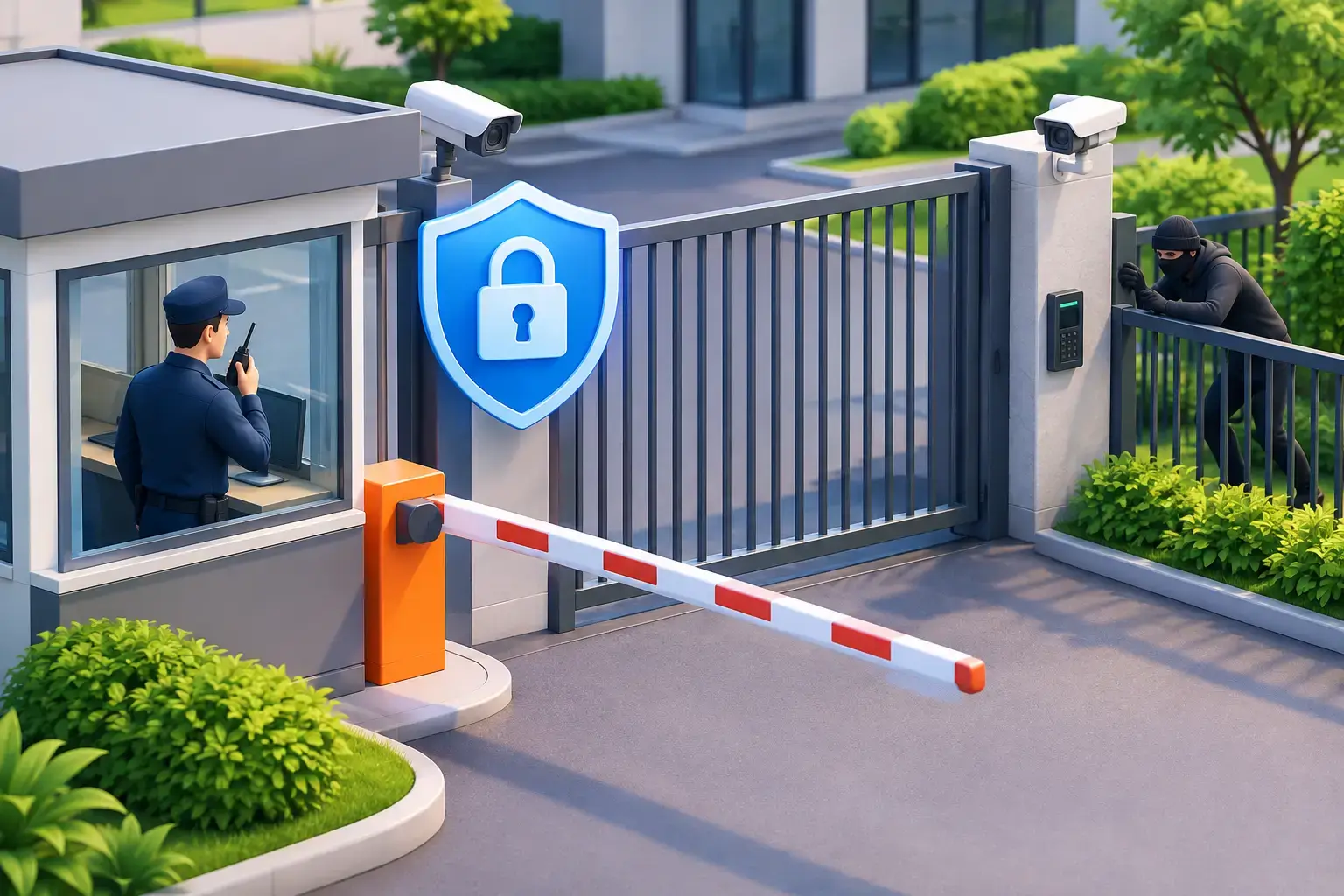
How to Prevent Unauthorised Entry at Your Site
A single unsecured delivery door, a borrowed access card, or an unattended reception desk can create an opening that affects far more than property. It can expose staff, visitors, data, stock, and your organization’s reputation. Knowing how to prevent unauthorised entry means treating site security as an operational discipline, not simply a lock-and-key issue.
For offices, venues, hospitality businesses, construction sites, and event spaces, the most effective approach is layered protection. Physical barriers, clear access rules, trained personnel, technology, and a reliable response process must support one another. The right balance depends on your site, foot traffic, operating hours, and risk profile.
Start with the Entry Points People Actually Use
Security plans often focus on the main entrance while overlooking the doors, gates, loading areas, stairwells, parking facilities, and staff-only corridors that receive less attention. An unauthorized person is more likely to test the least visible route than approach a controlled front desk.
Begin with a practical site assessment. Map every point where someone could enter, including temporary access routes created during deliveries, maintenance work, construction activity, or events. Identify which entrances must remain open to the public, which should be staff-only, and which should be locked except for approved use.
This assessment should also consider timing. A corporate lobby may be well managed from 8 a.m. to 5 p.m. but become vulnerable during early cleaning shifts or after-hours meetings. A restaurant may control its front entrance well while a rear service door is frequently propped open during busy periods. Security measures need to reflect how the site operates in reality, not how procedures say it should operate.
Use Layered Access Control, Not One Barrier
A locked door is useful, but it is not a complete security strategy. Keys can be copied, cards can be shared, and doors can be held open. A layered approach makes it harder for an unauthorized person to move from the perimeter to sensitive areas.
At a minimum, separate public, staff, contractor, and restricted areas. Access cards, fobs, PINs, or mobile credentials can help control movement and create an audit trail. For higher-risk locations, consider additional verification at critical points, such as secure server rooms, cash handling areas, controlled storage, executive floors, or backstage zones.
The trade-off is convenience. Overly complicated access procedures can frustrate employees and slow down legitimate operations. The answer is not to secure every room to the same level. Match controls to the consequence of unauthorized access. A public reception area requires a different standard from a data center or a venue green room.
Manage Keys and Credentials Closely
Physical keys should be issued, recorded, recovered, and reviewed. Avoid shared master keys with no accountability, particularly where multiple contractors or shift teams work on site. When an employee leaves, changes roles, or loses a key or access card, remove or update access immediately.
For electronic access systems, regularly review permissions. Staff often retain access after moving departments, completing a project, or finishing a temporary assignment. Limiting access to what each person genuinely needs reduces risk without disrupting legitimate work.
Make Visitor and Contractor Control Consistent
Visitors and contractors are part of normal business activity, but they should not be able to move freely through a site simply because they appear expected. A clear sign-in process confirms who is on site, why they are there, who they are meeting, and when they leave.
For many workplaces, a reception process and visible visitor pass are sufficient. Higher-risk sites may require photo identification, pre-registration, escorting, induction requirements, or restricted time windows. At events and hospitality venues, the process may involve ticket validation, wristbands, guest lists, bag checks, or designated entry lanes.
Consistency matters more than formality. If staff make exceptions whenever the site is busy, entry controls quickly lose their value. Procedures should allow for urgent deliveries or last-minute contractors, but those exceptions need a clear approval path rather than an informal decision at the door.
Use Visible Security Personnel Where Judgment Is Needed
Technology controls access, but trained security personnel provide judgment. A licensed security officer can verify identification, observe behavior, manage queues, enforce site rules, and respond calmly when someone refuses to comply. Their visible presence also discourages opportunistic entry attempts.
This is particularly valuable at high-footfall locations, after-hours facilities, construction sites, corporate buildings, clubs, hotels, and live events. A guard can identify tailgating, where an unauthorized person follows an approved individual through a secure door, and can challenge unfamiliar people before they reach sensitive areas.
The role should be clearly defined. At some sites, a static guard at the entrance is the right fit. At others, mobile patrols, concierge-style reception coverage, gatehouse control, or a combination of officers and electronic monitoring may be more appropriate. Staffing levels should reflect peak periods, site layout, crowd behavior, and the consequence of a breach.
Train Staff to Protect Access Without Creating Conflict
Employees are often the first people to notice something unusual, yet many hesitate to challenge an unfamiliar person. They may hold a secure door open out of courtesy, assume someone else has approved a visitor, or ignore a person in a restricted hallway to avoid an uncomfortable interaction.
Staff training should explain what to look for and what to do next. Employees should understand that badges and access cards are not transferable, secure doors should not be propped open, and visitors should be directed to the proper check-in point. They should know how to report a concern quickly without placing themselves at risk.
Use simple language and scenario-based guidance. For example: if someone says they are from a contractor but cannot identify their contact, staff should not grant access. They should direct the person to reception or contact the relevant manager. A calm, professional response protects both security and customer experience.
Improve Visibility Around the Perimeter
Unauthorized entry is easier when a person can approach or test access points without being seen. Good lighting, clear sightlines, maintained fencing, secure gates, and visible signage all contribute to deterrence.
Cameras are most effective when they support an active process. They should cover key entry and exit points, loading areas, parking zones, and vulnerable corridors, with footage that can be reviewed when needed. Camera placement should be tested in the conditions that matter, including darkness, glare, bad weather, and busy periods.
Do not rely on signs alone. “Authorized Personnel Only” notices set expectations, but they do not stop someone determined to enter. They work best alongside physical controls and personnel who are prepared to enforce the boundary.
Plan for Deliveries, Events, and Other Exceptions
Many breaches occur during exceptions to normal operations. A delivery driver needs access before opening hours. A contractor arrives with a replacement crew. An event has a late guest list change. A fire door is opened for equipment movement and left unsecured afterward.
Build these situations into the plan. Set delivery windows, designate loading access, require contractor sign-in, and assign responsibility for securing doors once work is complete. For events, establish entry lanes, credential categories, bag-check procedures where appropriate, and a clear method for resolving ticket or guest-list issues without creating pressure at the gate.
A good security plan is flexible enough to support operations while remaining controlled. If employees constantly need to bypass a rule to do their jobs, the rule needs to be redesigned.
Establish a Clear Response to Unauthorized Entry
Prevention includes knowing what happens when someone gets through. Staff and security personnel should have clear escalation procedures for suspected unauthorized entry, including who to notify, when to approach, when to monitor from a safe distance, and when to contact emergency services.
Document incidents, even when they appear minor. Repeated attempts at a rear door, a lost access card, or an unfamiliar person seen near a restricted area may reveal a pattern. Reviewing these reports helps managers correct weaknesses before a more serious incident occurs.
For sites with complex operations or significant public traffic, regular drills and post-incident reviews are worthwhile. They reveal whether communication systems work, whether staff know their responsibilities, and whether security coverage matches real conditions.
How to Prevent Unauthorised Entry With a Site-Specific Plan
There is no single control that suits every organization. A small office may need managed reception, credential control, and periodic patrols. A hospitality venue may need trained door staff and clear crowd management. A commercial site may require gatehouse coverage, vehicle checks, access logs, and after-hours monitoring. The strongest arrangements are tailored to the site, its people, and its daily pressures.
Broadsafe Group supports organizations that need professional, licensed security coverage built around their operational requirements. Whether the priority is venue access, corporate protection, event entry management, or static guarding, experienced security personnel can help turn procedures into consistent on-the-ground protection.
The most useful question is not whether your building is locked. It is whether the right people can enter easily, the wrong people are stopped early, and your team knows exactly what to do when a boundary is tested.