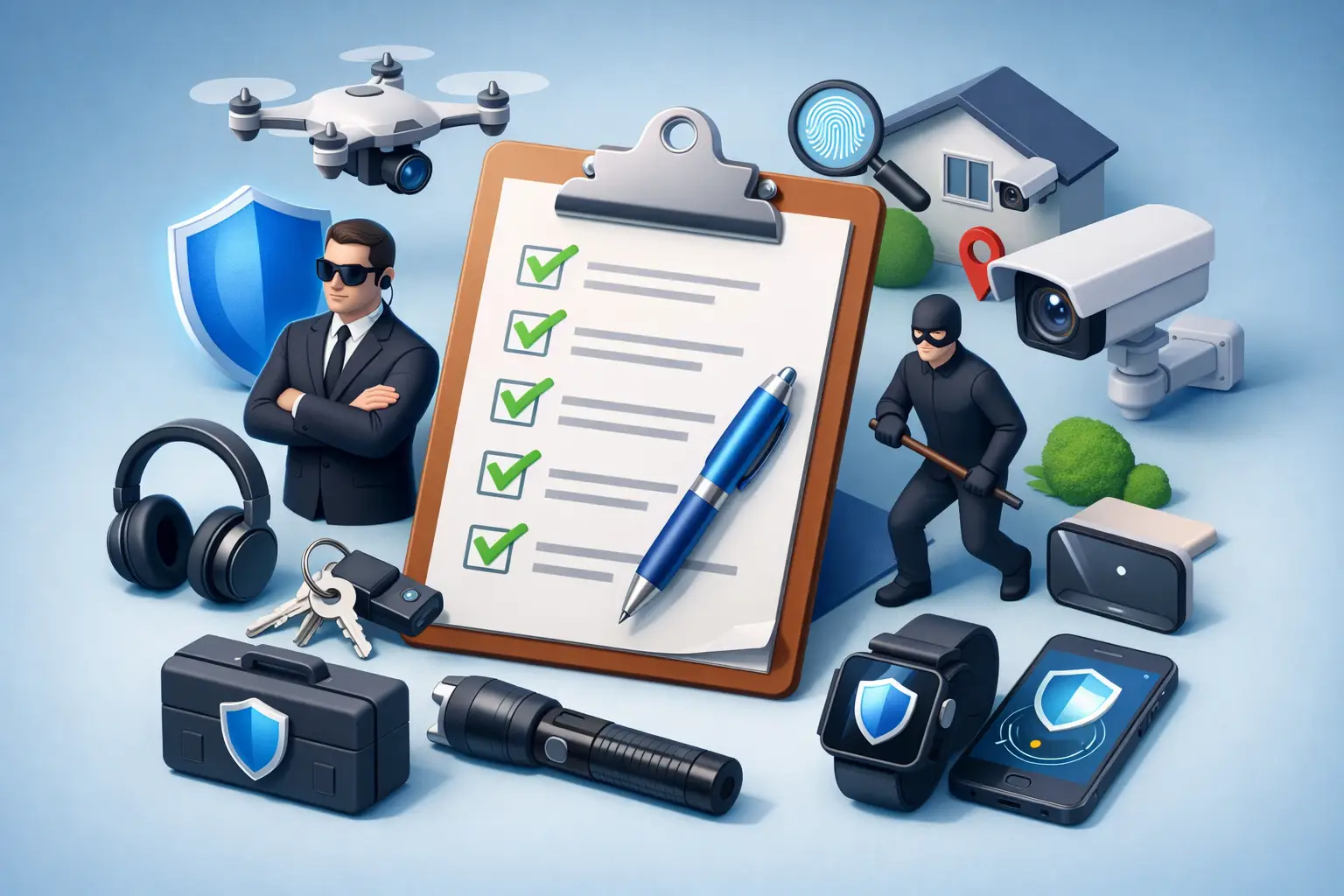
Personal Security Service Review Checklist
A personal security assignment can look straightforward on paper: place a trained professional beside an executive, guest, family member, or high-profile speaker. The reality is more demanding. The right provider must protect the individual without disrupting their schedule, attracting unnecessary attention, or creating new operational risks. A thorough personal security service review helps decision-makers distinguish between a visible presence and a genuinely capable protection program.
For venue operators, corporate teams, event organizers, and private clients, the review should start well before the first shift. Personal protection is not a commodity purchase. It is a trust-based service that depends on the quality of the personnel, the planning behind the assignment, and the provider’s ability to respond calmly when circumstances change.
Start With the Actual Risk, Not the Job Title
“Personal security” can mean very different things. A public-facing executive attending a conference may need discreet arrival and departure coordination, while a celebrity appearing at a nightlife venue may require close protection, crowd management, secure access routes, and coordination with venue staff. A family dealing with unwanted attention may need a different approach again.
A credible provider will ask detailed questions before recommending coverage. They should want to understand the person’s public profile, itinerary, travel arrangements, exposure points, venue layout, known concerns, and the level of discretion required. If a provider offers a fixed package without exploring these details, the service may be poorly matched to the risk.
The goal is proportionate protection. Too little coverage can leave gaps around entrances, vehicles, and transitions between locations. Too much can make a client feel restricted, unsettle guests, or damage the tone of a corporate or hospitality event. The best arrangement is tailored to the individual and the environment, with clear boundaries around what the security team is responsible for.
Personal Security Service Review: Verify the Provider First
Credentials do not guarantee performance, but they are a necessary starting point. Confirm that the company and assigned personnel hold the licenses required in the jurisdictions where the work will take place. Requirements vary by state and local authority, so a provider should be able to explain how it maintains compliance for each assignment.
Insurance deserves the same level of attention. Ask what coverage is in place, whether it is appropriate for personal protection work, and how incident reporting is managed. A provider that can clearly document its insurance profile, training expectations, and operational policies is easier to assess and more likely to take accountability seriously.
Quality and safety systems also matter. Organizations that work to recognized quality and occupational health and safety frameworks demonstrate that procedures are not left to chance. ISO 9001 and ISO 45001 alignment, for example, can indicate a structured approach to service delivery, continuous improvement, staff safety, and risk management. It should not replace due diligence, but it is a useful signal when comparing providers.
Ask who employs the personnel and who supervises them. Some providers rely heavily on last-minute subcontracting, which can create inconsistency in presentation, communication, and accountability. Subcontracting is not automatically a problem, particularly for large or multi-location events, but the provider should be transparent about it and retain clear command responsibility.
Assess the People Who Will Represent Your Organization
Personal security professionals operate close to the client, their colleagues, customers, and guests. Their judgment is often more valuable than physical presence. The assigned person should be calm under pressure, observant without being intrusive, and capable of communicating professionally with people from every level of an organization.
During a personal security service review, ask about the proposed team’s relevant experience. Experience in static guarding alone may not prepare someone for executive movements, public appearances, crowded venues, or discreet protective work. Likewise, a highly visible close-protection style may not suit a board meeting, hotel stay, or private family occasion.
Look for practical strengths: situational awareness, de-escalation ability, first-aid readiness where required, concise radio discipline, and confidence working with event staff, drivers, reception teams, and venue management. The best personnel can be firm without being confrontational. They understand when to step forward and when to remain in the background.
Professional presentation is also operationally important. A security officer who appears disorganized, distracted, or overly aggressive can undermine confidence quickly. Establish expectations around attire, identification, conduct, phone use, confidentiality, and interaction with media or the public before the assignment begins.
Review the Plan Behind the Presence
A capable personal protection service should provide more than a name on a roster. It should have an assignment plan that reflects the actual movement and risk profile of the client. The plan does not need to expose sensitive details broadly, but key stakeholders should understand the security approach and escalation process.
For a corporate appearance or event, this may include arrival procedures, secure parking or drop-off points, access control, backstage or green-room arrangements, departure timing, and designated contacts. For ongoing executive coverage, it may include daily schedules, travel coordination, residential considerations, and communication protocols.
Planning must remain flexible. Flight delays, unexpected crowds, last-minute venue changes, and unwanted contact can alter the risk picture quickly. Ask the provider how it handles changes outside business hours, whether a supervisor is available, and how additional resources can be deployed if the situation escalates.
There is a balance to maintain. Clients need enough information to make informed decisions, while sensitive schedules, routes, and personal details must be tightly controlled. A reliable provider will keep documentation purposeful, distribute it only to those who need it, and treat confidentiality as part of the protective service rather than an optional extra.
Test Communication and Command Structure
Poor communication is one of the most common reasons a security plan fails in practice. A highly qualified officer cannot perform effectively if the client, venue, driver, event manager, and security supervisor all have different assumptions about the assignment.
Before engagement, establish one primary client contact and one provider contact with authority to make decisions. Confirm how routine updates will be delivered, who receives incident notifications, and what constitutes an escalation. For higher-risk assignments, a pre-event briefing with relevant operational stakeholders can prevent confusion at the point where time matters most.
Incident reporting should be factual, timely, and useful. It should record what occurred, what action was taken, whether emergency services or venue teams were involved, and what follow-up is recommended. Avoid providers that treat reporting as an administrative afterthought. Clear records support accountability, insurance requirements, and future risk planning.
Consider Discretion, Culture, and Client Experience
The most effective personal security work is often barely noticed by everyone except the people responsible for it. That does not mean the service is passive. It means the protection team has positioned itself well, communicated early, and managed issues before they become visible disruptions.
This is particularly relevant in hospitality, entertainment, corporate, and VIP environments. Guests should still feel welcome. Employees should know who to contact. The protected individual should be able to focus on their meeting, appearance, or event rather than managing their own security detail.
Ask how the provider adapts to your environment. A concert, hotel lobby, restaurant, corporate office, and private residence all require different levels of visibility and different ways of interacting with the public. The provider should respect the culture of the setting while maintaining clear protective standards.
Make Accountability Part of the Decision
Price matters, but the lowest rate can become expensive if it produces poor attendance, weak supervision, underqualified personnel, or inadequate planning. Compare proposals based on the full scope of service: personnel experience, supervision, scheduling reliability, reporting, insurance, contingency support, and the provider’s willingness to define performance expectations.
A strong provider welcomes reasonable scrutiny. They can explain how shifts are filled, how absences are covered, how concerns are resolved, and how service quality is reviewed over time. They should also be comfortable adjusting the arrangement when the client’s risk profile or operating schedule changes.
For organizations that require protection alongside venue security, crowd control, static guarding, or event staffing, an integrated provider can reduce handoff errors and simplify command. Broadsafe Group approaches these assignments with licensed personnel, tailored planning, and a disciplined focus on safety, professionalism, and service continuity.
The right personal security partner should leave your people feeling protected, not managed. Choose the provider that asks the right questions, documents the right details, and demonstrates the judgment to protect what matters without getting in the way of the work, event, or life taking place around it.