Physical and IT Security Trends to Watch
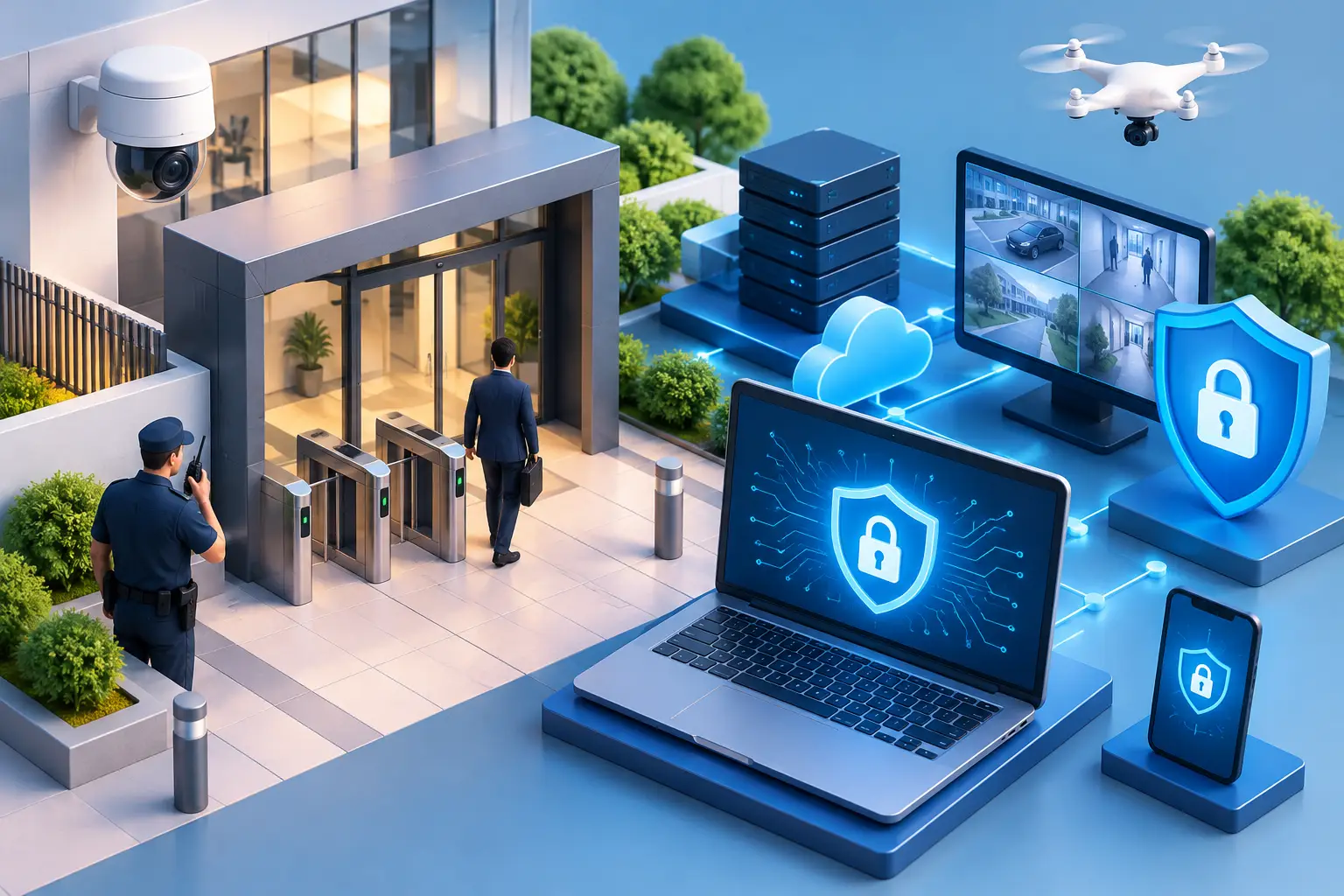
A security incident rarely stays in one lane. A compromised employee credential can open a network account, a restricted office door, or both. A crowded event can create a safety issue that is amplified by poor radio communication, unreliable cameras, or an unavailable incident-management system. For operations leaders, physical and IT security trends now point to the same priority: protect people, assets, information, and continuity as one connected responsibility.
The practical question is not whether every business needs advanced technology at every site. It is whether current controls match the real risks of the environment. A corporate office, hotel, construction site, nightclub, data center, and live venue all require a different balance of visible personnel, access control, technical support, and emergency response.
Physical and IT Security Trends Are Converging
For many years, physical security and IT security were managed as separate functions. One team focused on guards, doors, visitors, cameras, and patrols. Another handled networks, devices, user accounts, software, and data. That separation is becoming less workable.
Modern access control systems sit on networks. Video platforms store and transmit data. Visitor management systems collect personal information. Guards rely on mobile devices, radio systems, digital incident reports, and real-time communication with operations teams. Each connection can improve awareness and response, but it can also introduce a point of failure if it is not properly managed.
The strongest operating model does not force every security decision into one department. It establishes clear ownership, shared escalation procedures, and regular communication between facilities, security, IT, HR, and operations. That gives teams a better view of risk before a minor issue becomes a business disruption.
Security Staffing Is Becoming More Intelligence-Led
Visible, licensed security personnel remain one of the most effective deterrents in public-facing and high-risk environments. What is changing is the information available to support them. Guards are increasingly expected to work from current site instructions, digital patrol records, access alerts, incident histories, and clear communication channels rather than isolated paper processes.
For venue operators and event organizers, this means a security presence can be more targeted. Staffing can be positioned around entry points, restricted areas, cash-handling locations, loading zones, VIP movements, crowd pressure points, and closing-time risks. The goal is not simply to put more people on the floor. It is to place trained people where judgment, communication, and fast intervention matter most.
Technology should support that judgment, not replace it. A camera can identify unusual movement. An access report can show repeated failed entry attempts. Neither tool can reliably de-escalate an intoxicated patron, read a changing crowd mood, or make a proportionate decision during an unfolding incident. Those outcomes still depend on capable personnel, proper training, and site-specific procedures.
The growing value of better incident reporting
Clear reporting is becoming a competitive and operational requirement. Businesses want more than reassurance that a shift was covered. They need records that show what occurred, what action was taken, who was notified, and whether a follow-up is required.
Well-managed digital reporting helps security teams identify repeat issues, such as a vulnerable access point, recurring antisocial behavior, equipment faults, or a recurring delivery-area breach. It also gives management a factual basis for improving procedures, supporting insurance matters, and demonstrating reasonable care where needed.
Video Analytics Will Be Useful, but Human Oversight Matters
Video surveillance is evolving from passive recording to active monitoring. Analytics can help flag perimeter movement, abandoned objects, line congestion, unusual after-hours activity, and entry into restricted zones. For large facilities or multi-site businesses, this can help teams focus attention faster.
However, analytics are not a set-and-forget solution. Lighting, weather, camera placement, site layout, crowd density, and system configuration all affect performance. False alerts can overwhelm operators, while poorly configured systems may miss what matters. Organizations should test technology in real operating conditions rather than relying on vendor demonstrations alone.
Privacy also requires careful attention. Camera coverage, retention periods, access to footage, and the use of analytics should be governed by clear policy and applicable legal requirements. The right approach protects people and property without creating unnecessary collection or misuse of personal information.
Identity Is Becoming the Front Line of Access Control
Keys and swipe cards still have a place, but identity-based access is expanding. Mobile credentials, multi-factor verification, visitor pre-registration, temporary permissions, and role-based access can give businesses more control over who enters a site, system, or restricted area.
The benefit is accountability. Access can be limited by time, location, role, or purpose. A contractor may need access to a plant room for a scheduled service window but not to corporate offices. An event supplier may require loading dock access before doors open but no access to backstage areas during the show. These controls reduce the reliance on informal workarounds and shared credentials.
There is a trade-off. More sophisticated access systems require disciplined administration. When staff leave, contractors finish work, or event roles change, permissions must be removed promptly. An access-control platform is only as reliable as the process behind it.
Cybersecurity Must Include Physical Security Systems
Network-connected cameras, access panels, alarm systems, intercoms, and building-management tools can be overlooked in cybersecurity planning. Yet these systems may contain sensitive information or provide a pathway into broader business networks if they are outdated, poorly configured, or supported with weak credentials.
Organizations should know what security technology is connected to their network, who manages it, how it is updated, and what happens if it fails. This is especially important in sites that operate around the clock, including hotels, logistics facilities, entertainment venues, and critical operational locations.
A practical review should address four areas:
- whether devices and software are supported and receiving security updates;
- whether default passwords, shared logins, and unnecessary remote access have been removed;
- whether security systems are separated appropriately from core business systems; and
- whether there is a workable manual process if a system or network becomes unavailable.
The final point is often missed. A digital system can improve control, but business continuity depends on people knowing what to do when that system is down. Printed emergency contacts, radio procedures, manual visitor logs, and clear escalation authority still matter.
AI Will Change Monitoring, Not Eliminate Accountability
Artificial intelligence is becoming more common in security operations, from alert prioritization and video review to help-desk triage and anomaly detection. Used well, it can reduce repetitive work and help teams identify patterns across large volumes of information.
Used carelessly, it can create misplaced confidence. AI-generated assessments may be incomplete, biased, inaccurate, or based on poor-quality data. For security decisions that affect safety, access, employment, or emergency response, human review remains essential. Organizations need to know who is responsible for acting on an alert, verifying the information, documenting the decision, and communicating with stakeholders.
The most useful question is not, “Can AI do this?” It is, “Does AI improve response without weakening accountability?” For many businesses, the best starting point is targeted use in lower-risk, high-volume tasks rather than handing critical decisions to automated tools.
Resilience Is Replacing the Idea of Perfect Prevention
No security program prevents every incident. A realistic program prepares an organization to detect issues early, respond decisively, recover operations, and learn from what happened. This is particularly relevant for crowded venues, high-profile events, public-facing hospitality businesses, and corporate sites where a single incident can affect employee confidence and public reputation.
Resilience depends on rehearsed procedures. Security personnel, managers, IT teams, and key site contacts should understand who leads during an incident, how communications are maintained, when emergency services are contacted, and how evidence is preserved. Plans that exist only in a folder are less valuable than teams that have practiced their responsibilities.
For larger events and complex sites, scenario planning is worth the effort. Consider lost communications, a medical emergency, aggressive behavior, unauthorized access, system outage, suspicious activity, or an evacuation. The exact response will vary, but the exercise exposes gaps in staffing, equipment, authority, and coordination before they matter.
What Decision-Makers Should Do Next
The most effective response to emerging security trends is not to buy every new tool. Start with a site-specific risk review that examines people, premises, information, technology, and operating hours together. Identify the moments where a failure would cause the greatest harm: opening and closing times, crowd arrivals, staff transitions, deliveries, isolated work, after-hours access, or system outages.
Then align the solution to the risk. A busy venue may need experienced crowd-control personnel and stronger entry procedures. A corporate facility may need tighter visitor management and access governance. A multi-site operator may benefit from standardized reporting, asset management, technical support, and clearer escalation across locations.
Broadsafe Group approaches security as an operational responsibility, combining professional personnel and practical support around the conditions each client actually faces. The right security plan should be visible where deterrence is needed, discreet where customer experience matters, and dependable when pressure is highest.
Security is strongest when people know their role, technology is maintained and properly governed, and response plans work beyond the screen. Reviewing those foundations now gives your organization more control when the next unexpected moment arrives.