Are Security Guards Background Checked? What to Ask
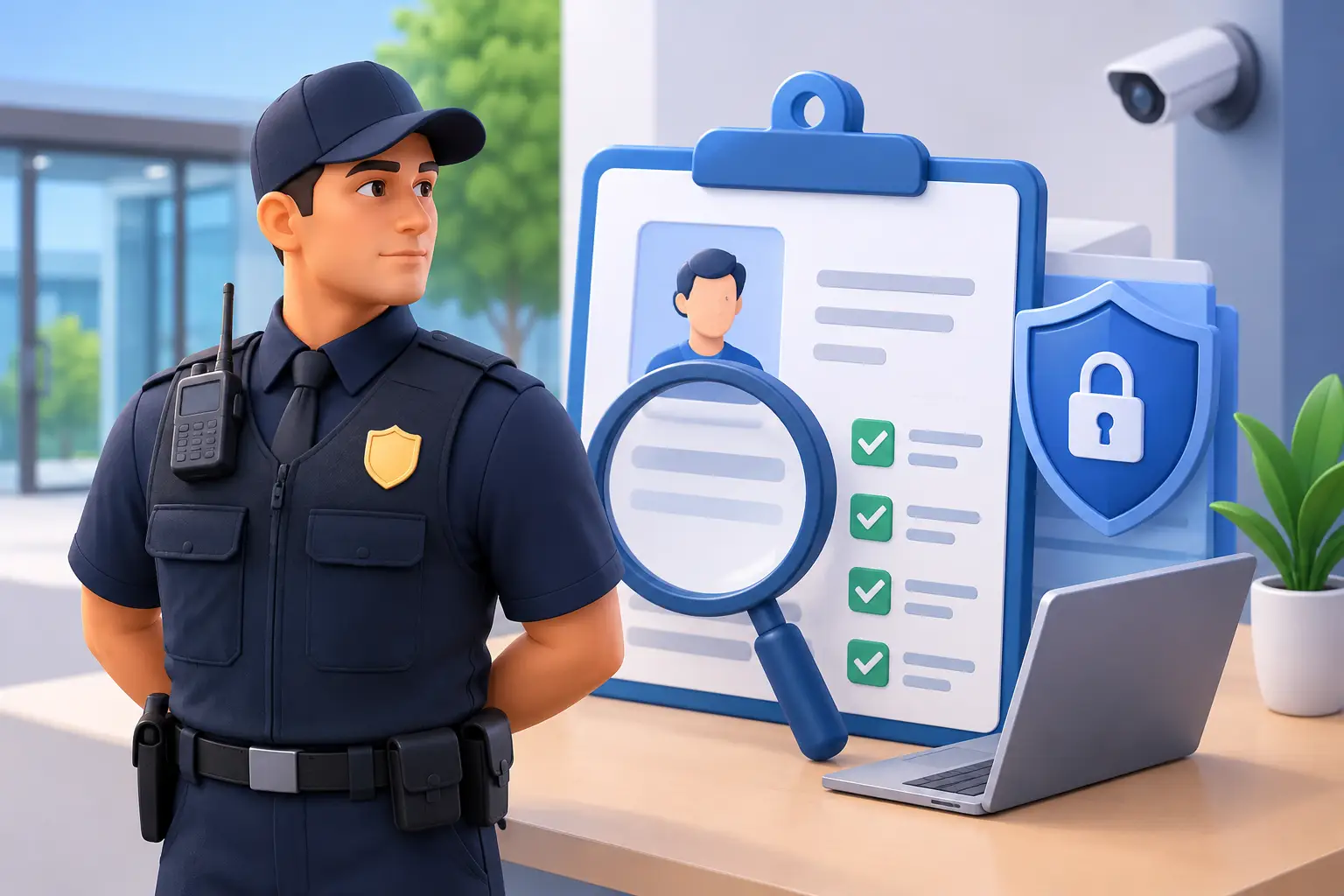
A guard at your entrance may be the first person a visitor sees, the first to respond to a disturbance, and the person trusted with access to people, property, and sensitive areas. So, are security guards background checked? Often, yes – but the depth of the check, the timing, and the standards applied can vary significantly by state, role, and security provider.
For a business, venue, or event organizer, “background checked” should never be treated as a vague reassurance. The real question is whether the provider has a documented, role-appropriate screening and licensing process that supports safe, professional deployment.
Are Security Guards Background Checked Before They Work?
In the United States, private security guard requirements are primarily set at the state level. Many states require guards to pass a criminal history check, meet eligibility requirements, complete training, and hold an active license or registration before they can work in a regulated security role. Other jurisdictions may place more responsibility on the employer to conduct screening and maintain personnel records.
This means there is no single national answer that applies to every guard in every setting. A guard working at a corporate office, a nightlife venue, a construction site, or a high-profile event may face different screening requirements based on local law and the nature of the assignment.
A responsible security provider should verify that each assigned officer is legally eligible to work, properly licensed or registered where required, and suited to the responsibilities of the post. That process should happen before deployment, not after an incident exposes a gap.
What a Meaningful Guard Screening Process Can Include
A criminal background check is a central part of screening, but it should not be the only consideration. The scope of a check may be affected by state rules, the candidate’s work history, the position’s duties, and fair hiring laws. Security companies must also handle candidate information lawfully and consistently.
For sensitive posts, a provider may assess more than a basic criminal record search. Depending on the role and applicable law, the process can include identity verification, employment history review, reference checks, license verification, training records, and checks related to driving eligibility where patrol vehicles are involved.
The key distinction is between a provider that simply fills shifts and one that manages risk. A trained officer may have the right presence for a front-of-house role, while a corporate facility, data center, or executive protection assignment may require additional experience, specialized training, and a more detailed suitability review.
Screening also needs context. Not every prior record automatically determines whether someone can perform a security role safely and legally. Employers must consider applicable regulations, the relevance of the information to the job, and fair employment obligations. What matters for clients is that the provider has a consistent process, clear decision-making standards, and accountable supervision.
Licensing Is Not the Same as a Background Check
Licensing and background checks are closely connected, but they are not interchangeable. A license or registration indicates that a guard has met the requirements established by the relevant authority at a particular point in time. Those requirements may include a background check, fingerprinting, training, or other eligibility criteria.
However, clients should not assume that a license alone answers every risk question. Licensing requirements differ between states, and renewals may occur on different schedules. A license also does not replace a security company’s responsibility to verify credentials, confirm availability, assess site fit, and monitor performance.
For procurement teams and site managers, the stronger standard is straightforward: ask whether guards are licensed or registered as required, how credentials are verified before assignment, and what controls prevent expired or unsuitable personnel from being placed on your site.
Questions to Ask a Security Provider Before You Hire
The most useful conversations happen before the contract is signed. Rather than asking only, “Do you background check your guards?” ask the provider to explain its process in practical terms.
Start by confirming whether the company verifies active guard licenses, registrations, and mandated training before deployment. Then ask whether screenings are role-specific. A large event with alcohol service, a hospital-adjacent property, an executive-facing office, and an overnight construction site do not carry the same risks or require the same experience.
You should also ask how the provider manages ongoing compliance. Are licenses tracked centrally? Are expiring credentials flagged before an officer is scheduled? Is there a supervisory process for checking uniform standards, post orders, incident reporting, and conduct on site?
For clients with higher exposure, it is reasonable to ask about insurance coverage, supervisor availability, escalation procedures, and the company’s approach to incident documentation. These operational safeguards matter because a thorough hiring process is only the beginning. Security quality is sustained through active management.
Why Background Checks Matter to Your Operations
A properly screened and credentialed guard supports more than loss prevention. They can help maintain order, control access, de-escalate conflict, protect staff, and provide a visible deterrent to unwanted behavior. In hospitality and events, the right officer can also protect the guest experience by handling concerns calmly and professionally before they become disruptive.
The cost of weak vetting can be substantial. An unsuitable officer may create safety issues, fail to follow post instructions, mishandle a confrontation, or damage the reputation of a venue or business. If an incident occurs, clients may face operational disruption, complaints, staff concern, and difficult questions about vendor oversight.
This is particularly relevant in high-footfall environments. Clubs, bars, hotels, concerts, retail settings, corporate lobbies, and public events require guards who can combine alertness with communication skills. A background check may identify certain risks, but it does not prove that an officer can manage a crowd, write a clear incident report, or represent your organization appropriately. Training, experience, and supervision complete the picture.
Match the Screening Standard to the Assignment
A one-size-fits-all approach can create unnecessary expense on low-risk assignments or leave unacceptable gaps on high-risk ones. The right security program begins with an honest assessment of the site.
For a static guard at a commercial property, the priority may be access control, visitor management, patrol discipline, and reliable reporting. For a music venue, the focus may shift to crowd behavior, entry screening, conflict de-escalation, and coordination with venue management. For VIP or personal protection work, discretion, advanced experience, and a carefully validated background may be especially important.
A capable provider will ask questions before recommending staffing. They should want to understand operating hours, public access, known risks, emergency procedures, site layout, staff concerns, and the authority the guard is expected to have. That consultation is not a delay – it is how security coverage becomes relevant to the real conditions on the ground.
Signs of an Accountable Security Partner
Look for a provider that is transparent without making promises it cannot substantiate. They should be able to discuss licensing requirements, screening practices, training standards, insurance, supervision, and reporting procedures clearly.
Professional providers also recognize that compliance is ongoing. Guard credentials need to be monitored. Site instructions need to be current. Officers need a clear escalation path. Clients need timely communication when an incident, staffing change, or operational concern arises.
Broadsafe Group approaches guarding assignments with this operational mindset: licensed personnel, tailored coverage, professional supervision, and a focus on protecting people, property, and business continuity. For clients, the objective is not simply to have someone standing at the door. It is to have a dependable security presence that understands the assignment and is accountable for carrying it out.
When evaluating security providers, ask for more than a yes-or-no answer on background checks. Ask how people are screened, how credentials are maintained, who supervises the work, and how the provider will protect your operation when conditions change. The answers will tell you far more than a badge at the entrance ever could.