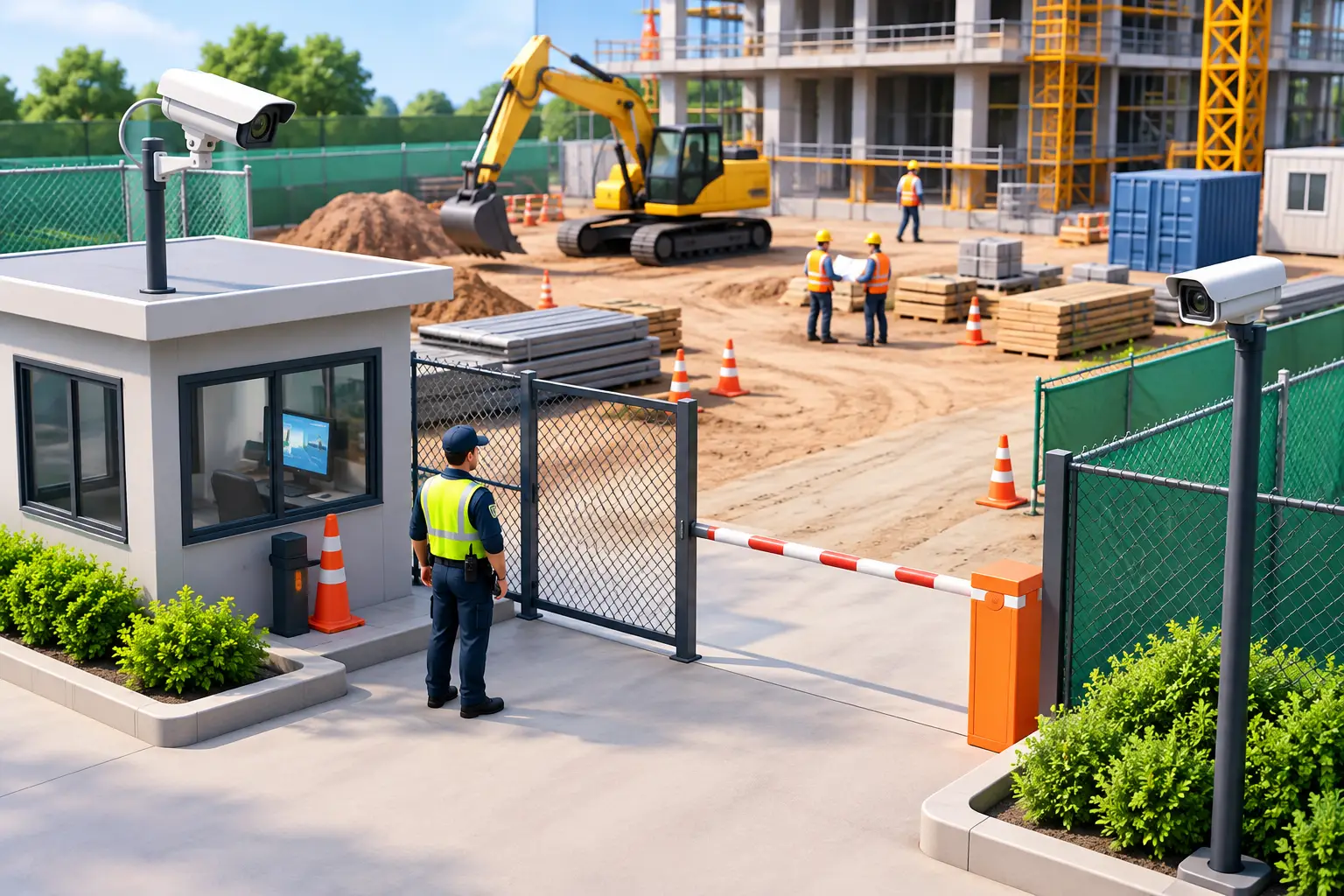
Construction Site Security Guide for Safer Projects
A missing generator, a cut perimeter fence, or an unauthorized person entering after hours can affect far more than the cost of replacement. Construction theft, vandalism, trespass, and unsafe site access can delay critical work, expose contractors to liability, and put people at risk. This construction site security guide outlines how site managers can build practical protection around their people, assets, and schedule.
Construction Site Security Guide: Assess Risk First
Security planning should begin before valuable equipment arrives and before the site becomes active. Every construction site has a different risk profile based on its location, stage of work, operating hours, perimeter condition, public visibility, and the value of materials on site.
An early-stage development with open land may be vulnerable to vehicle access and perimeter breaches. A high-rise project in a busy downtown area may face greater risks from public access, theft from multiple subcontractors, and the movement of people through shared entry points. Projects near entertainment districts, transit stations, or vacant properties may require more active after-hours coverage.
Walk the site with the project manager, superintendent, and security provider. Identify where people can enter, where equipment is stored, where materials are delivered, and which areas would cause the greatest disruption if damaged or accessed without permission. Do not treat the main gate as the only point of concern. Gaps behind temporary fencing, poorly lit rear boundaries, rooftop access, loading zones, and contractor parking can all create exposure.
A useful assessment also considers the project timeline. Security needs change as a site progresses. During excavation, perimeter protection may be the priority. Once mechanical systems, copper, appliances, or finished fixtures are installed, the site can become a higher-value target. A security plan should be reviewed at each major construction phase rather than left unchanged for the duration of the project.
Build Security in Layers
No single measure will protect a construction site on its own. Cameras can record activity, but they may not stop a determined intruder. Fencing creates a boundary, but it cannot always prevent a breach. On-site guards provide visible deterrence and immediate response, but their effectiveness improves when they work within a well-designed site plan.
The strongest approach combines physical barriers, access controls, active monitoring, and trained personnel. This layered approach makes unauthorized entry more difficult, increases the chance of early detection, and gives the site team a clear response process.
Start with the perimeter. Temporary fencing should be stable, properly secured, and checked regularly for gaps, damaged panels, or areas that can be lifted or bypassed. Gates should remain locked when not actively attended. If vehicle access is required after normal hours, designate a controlled entry point rather than allowing multiple crews to use separate gates.
Lighting is another basic but effective control. Dark corners, storage compounds, and access routes give intruders cover. Lighting should cover entry points, material storage areas, equipment yards, and pedestrian paths without creating glare that reduces camera visibility or affects nearby properties.
Cameras, alarms, and remote monitoring can extend coverage, particularly on large or vacant sites. Their value depends on placement, maintenance, and response procedures. A camera pointing at an empty section of fence while the tool container sits outside the frame offers limited protection. Technology should support operational decisions, not replace them.
Control Who Enters and Leaves the Site
Access control protects people as much as property. Construction projects often involve multiple subcontractors, delivery drivers, inspectors, visitors, and temporary workers. Without a reliable sign-in process, it becomes difficult to know who is on site during an emergency or investigation.
Set clear rules for entry. Workers should use designated gates, carry approved identification where appropriate, and follow site induction requirements. Visitors and delivery personnel should be signed in, directed to a contact person, and restricted from moving freely through active work areas.
For larger projects, access credentials, visitor logs, and scheduled delivery windows can reduce congestion and improve accountability. On smaller sites, a disciplined manual process may be sufficient. The right method depends on the site’s scale, workforce turnover, and risk level. What matters is consistency.
Security officers can support access control by verifying identification, recording arrivals and departures, managing deliveries, and addressing people who attempt to enter without authorization. Their role should be clearly coordinated with site management so that security procedures do not slow legitimate work unnecessarily.
Protect Keys, Equipment, and Materials
Many losses occur because high-value assets are left accessible at the end of the day. Establish a documented key-control process for site offices, storage containers, vehicles, plant equipment, and restricted areas. Keys should not be shared casually between crews or left in unsecured locations.
Equipment should be parked in planned areas, with ignition keys removed and attachments secured where practical. High-value portable tools, copper, fuel, and electrical materials should be stored in locked containers or compounds. Inventory checks at the end of shifts can identify a problem early, before it becomes a larger loss.
Marking equipment, maintaining serial number records, and documenting material deliveries also strengthen recovery efforts if theft occurs. These tasks may seem administrative, but they give investigators and insurers more useful information when an incident occurs.
Use Guarding for Visible Deterrence and Response
For many sites, licensed security officers are the difference between passive security measures and an active protection presence. A uniformed officer can deter trespassers, conduct scheduled patrols, monitor gates, inspect fencing, respond to alarms, and report hazards before they become major incidents.
Guarding requirements should be tailored to the project. A small site storing limited materials may only need mobile patrols at unpredictable times. A major commercial build with expensive equipment, multiple access points, or known neighborhood risks may need overnight static guarding. Projects with public-facing work, disputes, or high-value deliveries may benefit from coverage during specific high-risk periods.
The quality of guarding matters. Officers should be properly licensed for the jurisdiction, briefed on site rules, and given clear post orders. They need to know who to contact, how to handle a breach, where emergency equipment is located, and when to involve law enforcement or emergency services.
A professional security provider should also provide accountability through incident reports, patrol records, supervisor oversight, and clear escalation channels. This documentation helps site managers identify patterns, demonstrate due diligence, and make informed adjustments to coverage.
Prepare for Incidents Before They Happen
A security plan is only useful if the team knows what to do when something goes wrong. Theft, fire, trespass, aggressive behavior, weather damage, and suspicious activity should each have a simple response procedure.
Define who receives an alarm notification, who has authority to authorize access after hours, and who contacts emergency services. Keep current contact details for project leadership, security supervisors, property representatives, and key contractors. These details should be available to the appropriate personnel without exposing sensitive information to unauthorized workers.
Security officers should be instructed to observe, report, preserve safety, and escalate appropriately. They should not be expected to take unnecessary risks to recover property or confront dangerous individuals. Protecting life and maintaining a controlled response always come before protecting equipment.
After an incident, review what happened. Was the perimeter breached? Was lighting inadequate? Did an access process fail? Were materials stored in an exposed area? Small changes made after a near miss can prevent a costly repeat event.
Choose a Security Partner That Understands Operations
Construction security is not simply placing a guard at a gate. It requires a provider that can assess site conditions, deploy trained personnel, communicate with project leadership, and adapt coverage as the build changes.
When evaluating providers, look for licensed personnel, appropriate insurance, defined reporting processes, supervisory support, and experience working in active operational environments. Ask how the provider handles absences, incident escalation, shift handovers, and changes to the site footprint. A low hourly rate can become expensive if coverage is inconsistent or reporting is incomplete.
Broadsafe Group approaches site protection with tailored guarding and operational support designed around the realities of each location. For project teams, the goal is straightforward: maintain a secure site without creating friction for authorized workers, contractors, and deliveries.
Construction schedules leave little room for preventable setbacks. A clear plan, maintained perimeter, controlled access process, and professional security presence give project leaders more confidence that the work completed today will still be protected tomorrow.