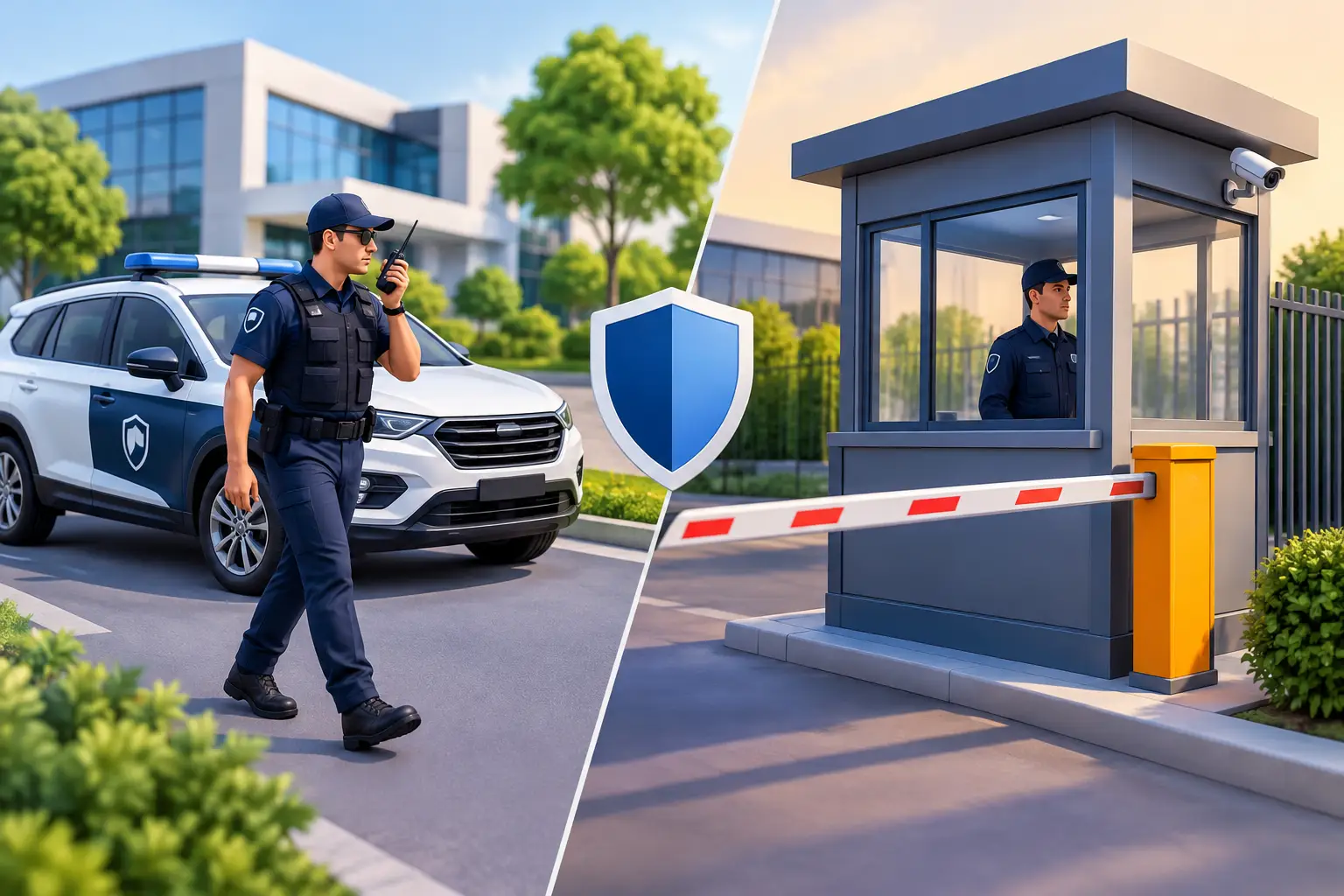
Mobile Patrols vs Static Guards: Which Fits?
A vacant warehouse with several entry points needs a different security approach than a hotel lobby managing guests, deliveries, and staff around the clock. That is the central question in mobile patrols vs static guards: not which service is better in general, but which level of presence, response, and visibility matches the risks at your site.
For operations managers, venue operators, and business owners, choosing incorrectly can mean paying for coverage that leaves critical gaps or overstaffing a lower-risk environment. The right solution should protect people and assets while supporting normal business activity without unnecessary friction.
Mobile Patrols vs Static Guards: The Core Difference
A mobile patrol service uses licensed security personnel who inspect one or more locations on a scheduled or randomized basis. Officers may conduct exterior and interior checks, inspect access points, respond to alarms, identify signs of trespass or damage, and document what they find. The emphasis is on active movement, broad coverage, and deterrence through unpredictability.
A static guard is assigned to remain at a specific location for a defined shift. This could be a front desk, gatehouse, construction-site entrance, loading dock, retail floor, hotel lobby, or restricted access point. Their value comes from continuous visibility and immediate on-site decision-making.
Both models can provide a strong deterrent. The difference is whether your risk requires a professional security presence at all times or regular, accountable inspections across a wider area.
When Mobile Patrols Make Sense
Mobile patrols are often a practical choice for sites that are closed overnight, spread across multiple buildings, or do not need a guard stationed at one point throughout the day. Industrial facilities, office parks, storage yards, vacant properties, construction sites, and multi-location businesses commonly benefit from patrol coverage.
A patrol officer can check that gates are secure, doors are locked, lighting is operational, and no unauthorized activity is taking place. The officer can also respond to an alarm activation, investigate the cause, and escalate the matter according to the agreed site instructions.
Cost efficiency is a key advantage. Rather than funding a full shift at every location, a business can arrange inspections at appropriate intervals. This gives managers a documented security presence while focusing resources on the hours and areas of highest risk.
The trade-off is straightforward: a patrol officer is not permanently on site. If an incident occurs between visits, response depends on the patrol schedule, alarm monitoring arrangements, local response procedures, and the seriousness of the event. For a site with frequent public access, active conflict, or a high-value asset that requires constant oversight, mobile patrols alone may not be sufficient.
Mobile patrols work well when:
- The property is vacant or lightly occupied outside business hours.
- Several nearby sites need regular checks rather than dedicated coverage.
- The primary risks are trespass, vandalism, theft, unsecured access, or alarm response.
- Management needs inspection reports and clear records of security activity.
- A visible but cost-conscious deterrent is appropriate.
When Static Guards Are the Better Choice
Static guards are designed for environments where security needs to be present, visible, and able to act immediately. A corporate reception desk, a busy nightclub entrance, a hotel, a medical facility, or a construction gate with constant contractor traffic all require more than periodic inspections.
At a fixed post, a trained officer can verify visitor credentials, control access, monitor deliveries, enforce site procedures, assist staff and guests, observe behavioral concerns, and respond before a small issue becomes a significant disruption. This consistency matters in public-facing settings, where the guard is often part of the customer and visitor experience.
For venues, hospitality businesses, and events, static personnel also support crowd management and responsible entry practices. Their presence can reduce unauthorized access, help de-escalate conflict, and give employees a clear point of contact when they need assistance.
The main consideration is cost. Continuous coverage requires dedicated staffing, especially where a site operates long hours or needs 24/7 protection. However, this investment is often justified where an unattended entrance, delayed response, or unmanaged crowd could create safety, liability, operational, or reputational consequences.
Assess the Risk, Not Just the Budget
Security planning should begin with a practical site assessment. The cheapest option is not always the most efficient if it fails to address the risk that matters most. Likewise, a full-time guard may not be necessary for a low-traffic property that simply needs verified lockups and after-hours inspections.
Consider what could happen if no officer were present for 15 minutes, one hour, or an entire night. If the answer includes uncontrolled visitor access, aggression toward staff, theft from an active area, safety incidents, or exposure of confidential assets, a static guard may be the responsible choice.
If the concern is primarily after-hours intrusion, open gates, property damage, or alarm activations at a site with limited activity, mobile patrols may provide the right balance of coverage and cost control.
It is also useful to look beyond the building itself. Nearby nightlife, isolated access roads, construction activity, cash handling, high-value inventory, public events, and past incidents can all change the appropriate level of protection.
The Strongest Option Is Often a Combined Model
For many organizations, the answer is not strictly mobile patrols or static guards. A combined security plan can provide continuous protection where it is needed most and flexible coverage elsewhere.
A corporate facility, for example, may use a static guard during business hours to manage reception, visitor sign-in, and access control. Mobile patrols can then inspect the perimeter and respond to alarms after the office closes. A construction project may use a daytime gate officer to control contractor entry, supported by nighttime patrols to check fencing, equipment, and storage areas.
Event and hospitality environments can take a similar approach. Static guards may cover entrances, VIP areas, cash points, and high-traffic spaces, while mobile personnel circulate through parking areas, surrounding grounds, and less visible sections of the venue. This gives organizers both fixed control points and active situational awareness.
The benefit of a combined model is flexibility. Staffing can increase for major events, seasonal trading periods, construction phases, or known risk periods without redesigning the entire security arrangement.
What to Expect From a Professional Security Provider
Whether you choose patrols, static coverage, or both, the quality of execution matters. Security officers should be appropriately licensed for their role, professionally presented, briefed on site-specific procedures, and able to communicate clearly with staff, visitors, emergency services, and management.
A reliable provider should establish clear post orders and escalation pathways. Your team should know who the officer reports to, what incidents require immediate notification, how access issues are handled, and what documentation will be provided after a patrol, shift, or incident.
Reporting is more than an administrative task. Accurate records can reveal recurring access problems, repeat trespass activity, poorly lit areas, unsafe behavior, or patterns that require operational changes. For procurement and facilities teams, documented reporting also supports accountability and demonstrates that contracted services are being delivered as agreed.
Ask how the provider handles shift continuity, officer supervision, emergency escalation, and replacement staffing. A security plan is only dependable when it remains dependable during staff absences, busy periods, and unexpected incidents.
Broadsafe Group tailors licensed guarding and patrol arrangements to the operational realities of commercial sites, venues, hospitality businesses, and events. The objective is not simply to place personnel on site, but to provide a disciplined security presence aligned with risk, public safety, and business continuity.
Making the Right Coverage Decision
Start by identifying the locations, times, and activities where a delay in response would have the greatest consequence. Then determine whether those areas need constant supervision, regular inspections, or a combination of both. This creates a more defensible plan than choosing security based only on a standard package or an hourly rate.
The right coverage should feel proportionate to the site: visible enough to deter issues, responsive enough to manage them, and structured enough to give management confidence. A well-planned security arrangement protects more than property. It helps protect employees, visitors, operations, and the reputation your organization has worked to build.
A site-specific risk discussion is the best next step, because the most effective security plan begins with how your property actually operates after the doors open, after they close, and when conditions change.