Security Services for Live Events That Work
A sold-out room can change character in minutes. One blocked exit, an unchecked credential, an intoxicated patron, or an unclear handoff between staff can turn a successful event into an operational problem. Effective security services for live events are not simply about placing guards at doors. They are about protecting people, preserving the event experience, and giving organizers control when conditions change.
For concert promoters, venue operators, hospitality groups, and corporate event teams, security planning should begin before the first ticket is scanned. The right approach combines visible presence, disciplined access control, crowd management, clear communication, and trained response. It also recognizes that every event carries a different risk profile.
Start With the Event, Not the Staffing Number
A common mistake is asking for a fixed number of guards before defining what the event requires. A 500-person seated awards dinner, a 500-person nightclub performance, and a 500-person outdoor festival may have the same attendance figure, but they do not create the same security demands.
A proper assessment considers the venue layout, entry and exit points, alcohol service, performer profile, expected audience behavior, event duration, weather exposure, and the presence of cash, equipment, VIPs, or restricted areas. It should also account for nearby public spaces, transportation access, and whether the event is likely to attract walk-up guests or unauthorized individuals.
The goal is not to overstaff a site. It is to position capable personnel where they can prevent problems, identify developing issues early, and respond without disrupting the wider event. A well-designed security plan is often less visible than a poorly designed one because it reduces friction before it becomes noticeable.
What Security Services for Live Events Should Cover
Live event security is a coordinated operation, not a collection of isolated posts. Each role should have a clear purpose, reporting line, and escalation process. When staff understand their responsibilities, organizers avoid duplicated effort and gaps in coverage.
Entry Screening and Access Control
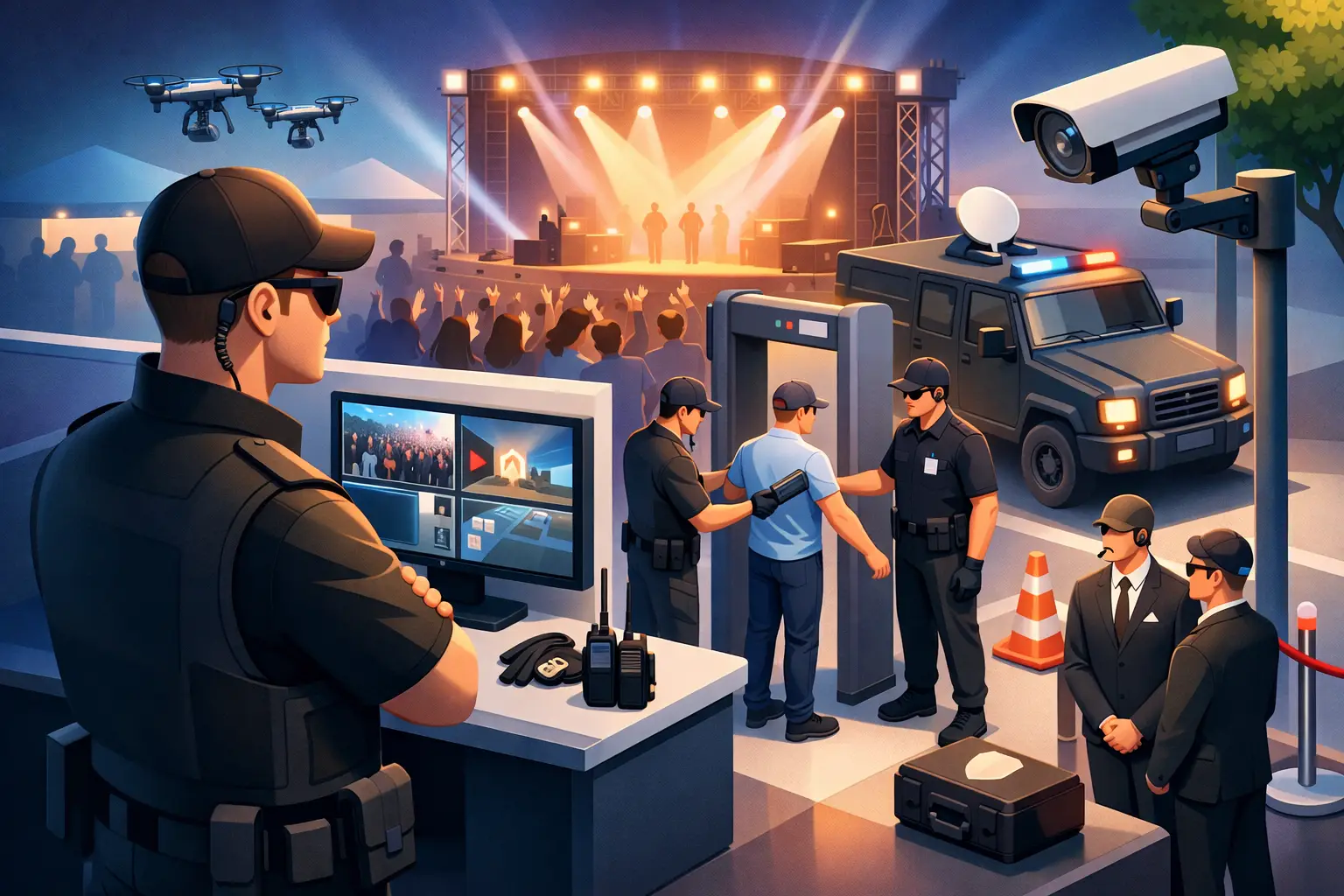
Entry points set the tone for the entire event. Security personnel may verify tickets and credentials, manage bag checks where appropriate, monitor prohibited items, and direct guests to the correct entrance. This process needs to be courteous as well as consistent. Overly slow screening creates long lines and frustration, while rushed screening can allow avoidable risks inside.
Back-of-house access deserves the same attention. Loading docks, green rooms, production areas, staff entrances, and equipment storage can be vulnerable when many contractors are moving through a venue. Credential checks, sign-in procedures, and controlled access zones help protect performers, crew, assets, and confidential event operations.
Crowd Flow and Crowd Control
Crowd pressure rarely begins with a major incident. It often starts with small issues: a queue forming across a walkway, guests gathering around a popular bar, a late opening of doors, or unclear signage near an exit. Experienced crowd control personnel monitor these patterns and act early by redirecting foot traffic, opening alternate routes, or communicating with event management.
This is especially important at concerts, festivals, sporting activations, club events, and any event with standing-room audiences. Security teams need to understand sightlines, barriers, capacity limits, emergency egress, and the areas where congestion is most likely to develop. Their role is to keep movement orderly while maintaining a welcoming environment for legitimate guests.
Incident Response and De-escalation
Not every incident requires removal from the venue. In many cases, calm communication, separation of parties, or a discreet welfare check can resolve a situation without creating a spectacle. Professional security personnel use situational awareness and de-escalation skills to make measured decisions under pressure.
When stronger action is required, the response should be controlled, lawful, and documented. Event staff should know who has authority to make key decisions, when medical support is needed, how to contact emergency services, and how information will be passed to the event lead. Clear reporting protects the organizer after the event as well as during it.
VIP, Artist, and Executive Protection
High-profile guests can alter an event’s risk level quickly. Public attention, fan behavior, media presence, and unplanned movement through crowded areas all require careful coordination. Personal protection and VIP security should be tailored to the individual, schedule, venue, and level of exposure rather than handled with unnecessary showmanship.
The best protection detail is calm, professional, and prepared. It coordinates arrivals and departures, secures transition points, monitors access to private areas, and works closely with venue and production staff. A visible security presence may be appropriate in some settings, while a lower-profile approach may better suit a corporate function or hospitality event.
Build a Command Structure Before Doors Open
Live events move quickly, and unclear communication can create more risk than a shortage of personnel. Before opening, the security provider, event organizer, venue manager, production lead, and relevant emergency contacts should agree on a command structure.
That structure should define who receives incident reports, who can authorize removal or evacuation, who communicates with performers or VIP representatives, and who contacts police, fire, or medical services if needed. Security supervisors should conduct a pre-event briefing so every officer understands post assignments, radio procedures, emergency exits, muster points, and site-specific concerns.
A practical event briefing also addresses the details that are easily overlooked: shift handovers, meal breaks, staff parking, lighting failures, lost children or vulnerable persons, property collection, and what to do if the schedule runs late. These details may seem minor until they affect the guest experience or distract staff from a more serious concern.
Balance Guest Experience With Visible Deterrence
Security should make guests feel safe, not unwelcome. The balance depends on the event. A corporate conference may call for discreet, polished personnel at registration and executive areas. A late-night venue, large music event, or high-footfall festival may require a more visible crowd control presence.
Uniform standards, professional communication, and appropriate positioning all matter. Personnel stationed at key points can deter misconduct and offer reassurance, but they should also be able to provide directions, assist with accessibility needs, and identify guests who may require medical or welfare support.
This is where licensing, training, insurance, and operational discipline become meaningful. Organizers need more than a provider that can fill a roster. They need a team that understands its legal responsibilities, follows site procedures, records incidents accurately, and represents the venue professionally in front of guests, clients, and stakeholders.
Plan for the Risks That Are Most Likely
A security plan should not be built around dramatic worst-case scenarios alone. It should address the incidents most likely to affect the event, including intoxication, gate-crashing, disputes, lost property, unauthorized access, medical concerns, aggressive behavior, and congestion at exits.
At the same time, contingency planning matters. Severe weather, a power interruption, a suspicious item, a fire alarm, or a sudden surge at an entrance can require immediate coordination. Security personnel should know the venue’s emergency procedures and be prepared to support evacuation, sheltering, or controlled lockdown directions as required.
Technology can strengthen this work, but it does not replace trained people on the ground. Radios, CCTV, access systems, incident reporting tools, and communication channels give teams better visibility. Their value depends on whether the security operation has clear processes and accountable leadership behind them.
Choose a Provider That Can Adapt on Site
Event conditions do not always follow the run sheet. Attendance may exceed expectations, an artist may arrive late, a public figure may attract unexpected attention, or a change in weather may move guests into a tighter space. A dependable provider can adjust posts, reinforce vulnerable areas, and keep the organizer informed without creating unnecessary alarm.
When evaluating a security partner, ask how they assess risk, recruit and verify personnel, supervise shifts, communicate incidents, and scale coverage when requirements change. Confirm that licensing and insurance are appropriate for the jurisdiction and assignment. It is also worth asking whether the provider has experience with your type of venue, audience, and event schedule.
Broadsafe Group approaches event coverage as a tailored operational service, with licensed personnel, clear supervision, and a focus on professional conduct from guest arrival through final egress.
The strongest live events are remembered for the performance, the connection, and the atmosphere – not for a preventable incident. Give security planning the same attention as production and hospitality, and your team will have more room to deliver the experience guests came for.