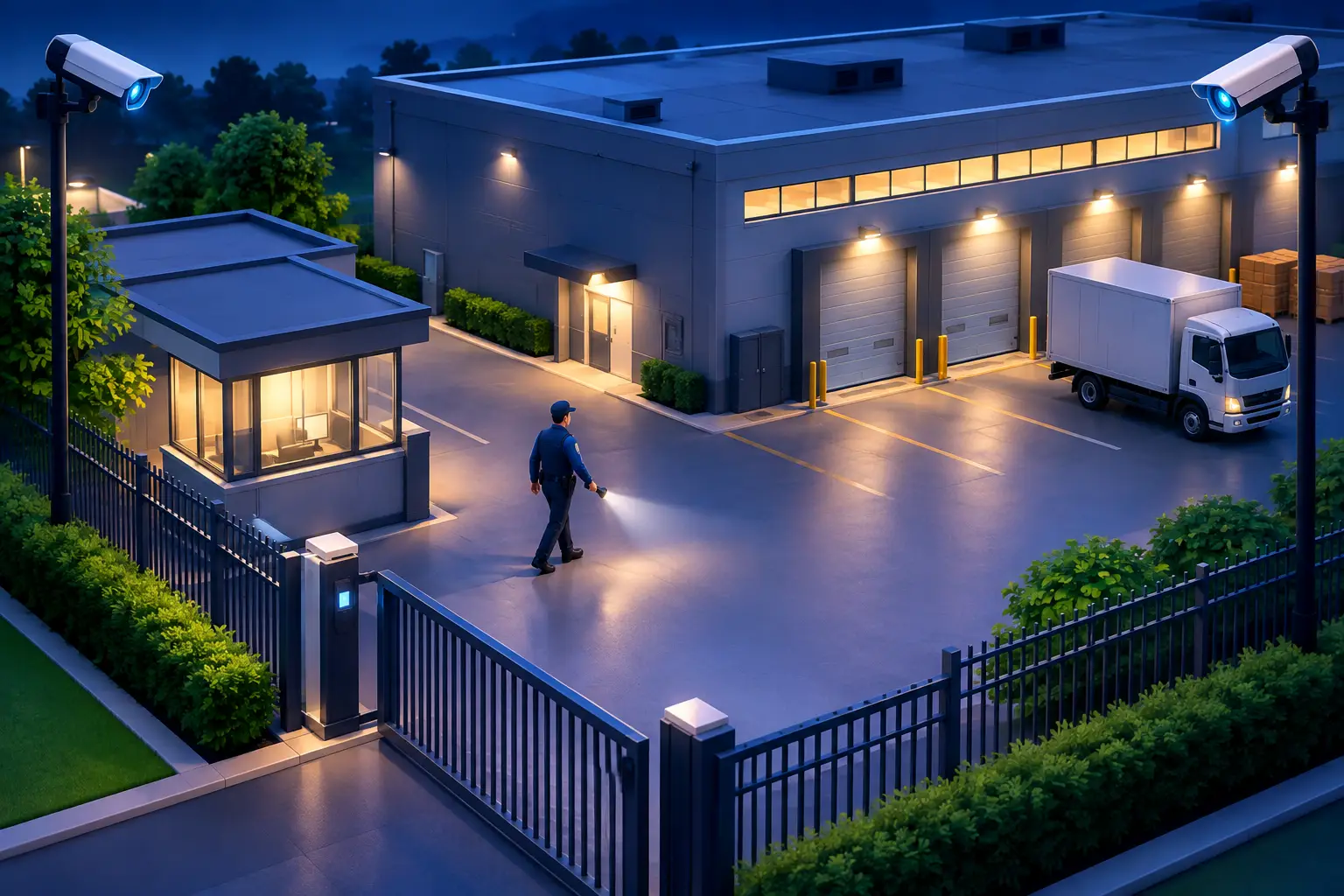
After Hours Site Security That Prevents Loss
The last employee may leave at 6 p.m., but the risks at a commercial property, venue, construction project, or warehouse do not clock out. After hours site security is the protection layer that keeps an empty or lightly staffed location from becoming an easy target for theft, trespass, vandalism, safety incidents, and costly disruption.
For site managers, the question is not simply whether to have a guard on duty. It is whether the coverage reflects how the site actually operates after business hours: who can access it, what assets remain exposed, where blind spots exist, and how quickly an incident can affect the next day’s operations.
What After Hours Site Security Should Accomplish
Effective overnight security is designed around prevention, detection, and response. A visible, professional security presence can discourage opportunistic crime before it begins. Regular patrols identify unsecured gates, damaged fencing, suspicious vehicles, water leaks, fire hazards, and people who should not be on site.
Detection matters just as much. Cameras, alarms, access-control records, lighting, and guard observations each provide part of the picture. Technology can alert a monitoring team to an event, but it cannot always determine whether a person is authorized, a door has been forced, or a situation is escalating. Trained personnel provide judgment at the point of risk.
The final requirement is a controlled response. When something occurs, the person on duty needs clear authority, site knowledge, escalation procedures, and reliable communications. The objective is to protect people first, preserve the site, document what happened, and involve emergency services or site contacts when required.
Start With the Risk, Not the Roster
A common mistake is to select coverage based only on the number of hours between closing and opening. Two properties with the same hours can need very different security arrangements.
A corporate office may be quiet overnight but hold sensitive records, laptops, controlled-access areas, and a parking structure with limited visibility. A construction site may have valuable tools, fuel, copper, heavy equipment, and changing entry points. A hospitality venue may need security through the final departure of guests and staff, when alcohol-related incidents, cash handling, and transport coordination can create added exposure.
A practical risk assessment should look at the site’s asset value, location, crime history, public access, staffing patterns, neighboring properties, lighting, perimeter condition, and emergency risks. It should also account for change. A site under renovation, a venue hosting a high-profile event, or a warehouse managing a large delivery can require temporary increases in coverage.
The result should be a post-order plan, not a generic instruction to “walk the property.” It defines patrol routes, check-in times, restricted areas, key or access-card procedures, visitor protocols, incident thresholds, and the right contacts for different scenarios.
Define What Requires Immediate Escalation
Not every issue needs the same response. An unsecured side gate may require a guard to secure it and log the event. A forced entry, medical emergency, fire alarm, aggressive individual, or suspected theft requires immediate escalation under the site’s emergency procedures.
Clear escalation rules prevent hesitation and reduce unnecessary calls. They also give managers confidence that incidents will be handled consistently, including when the usual decision-maker is unavailable.
Choose Coverage That Fits the Site
There is no single model for after hours coverage. The right approach depends on exposure, budget, operating hours, and the consequences of an incident.
A dedicated static guard is often appropriate for sites with high-value assets, frequent overnight activity, vulnerable entry points, or a need for constant access control. The guard can manage arrivals, check credentials, conduct patrols, monitor cameras, and respond immediately to concerns.
Mobile patrols can suit lower-risk sites that need scheduled or randomized inspections rather than a full-time on-site presence. They can confirm that doors and gates are secure, investigate alarm activity, and maintain a visible deterrent. However, a patrol officer cannot be everywhere at once. For a site where response time is critical, mobile patrols may not provide sufficient protection on their own.
Remote monitoring can add value where camera coverage, alarm systems, and site connectivity are reliable. It is useful for reviewing alerts and supporting documented oversight. Its limitation is physical intervention. A monitored camera cannot lock an open gate, escort an unauthorized person off the property, or assess a safety hazard with the same certainty as a trained officer on site.
Many operations benefit from a combined model: technology for broad visibility, mobile patrols for scheduled checks, and static coverage during high-risk periods. This approach can control costs without treating security as an afterthought.
Make the Security Officer Part of Operations
Security performs best when officers are properly briefed, not positioned as isolated observers. They need current information about the layout, access points, contractors, deliveries, staff schedules, alarm panels, emergency equipment, and site-specific hazards.
For a construction site, that may mean understanding plant movements, excavation zones, temporary power, and changing fence lines. For a corporate facility, it may involve visitor management, data-sensitive areas, executive travel schedules, and building-management procedures. At a venue, the focus may include staff departures, cash movement, guest behavior, and safe handover at closing.
A good briefing also sets professional expectations. Security personnel should know how to communicate with employees, contractors, guests, police, and emergency responders. The role requires vigilance, but it also requires sound judgment, calm communication, and accurate reporting.
Licensing, appropriate training, insurance, and documented procedures should be baseline considerations when selecting a provider. For procurement and facilities teams, these details demonstrate accountability, not just staffing availability.
Close the Gaps That Criminals Look For
Most after-hours incidents do not begin with a sophisticated breach. They start with an unlocked door, a propped-open fire exit, poor lighting, an exposed key box, an unmonitored loading area, or a gap in the perimeter.
Security officers should be instructed to inspect these points consistently, while management should act on recurring issues. If the same door is repeatedly found unsecured, the solution may be a door repair, access-control review, or staff retraining rather than more patrols alone.
Lighting deserves particular attention. Bright lighting is not automatically effective if it creates glare, leaves deep shadows, or fails to cover approaches to the building. Walk the property after dark and assess what a person can actually see from entrances, parking areas, loading docks, walkways, and fence lines.
Access control should also match real operations. Overly loose access allows unnecessary exposure, while overly restrictive procedures can cause staff to bypass controls. The best process is one employees can follow reliably, supported by clear accountability for keys, cards, codes, and visitor access.
Reporting Turns Coverage Into Accountability
A security presence is more valuable when management can see what occurred on site. Daily activity reports, patrol records, incident reports, and photographs where appropriate create an operational record. They can reveal patterns that would otherwise be missed, such as recurring trespass attempts, faulty lights, repeated alarm activations, or contractors arriving outside approved hours.
Reports should be factual and timely. They should record the time, location, individuals involved, observations, actions taken, notifications made, and any follow-up required. Vague notes do not help a manager make decisions or support an investigation later.
For larger organizations, reporting can also help align security with facilities, operations, safety, and risk teams. A broken fence is not merely a maintenance issue if it creates a repeat access point. A poorly managed staff exit is not just an HR concern if it affects personal safety after closing.
Review Coverage Before an Incident Forces the Issue
After hours security plans should be reviewed when operations change, not only after a theft or serious incident. New equipment, construction work, seasonal trading, staffing reductions, special events, and altered building access can all change the risk profile.
Ask whether the current coverage would detect a problem quickly, whether the officer knows exactly what to do, and whether the site team would receive useful information by the next morning. If the answer is uncertain, the plan needs adjustment.
The strongest security arrangements are not the most visible or the most expensive. They are the ones that match the site, support the people responsible for it, and make it harder for a small weakness to become a major loss. A disciplined review now can protect tomorrow’s operations, reputation, and people when the building is at its quietest.