How to Secure Construction Sites Effectively
A construction site can become a target long before the building takes shape. Tools, copper, fuel, machinery, materials, and temporary offices are often exposed after hours, while changing crews and delivery schedules create opportunities for unauthorized access. Knowing how to secure construction sites means treating security as an operational requirement from mobilization through handover, not as a last-minute response after a loss.
The most effective approach is layered. Fencing alone will not stop a determined intruder. Cameras without a response plan may only record the incident. Security works when physical barriers, trained personnel, technology, procedures, and site management support one another.
Start With a Site-Specific Security Assessment
Every project has different vulnerabilities. A city-center redevelopment may face trespassing, theft, vandalism, and public safety risks. A remote infrastructure project may have long response times, limited lighting, and higher exposure to fuel theft. An occupied commercial renovation presents another challenge: contractors, tenants, visitors, and deliveries may share entry points.
Before selecting guards, cameras, or access systems, assess the site’s layout and daily activity. Identify perimeter gaps, blind spots, storage areas, temporary power sources, valuable plant, public-facing edges, and routes used by workers and suppliers. Review when the site is busiest, when it is empty, and which stages of the project will introduce higher-value materials or equipment.
This assessment should also establish clear priorities. For some sites, preventing public access to hazardous areas is the main concern. For others, the greatest financial risk is theft of equipment or materials. The security plan should reflect those realities rather than relying on a standard package.
Build a Strong Perimeter First
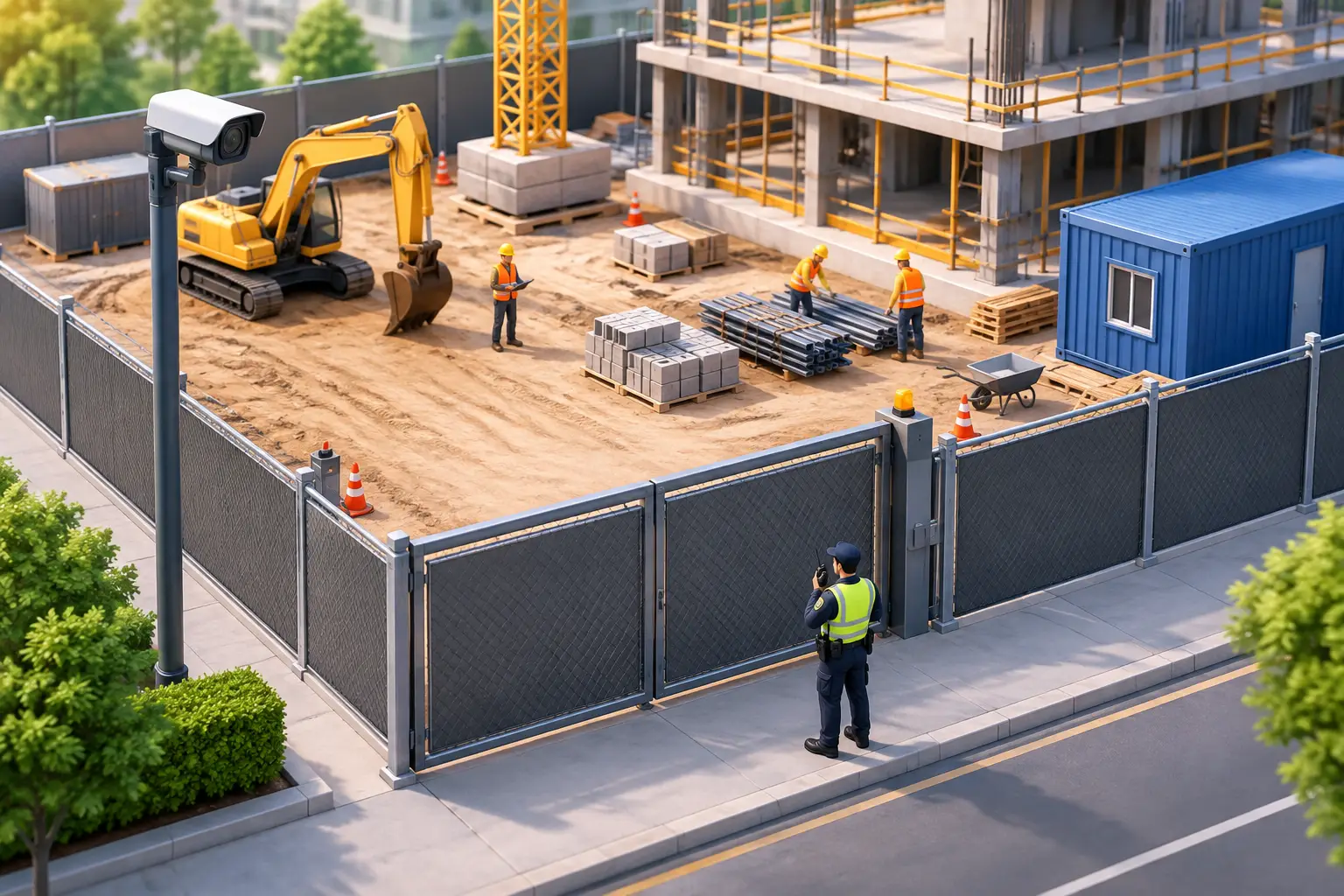
The perimeter is the first visible deterrent and the first opportunity to control access. Temporary fencing should be stable, difficult to move, and checked regularly for damage, gaps, or sections that have been lifted or undermined. Gates need reliable locks and should remain closed when deliveries are not being managed.
Lighting is equally important. Well-lit entrances, material storage areas, walkways, and parking zones make unauthorized activity easier to detect and discourage opportunistic crime. Lighting should be positioned to reduce shadows around fence lines and portable offices, without creating glare that prevents guards or camera operators from seeing clearly.
Signage reinforces the perimeter. Display notices that identify restricted access, visitor check-in requirements, surveillance where applicable, and site safety rules. Signs do not replace physical security, but they make the site’s expectations clear and support enforcement when someone enters without authorization.
Control Who Enters and Why
Construction sites are active environments, and access can quickly become informal if it is not managed consistently. A secure site needs one defined process for employees, subcontractors, visitors, and delivery drivers.
Use designated entry points instead of allowing multiple informal routes into the work area. Workers should carry visible identification or use an approved credential system. Visitors and vendors should sign in, confirm who they are meeting, receive site instructions, and remain escorted where necessary. Delivery schedules should be coordinated so drivers are not left waiting at open gates or moving freely through the site.
Access control becomes especially valuable on large, long-term, or high-value projects. Depending on the site, this may include controlled gates, electronic credentials, visitor registers, vehicle checks, or a staffed gatehouse. The right level of control depends on the risk profile, but accountability should never be optional. Site managers need to know who is present, what they are authorized to do, and when they left.
Secure Keys, Codes, and Credentials
Keys, gate remotes, alarm codes, and access cards are often overlooked vulnerabilities. Keep a documented register of who holds them, review permissions as subcontractors change, and collect all items when a worker leaves the project. Avoid shared alarm codes whenever possible. If codes must be shared, change them after staffing changes or a suspected compromise.
Use Security Guards Where Judgment Matters
Technology is valuable, but it cannot replace a trained professional’s ability to assess behavior, manage a confrontation, direct emergency services, or make sound decisions in an evolving situation. Static security guards provide a visible presence at gates, reception points, patrol routes, and high-value storage areas. Their role can include access management, visitor verification, perimeter inspections, incident reporting, and escalation of safety or security concerns.
After-hours guarding is particularly effective when theft, trespass, vandalism, or arson risks are elevated. A guard can conduct unpredictable patrols, inspect temporary fencing, identify signs of forced entry, and respond immediately when an issue is found. This is more proactive than discovering a breach the following morning.
The provider matters. Use properly licensed personnel with construction-site experience, clear reporting procedures, appropriate insurance, and supervisors who can respond when conditions change. Guards should understand the boundaries of their role and coordinate with site leadership, law enforcement, fire services, and emergency contacts when required.
Pair Monitoring Technology With a Response Plan
Cameras, intrusion detection, remote monitoring, and GPS tracking can strengthen a security program, particularly across large sites or projects with limited overnight staffing. Cameras should cover entry points, perimeter corners, equipment compounds, fuel storage, offices, and material laydown areas. They should be positioned deliberately, not simply mounted where installation is easiest.
However, surveillance footage has limited value if no one reviews alerts or knows what to do next. Every monitored system needs a defined response procedure. Determine who receives the alert, who verifies it, whether a guard is dispatched, when management is contacted, and when law enforcement should be called.
For valuable machinery, use equipment immobilization measures, secure key storage, and asset tracking where appropriate. Marking assets and maintaining accurate equipment records can also assist recovery and insurance claims if theft occurs. These measures are not a substitute for physical security, but they make stolen property harder to use, sell, or conceal.
Protect Materials, Tools, and Temporary Facilities
Not every item requires the same level of protection. Separate high-value, portable, and easily resold items from general supplies. Store tools in locked containers or secure cages, keep copper and other attractive materials out of public view, and avoid leaving equipment keys in vehicles or site offices.
Fuel storage requires special attention because it creates both theft and safety concerns. Secure tanks, document fuel deliveries and usage, and investigate unexplained discrepancies promptly. Portable generators, compressors, trailers, and small plant should be locked, immobilized, or chained to approved anchor points when not in use.
Temporary offices can hold personal information, plans, network equipment, and access credentials. Secure doors and windows, keep sensitive documents out of sight, and limit access to authorized staff. If the office has connected systems or cameras, basic cybersecurity practices matter too: use strong unique passwords, restrict administrator access, and remove accounts for departed personnel.
Train Crews to Report, Not Ignore
Security is strongest when every worker understands that suspicious activity, damaged fencing, missing equipment, or unfamiliar visitors should be reported immediately. Brief security expectations during site induction and reinforce them through toolbox talks as the project changes.
Workers should know the reporting path and should feel confident that concerns will be taken seriously. A missing lock may seem minor, but it can signal a planned theft or a larger breakdown in access control. Fast reporting gives site management the chance to correct weaknesses before they become an incident.
Clear procedures also reduce conflict. Crews need to understand that access checks, sign-in requirements, and restricted areas protect their safety as well as the project’s assets and schedule.
Review Security as the Project Changes
A construction site is not static. The risk profile changes as foundations are poured, structures rise, materials arrive, trades rotate, and the project approaches completion. A fence arrangement that worked during early excavation may no longer protect new access points or equipment compounds.
Schedule regular security reviews with the project manager, superintendent, and security provider. Examine incident reports, near misses, access logs, camera coverage, lighting outages, and changes to the construction schedule. Pay close attention before holiday closures, long weekends, major deliveries, and handover periods, when sites can be especially exposed.
For higher-risk projects, an experienced security partner can provide trained guarding, mobile patrols, access management, and reporting tailored to site operations. Broadsafe Group approaches site protection with licensed personnel, disciplined procedures, and coverage designed around the conditions on the ground.
A secure construction site is not one that never faces risk. It is one where risks are identified early, access is controlled, people know their responsibilities, and a capable response is ready when something does not look right.