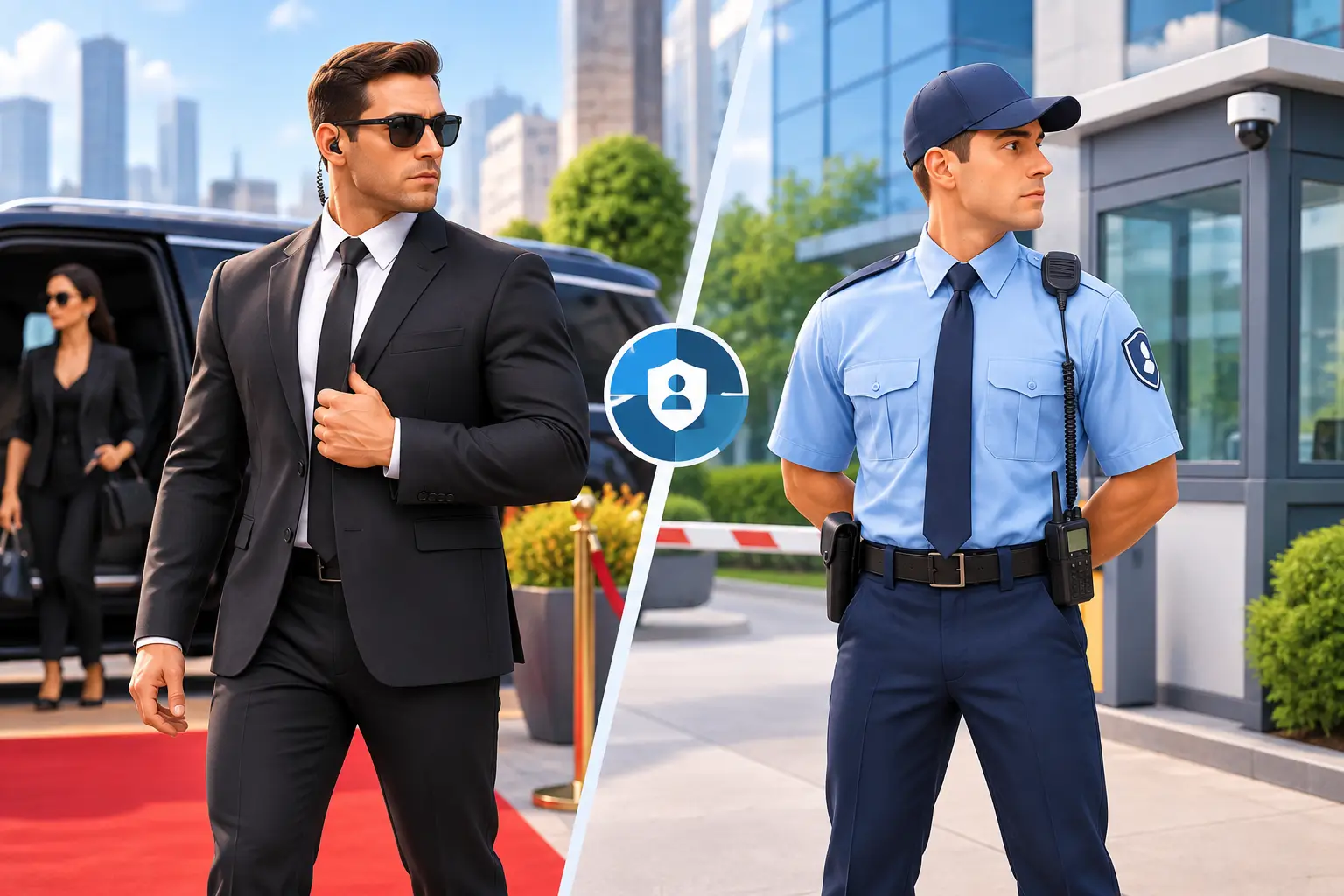
Bodyguard vs Security Guard: Which Fits?
A crowded product launch, an executive arriving through a public entrance, and a busy hotel lobby may all require security. But the right assignment is not always the same. In the bodyguard vs security guard decision, the central question is whether you need to protect a specific person, a defined place, or both.
Choosing incorrectly can create gaps in coverage, unnecessary expense, or a security presence that does not suit the environment. For operations managers, venue leaders, and event organizers, understanding the distinction makes it easier to build a protection plan that supports safety, customer experience, and business continuity.
Bodyguard vs Security Guard: The Core Difference
A bodyguard, often referred to as a personal protection officer or close protection officer, is assigned primarily to protect an individual. Their work centers on the person’s movements, exposure to risk, schedule, travel, and immediate surroundings. The protected person may be a corporate executive, public figure, visiting VIP, high-profile speaker, or someone facing a known personal threat.
A security guard is generally assigned to protect a location, event, asset, or group of people within a site. Their responsibilities may include controlling access, monitoring entrances, conducting patrols, responding to incidents, managing crowds, observing CCTV, and enforcing venue policies. The goal is to maintain a safe and orderly environment across the entire operation.
There can be overlap. A trained professional may perform both functions during a high-profile event, particularly when a VIP needs to move through a venue safely. However, the operating focus remains different: bodyguards stay close to the person, while guards maintain control of the environment.
What a Bodyguard Does
Personal protection is proactive and highly individualized. Before an assignment begins, the protection officer should understand the client’s itinerary, transport arrangements, public exposure, entry and exit points, and any credible risks. The work is not simply standing beside someone. It involves anticipating problems before they interrupt the person’s movement or safety.
A bodyguard may coordinate secure arrivals and departures, assess venues before attendance, manage proximity to members of the public, accompany the client between locations, and respond quickly if an incident develops. Discretion is often as valuable as visibility. For a corporate executive meeting staff or clients, an overly obvious close-protection presence may be counterproductive. In other situations, visible protection can provide reassurance and deter unwanted behavior.
The appropriate level of personal protection depends on the threat profile. A CEO attending a low-profile business dinner may require discreet support and secure transport coordination. A celebrity appearing at a public event may require a larger team, advance planning, controlled access routes, and close coordination with event security.
Bodyguard services are typically best suited to assignments where a person’s safety remains the priority even as they move between different locations. That mobility is a key distinction from fixed-site guarding.
What a Security Guard Does
A security guard protects the operational environment. At a corporate office, that may mean verifying visitors, managing contractor access, monitoring after-hours activity, and reporting hazards. At a concert, it may mean checking credentials, supporting safe entry, watching crowd behavior, protecting restricted areas, and responding to disturbances.
For hospitality venues, guards can help maintain a welcoming but controlled atmosphere. They may manage queues, identify unsafe behavior, de-escalate conflict, and support staff when refusing entry or removing disruptive patrons. At construction sites and commercial properties, static guards and patrol officers help deter trespassing, theft, vandalism, and unauthorized access.
Strong guarding is not passive. It requires situational awareness, clear communication, accurate incident reporting, and the judgment to respond proportionately. The best guard presence helps staff and guests feel safe without creating unnecessary friction in daily operations.
Different Skills, Different Planning
Both roles demand professionalism, composure, and a security mindset. Still, the skill emphasis differs.
A personal protection officer needs close-protection training, strong observation skills, route awareness, discretion, and the ability to make rapid decisions around a client’s movements. They must remain alert without becoming intrusive. Their communication must be direct and calm, particularly when guiding a client away from an escalating situation.
A security guard needs to understand the site and its operating procedures. They may work with access systems, visitor logs, radio communications, alarm responses, emergency plans, and venue policies. Crowd control personnel need additional confidence in managing large groups, recognizing early signs of disorder, and de-escalating tension before it spreads.
For either role, licensing, background screening, insurance, and supervision matter. Clients should also confirm that the provider understands relevant local requirements and can document procedures, incidents, and shift activity to the standard their organization expects.
When You Need a Bodyguard
Personal protection is appropriate when a specific person’s exposure creates a meaningful security concern. That might include an executive handling a sensitive issue, a public figure attending an open event, a witness facing unwanted attention, or an overseas guest unfamiliar with the local area.
It is also valuable where schedules are unpredictable. If the individual will move from airport to hotel, office, meeting venue, restaurant, and event site, a dedicated protection officer provides continuity. The officer retains awareness of the principal’s location, companions, planned movements, and safe options if conditions change.
A bodyguard is not automatically required because someone is important. The decision should be based on practical risk: public visibility, known threats, contentious business activity, travel patterns, crowd interaction, and the consequences of disruption. A proportionate assessment prevents both under-protection and unnecessary overstaffing.
When You Need a Security Guard
Security guarding is the stronger fit when the risk is tied to a physical environment. Examples include a warehouse with valuable stock, a corporate lobby receiving regular visitors, a nightclub managing late-night crowds, or an event with multiple access points and high foot traffic.
Guards are also essential when consistent coverage is needed over long operating hours. A bodyguard follows a person. A guard post protects an entrance, loading dock, perimeter, control room, or restricted area. For many businesses, static guarding and mobile patrols provide visible deterrence and reliable operational support without the cost of a dedicated personal protection detail.
If your concern is keeping unauthorized people out, protecting assets, supporting staff, and maintaining orderly site conditions, a professionally managed guarding service will usually be the right starting point.
Many Assignments Need Both
For executive events, VIP appearances, concerts, and major corporate functions, the most effective option may be a combined deployment. Close-protection officers can stay focused on the VIP, while event security teams control the larger environment.
This structure prevents a common failure point: asking one officer to stay with a principal while also monitoring doors, crowds, and restricted areas. Those responsibilities compete for attention. Separating them gives each team a clear purpose and allows supervisors to coordinate communication, access plans, emergency procedures, and escalation protocols.
Consider a keynote speaker appearing at a conference. A personal protection officer may manage the speaker’s route from vehicle to green room to stage. Meanwhile, security guards manage attendee access, backstage credentials, entry screening, and crowd movement. The result is safer, more organized, and less disruptive to the event schedule.
Cost, Visibility, and Service Expectations
Bodyguard services generally cost more than standard guarding because they require specialized experience, dedicated attention, and often flexible hours or travel. The assignment may also require advance work, multiple officers, transport coordination, or coverage across several locations.
Security guard pricing varies according to the number of officers, shift duration, location, risk level, duties, required licenses, and whether the assignment involves crowd control, overnight coverage, or specialized equipment. The lowest rate is rarely the best measure of value. Gaps in supervision, weak reporting, poor presentation, or untrained personnel can quickly become a larger operational cost.
Visibility should also be considered. Uniformed guards can deter opportunistic misconduct and reassure employees, customers, and guests. Personal protection may be uniformed, suited, or discreet depending on the client and setting. A professional provider should tailor presentation to the purpose of the assignment rather than applying a one-size-fits-all approach.
Questions to Ask Before Booking Protection
Before selecting a service, clarify what you are trying to protect, when risk is highest, who needs access, and what an effective response looks like. Consider whether the assignment involves a fixed site, a moving individual, public interaction, sensitive information, valuable assets, or a large crowd.
Ask how personnel will be selected, supervised, and briefed. Confirm licensing and insurance requirements, incident-reporting processes, escalation procedures, and the provider’s capacity to add coverage if attendance, risk, or operating hours change. For recurring assignments, a provider that learns your site, team, and operating rhythm will deliver better consistency over time.
The right security arrangement should give your people room to do their jobs confidently. Whether that means discreet personal protection for a key individual or dependable guards across a busy site, the best outcome is a controlled environment where safety supports the experience rather than interrupting it.