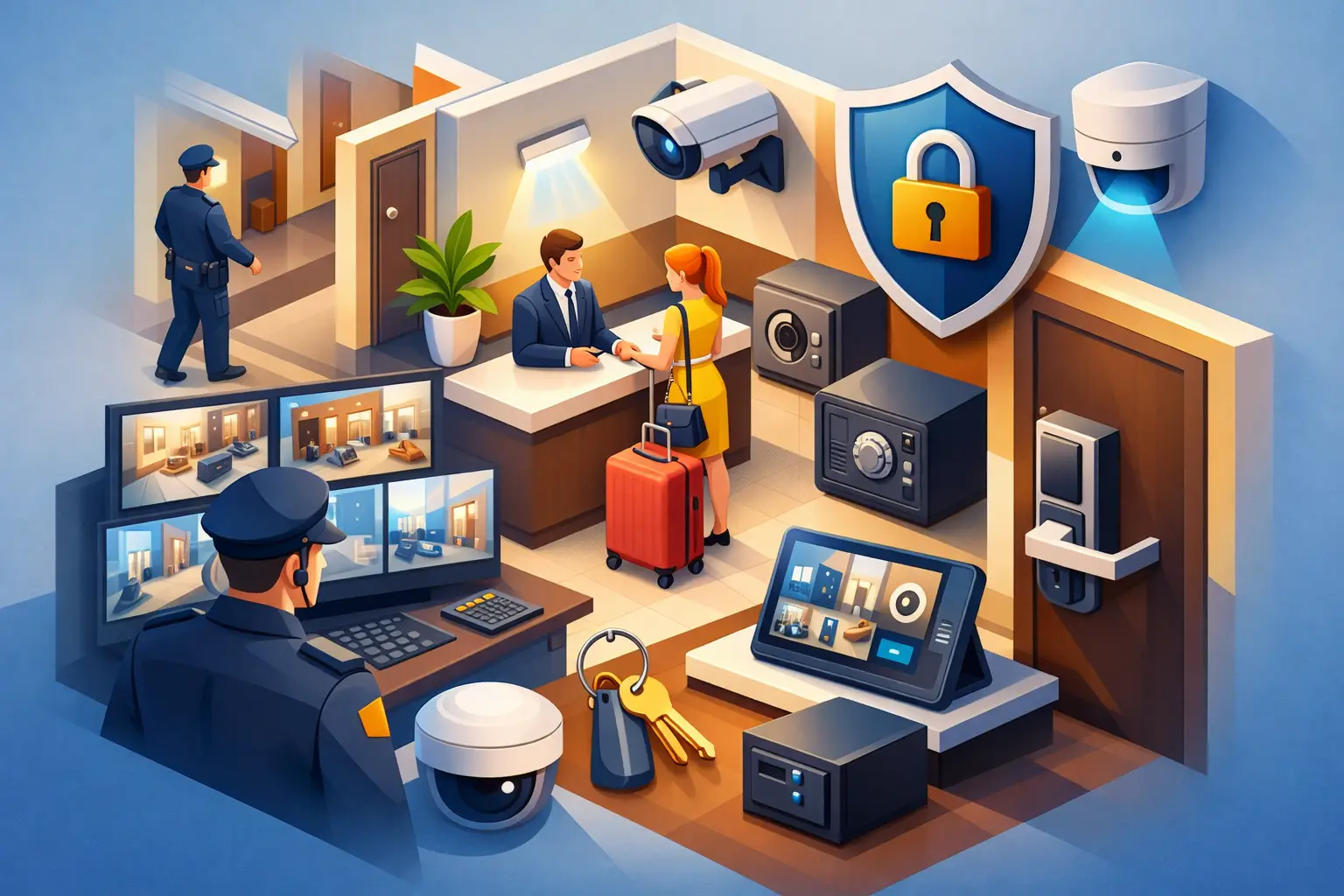
10 Best Hotel Security Measures That Protect Guests
A guest should feel welcomed when they enter a hotel, not processed through a checkpoint. That balance is exactly why the best hotel security measures combine visible professionalism with discreet prevention. For hotel operators, security is not simply about stopping theft or managing an incident. It protects guest confidence, employee wellbeing, brand reputation, and the continuity of daily operations.
Hotels face a changing mix of risks: unauthorized visitors, room theft, aggressive behavior, intoxication, emergencies, staff safety concerns, and digital threats linked to connected access systems. The right approach is layered, site-specific, and backed by trained people who know how to act without disrupting the guest experience.
Hotel Security Starts With the Property’s Real Risks
A luxury city hotel, an airport property, a resort, and a limited-service roadside hotel do not carry the same risk profile. Security planning should begin with an assessment of the building layout, guest volume, operating hours, public access points, parking areas, nearby activity, and incident history.
This assessment should involve hotel management, front desk leaders, facilities staff, housekeeping supervisors, and the security provider. It identifies where people can enter unnoticed, where staff may be isolated, and which areas require stronger supervision. A well-designed plan also considers busy periods, major events, VIP stays, school groups, and late-night food and beverage operations.
10 Best Hotel Security Measures for Safer Operations
1. Maintain a Visible, Professional Security Presence
A trained security officer at the right location is one of the strongest deterrents a hotel can deploy. Presence matters in lobbies, entrances, parking facilities, event spaces, and public areas where staff need rapid support. The goal is not to make the hotel feel over-policed. It is to ensure guests and employees know help is available immediately.
Officers assigned to hospitality settings need more than a security license. They should understand guest service, conflict de-escalation, access control, report writing, emergency response, and how to communicate respectfully with people from varied backgrounds.
2. Control Access to Guest Floors and Back-of-House Areas
Guest room floors, service corridors, loading docks, staff offices, and mechanical rooms should not be freely accessible. Key cards, mobile credentials, visitor protocols, and properly managed physical keys reduce opportunities for unauthorized entry.
Access controls must also be managed operationally. Deactivated cards should stop working promptly after checkout. Lost keys must be recorded and replaced through a documented process. Staff access should reflect the role and shift, rather than granting broad access simply because it is convenient.
3. Strengthen Front Desk Verification Procedures
The front desk is often the first point at which a security issue can be prevented. Employees should be trained to verify guest identity before issuing replacement keys, disclosing room information, or connecting calls to a room. A person who knows a guest’s name is not automatically entitled to their room number or access credentials.
Procedures should be clear enough for staff to follow during a busy check-in period. They must also give employees authority to pause a request, seek a supervisor’s support, or call security when something does not feel right.
4. Use Surveillance Strategically, Not Excessively
Cameras are valuable when they cover meaningful areas: entrances, reception, elevators, corridors where appropriate, parking areas, loading zones, cash-handling points, and perimeter access routes. Footage can support real-time monitoring, incident investigation, and accountability.
Camera placement should respect privacy expectations. Guest rooms, restrooms, changing spaces, and other private areas are never appropriate for surveillance. Hotels should also establish retention periods, viewing permissions, maintenance checks, and a clear process for preserving footage after an incident.
5. Protect Parking Lots, Garages, and Arrival Areas
Parking facilities can create risks that are less visible from the main building. Poor lighting, blind corners, uncontrolled pedestrian access, and limited staff presence make guests and employees more vulnerable, particularly during late-night arrivals and early departures.
Good lighting, visible signage, camera coverage, emergency call points where suitable, and routine patrols can significantly improve safety. For larger properties, security staff should pay particular attention to delivery activity, ride-share pickup zones, unattended vehicles, and tailgating through gated entrances.
6. Prepare Staff to Recognize and De-Escalate Problems
Many hotel incidents begin as a small concern: a dispute in the lobby, an intoxicated visitor, a guest being followed, or someone refusing to leave a restricted area. Staff who recognize warning signs early can request assistance before the situation escalates.
Training should cover verbal de-escalation, personal safety, suspicious behavior reporting, domestic violence awareness, and emergency communication. Employees do not need to become security specialists. They need to know when to engage, when to keep distance, and when to bring in trained support.
7. Establish Clear Emergency Response Plans
A security plan is only effective if people can use it under pressure. Hotels should have current procedures for fire alarms, medical emergencies, active threats, severe weather, missing persons, evacuations, shelter-in-place instructions, and power outages.
Roles need to be defined before an emergency occurs. Who calls emergency services? Who communicates with guests? Who checks stairwells, assembly points, or event spaces? Who preserves information for management and authorities? Regular drills and tabletop exercises expose gaps that a written policy alone will not reveal.
8. Secure Events, Bars, and High-Traffic Public Spaces
A hotel can be secure during normal operations but exposed during a wedding, conference, concert, or busy weekend service. Events create temporary access points, unfamiliar attendees, cash activity, alcohol-related risks, and crowd movement that require additional planning.
Event security should be scaled to attendance, venue layout, guest profile, alcohol service, and the nature of the program. Depending on the risk, this may include credential checks, bag policies, roving patrols, door supervision, crowd management, and a dedicated incident-response contact for event organizers.
9. Protect Employee Safety and Internal Assets
Hotel security must protect the people working behind the scenes, not only the guests in public spaces. Housekeeping staff may work alone on guest floors. Night auditors may manage the desk with limited support. Maintenance teams often enter isolated locations, while cash-handling staff can face elevated risk during transfers or closing procedures.
Check-in systems, panic alarms, radios, escort procedures, secure cash practices, and supervisor check-ins can reduce these risks. Internal theft controls also matter. Inventory rooms, master keys, sensitive guest data, and receiving areas require defined accountability and regular review.
10. Connect Physical Security With Technology and Reporting
Modern hotels rely on connected systems, including property management platforms, electronic locks, Wi-Fi networks, payment systems, and surveillance tools. A failure in one area can create consequences in another. For example, compromised credentials may affect room access, while a network outage can limit camera visibility or communication.
Physical security and IT teams should coordinate on access permissions, incident escalation, system updates, vendor access, and backup procedures. Detailed incident reports are equally valuable. They reveal patterns, support follow-up action, and help management make decisions based on evidence rather than assumptions.
The Right Security Model Depends on the Hotel
Not every property needs 24-hour guards at every entrance. A smaller hotel may benefit most from strong front desk procedures, controlled access, reliable cameras, and on-call response. A large full-service property may require dedicated lobby coverage, overnight patrols, parking supervision, event security, and close coordination with management.
The trade-off is cost versus exposure, but the cheapest arrangement is rarely the most efficient if it leaves employees unsupported or incidents unmanaged. Security coverage should be reviewed after significant changes such as renovations, new event offerings, a rise in local crime, changes in operating hours, or a serious incident.
A professional security partner can help translate risk into practical coverage. Broadsafe Group approaches hospitality security with licensed personnel, tailored site procedures, and a disciplined focus on protecting people, property, and operations.
Make Security Part of the Guest Experience
The strongest hotel security programs are felt more than seen. Guests notice that entrances are well managed, staff are confident, common areas are monitored, and help arrives quickly when needed. Employees notice that management has clear procedures and takes their safety seriously.
Start with an honest assessment of where your property is most exposed, then build safeguards that fit the way your hotel actually operates. A calm, prepared response at the right moment can protect far more than a single stay – it can protect the trust guests place in your business.