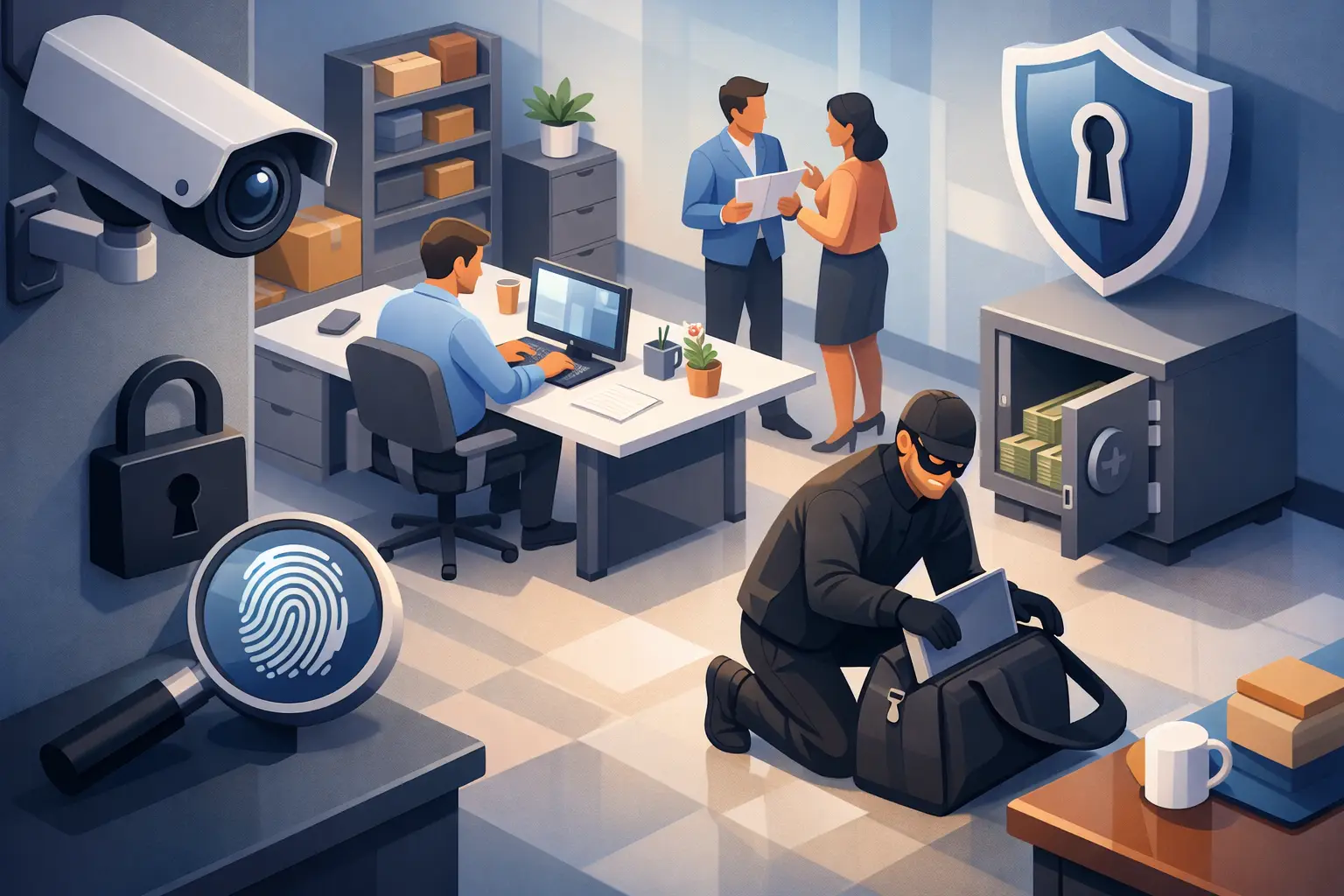
How to Prevent Workplace Theft Without Disrupting Work
A missing laptop, a case of inventory that never reaches the loading dock, or unexplained cash discrepancies can quickly become more than a financial issue. They affect morale, disrupt operations, and create uncertainty for managers. Knowing how to prevent workplace theft means building clear controls that protect assets while treating employees, contractors, and customers with professionalism.
Workplace theft is not limited to cash or stock. It can involve tools, fuel, electronic devices, confidential information, time, access credentials, and company property used outside approved purposes. The right response depends on the site, the assets at risk, and the number of people moving through the workplace each day.
Start With a Clear View of Your Risks
Effective prevention begins with understanding where loss can occur. A corporate office faces different risks from a restaurant, construction site, warehouse, hotel, club, or event venue. High-footfall businesses may need to focus on public access points and back-of-house areas, while offices may be more concerned with devices, documents, and visitor access.
Walk through the site as someone looking for an opportunity to take property without being seen. Pay attention to poorly lit parking areas, unattended delivery doors, shared storage rooms, blind spots around registers, unsecured keys, and spaces where staff can enter without authorization. Review when losses or discrepancies occur. Patterns often emerge around shift changes, busy service periods, deliveries, or times when supervision is reduced.
Do not rely on assumptions. Compare inventory records, equipment sign-out logs, access records, cash reconciliation reports, and incident reports. A single missing item may be an error. Repeated irregularities deserve a closer, documented review.
How to Prevent Workplace Theft With Layered Controls
The strongest theft prevention plans use layers rather than one highly visible measure. Cameras alone may deter some behavior, but they do not control access, improve recordkeeping, or establish accountability. Likewise, a policy is ineffective if staff do not understand it or managers do not apply it consistently.
Control Access to Restricted Areas
Limit access to stockrooms, server rooms, offices, cash handling areas, equipment cages, loading docks, and other sensitive locations. Use keys, access cards, codes, or monitored entry systems appropriate to the site. Access permissions should match an employee’s role, not simply be granted for convenience.
Review access when employees change roles, leave the business, or when contractors complete their work. Shared keys and codes create unnecessary risk because it becomes difficult to determine who entered an area. Where shared access cannot be avoided, use sign-out procedures and regular checks.
Visible, professional security personnel can add an important deterrent at sites with valuable stock, large visitor volumes, late trading hours, or repeated incidents. Their role should extend beyond standing at an entrance. A trained officer can monitor access points, conduct patrols, observe unusual activity, support staff during incidents, and report concerns through a clear chain of command.
Protect Cash, Stock, and Equipment Differently
Different assets require different controls. Cash should be counted under defined procedures, with separation between the person receiving money and the person reconciling it where practical. Set cash limits at registers, use secure drops, and investigate variances promptly rather than allowing small discrepancies to become routine.
For inventory, maintain accurate receiving, transfer, and dispatch records. Deliveries should be checked against purchase orders, and returns should require authorization. In a warehouse or hospitality setting, frequent counts of high-value or fast-moving items are more useful than waiting for a quarterly stocktake to reveal a problem.
Tools, tablets, radios, laptops, and specialized equipment should be assigned to named individuals or teams. Record serial numbers and condition at issue and return. For portable devices, combine physical controls with technical protections such as password requirements, device tracking, and access management. This reduces the impact if a device is lost or stolen.
Make Reporting Safe and Straightforward
Many theft issues are identified by employees who notice something unusual before a formal audit does. They may hesitate to report it if they fear retaliation, conflict with coworkers, or being labeled difficult. Create a reporting process that is confidential, accessible, and taken seriously.
Staff should know who to contact, what information to provide, and what will happen after they raise a concern. Encourage reporting of suspicious behavior, unsecured areas, policy gaps, and repeated process failures, not only confirmed theft. A report should lead to a professional review, not immediate accusations.
Managers need to respond consistently. Thank the person for raising the concern, preserve relevant records or footage, restrict access if needed, and document the next steps. Avoid discussing an allegation widely or confronting a suspected individual without evidence. Poorly managed investigations can damage trust and expose the business to legal and employee relations risks.
Train Staff on Everyday Security Habits
Security procedures work when they are practical enough to use during a busy shift. New employees should receive theft prevention training during onboarding, and existing teams should receive regular refreshers when procedures change or incidents identify a gap.
Training should explain why controls exist. For example, staff are more likely to challenge an unknown person in a restricted hallway when they understand that visitor management protects colleagues, customer data, and business assets. Use real workplace scenarios relevant to the site, such as an unverified delivery driver requesting access to a stockroom or a former employee trying to use an old access card.
Managers set the standard. If leaders bypass sign-out processes, leave sensitive areas unlocked, or treat stock variances casually, the rest of the team will follow. Consistent behavior from supervisors is one of the most effective and least expensive deterrents available.
Use Surveillance Carefully and Professionally
Security cameras can help deter theft, support investigations, and clarify what happened after an incident. Their placement matters more than their number. Prioritize entrances and exits, registers, receiving areas, loading docks, high-value storage, and other locations identified in your risk assessment.
Surveillance must be used responsibly. Employees should be informed of monitoring practices, and cameras should never be placed in areas where people reasonably expect privacy, such as restrooms or changing rooms. Footage should be protected, retained only as long as necessary, and accessed by authorized personnel.
For larger sites, remote monitoring, alarm response, and scheduled physical patrols can provide coverage outside standard business hours. The appropriate mix depends on the value of assets, local incident history, operating hours, and how quickly a response is required. A low-risk office may only need strong access control and monitored alarms, while a busy venue may benefit from visible security staff during peak periods.
Manage Visitors, Vendors, and Contractors
Not every workplace theft risk comes from employees. Vendors, delivery drivers, temporary workers, maintenance teams, and visitors may legitimately need access to parts of the site. The goal is not to create an unwelcoming environment. It is to ensure every person is expected, identifiable, and appropriately supervised.
Use a sign-in process, issue visitor identification where suitable, and confirm the host responsible for each visitor. Contractors working near valuable equipment, customer records, or stock should have clear boundaries on where they can go and what they can access. At events and public-facing venues, well-managed entry points also help prevent unauthorized items and individuals from moving into staff-only areas.
Delivery procedures deserve particular attention. Verify drivers and orders, direct them to designated receiving points, and avoid allowing unescorted access through back entrances. Busy periods are when unauthorized access is most likely to go unnoticed.
Review Incidents Without Creating a Culture of Suspicion
A theft prevention plan should protect the workplace, not make every employee feel watched or mistrusted. Most people want clear expectations and a safe environment. Focus on fair procedures, consistent enforcement, and evidence-based decisions.
After an incident, assess what enabled it. Was an access point left open? Were inventory records inaccurate? Did a rushed team skip a required check? Did the site lack adequate supervision at a predictable time? Correct the underlying weakness, then communicate any process changes clearly.
Periodic security reviews keep controls aligned with operational changes. New locations, altered shifts, expanded inventory, technology upgrades, and seasonal events can all create new risks. A security provider with experience in corporate, hospitality, venue, and event environments can help assess the site and recommend coverage that fits the way your business actually operates.
The best prevention measures are often the ones employees can follow without slowing down: a locked storage room, a verified delivery, a properly logged device, a visible patrol, and a manager who acts quickly when something does not look right. Those disciplined routines protect more than property – they protect the confidence people have in your workplace.