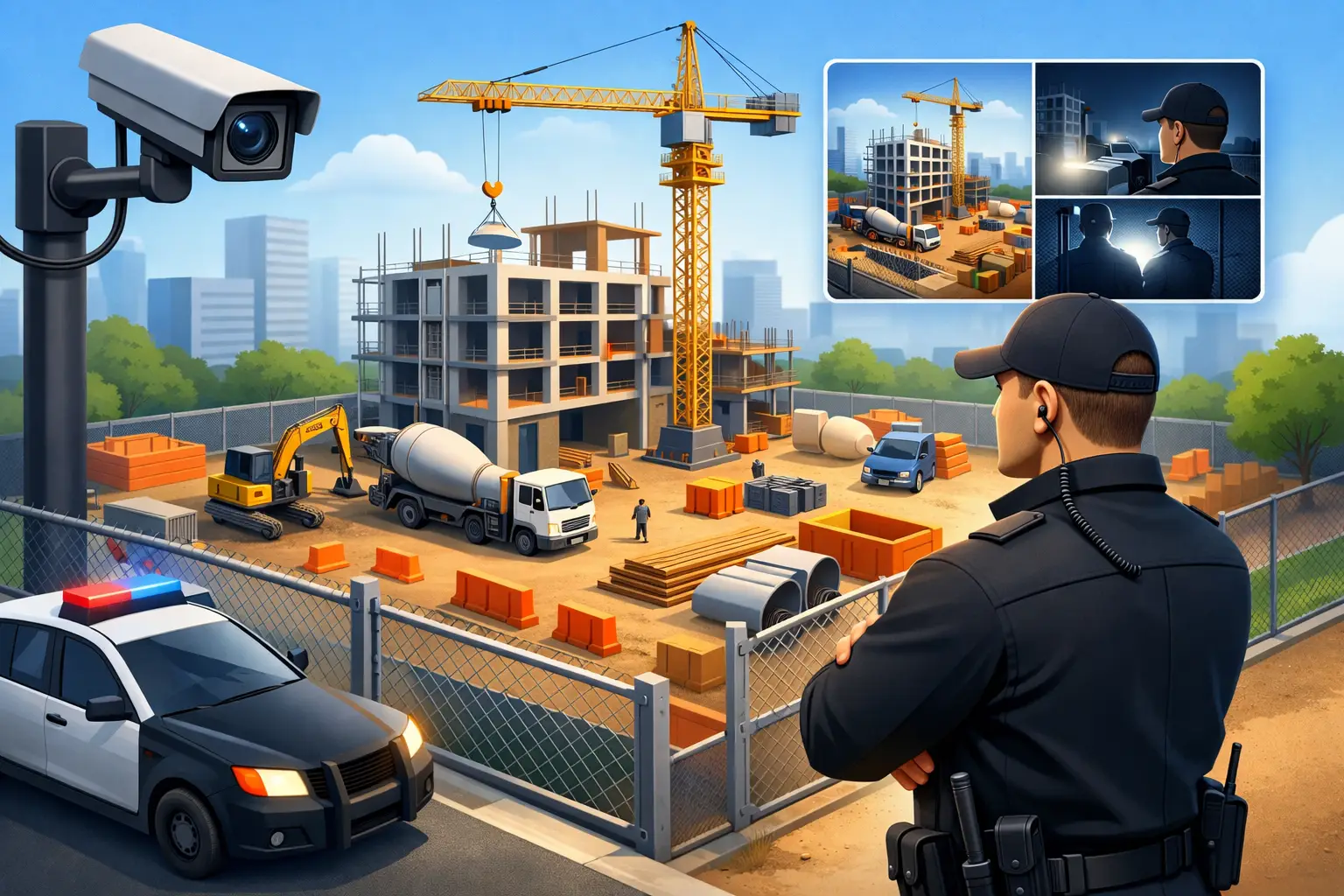
Why Security Guards for Construction Sites Matter
A construction site can lose thousands of dollars in a single night. Copper wiring disappears, tools go missing, fuel is siphoned, fencing is breached, and by morning the project is behind schedule before the crew even clocks in. That is why security guards for construction sites are not a luxury line item. They are a practical control that protects timelines, assets, and the people responsible for keeping a project moving.
Construction environments create a very specific security challenge. They are temporary by nature, often spread across large footprints, and constantly changing as the build progresses. Access points shift. Deliveries arrive early. Subcontractors come and go. Valuable materials may sit on-site before installation. In many cases, the site is exposed after hours, on weekends, and during holiday shutdowns, which is exactly when opportunistic theft and vandalism tend to happen.
Why construction sites attract risk
A finished commercial building usually has controlled entry, permanent lighting, established surveillance points, and a stable list of occupants. A construction site has none of that certainty. It may have incomplete perimeter barriers, uneven visibility, and multiple parties entering under tight deadlines. That combination makes it attractive not only to thieves, but also to trespassers, vandals, and anyone willing to exploit weak oversight.
The losses are rarely limited to stolen property. One missing generator or damaged switchboard can stop trades from working. One act of vandalism can trigger cleanup costs, insurance issues, rework, and client pressure. If an unauthorized person is injured on-site, the exposure can become even more serious. For developers, builders, and site managers, the real cost of poor site security is usually downtime and liability, not just replacement value.
What security guards for construction sites actually do
The value of on-site guarding starts with visibility. A trained guard provides an immediate deterrent that cameras and signage alone cannot match. Most incidents on construction sites are opportunistic. When there is a licensed security presence performing patrols, monitoring entry points, and documenting activity, the site becomes a harder target.
But deterrence is only one part of the job. Effective security guards for construction sites control access, verify who belongs on-site, monitor deliveries, and maintain detailed incident records. They can challenge unauthorized visitors before they reach equipment yards or storage containers. They can also identify suspicious behavior that might not look serious on a camera feed until the damage is already done.
There is also an operational benefit that many project teams overlook. Guarding creates accountability. When workers, subcontractors, and visitors know entries and exits are being observed and recorded, site discipline improves. That does not replace good project management, but it supports it.
Access control is often the first weak point
Many site losses begin with poor access management rather than a dramatic overnight break-in. A side gate is left unsecured. A driver enters without verification. A former subcontractor still knows the routine and returns after hours. Construction sites are busy places, and in busy environments small gaps become expensive problems.
A security guard at the gate or entry checkpoint helps tighten those gaps. Credentials can be checked, vehicles logged, and visitors directed properly. For larger projects, access control also helps maintain a safer environment by reducing unnecessary foot traffic around active work zones.
After-hours patrols protect more than materials
Night shifts, weekends, and shutdown periods create the highest exposure for most sites. This is when there are fewer witnesses, less natural oversight, and more time for intruders to work unnoticed. A guard conducting scheduled and random patrols can identify breached fencing, unlocked containers, suspicious vehicles, or signs of attempted theft before a small issue becomes a major incident.
That matters for safety as much as security. Construction areas contain hazards even when work has stopped. An unauthorized person who enters after hours may not only steal or damage property, but also put themselves in danger. A physical security presence helps reduce both risks.
When a site needs guards instead of just cameras
Cameras are useful. Lighting is useful. Alarm systems are useful. None of those measures should be dismissed. But they do not always solve the problem on their own.
A camera can record a theft. A guard may stop it. An alarm can notify someone after a perimeter is breached. A guard may catch the attempt before access is gained. For some lower-risk sites, remote monitoring and physical barriers may be enough. For higher-value projects, sites in isolated areas, or builds facing repeated trespassing, dedicated guarding is usually the more reliable option.
It depends on the risk profile. A small daytime renovation in a tightly controlled urban building has very different needs from a multi-phase development with stored equipment, fuel, copper, and temporary infrastructure. Good security planning starts with an honest assessment of what is on-site, when it is exposed, and what a disruption would cost.
How to evaluate security guards for construction sites
Not all guarding services are equal, and construction work is not a generic assignment. The best fit is a provider that understands dynamic worksites, changing site conditions, and the importance of reporting, professionalism, and escalation protocols.
Licensing is the baseline, not the differentiator. Beyond that, decision-makers should look for guards who are trained to operate in active commercial environments, communicate clearly with site teams, and follow documented procedures. Insurance coverage matters. So does a provider’s ability to supply consistent staffing, supervisory oversight, and reliable incident reporting.
Construction clients should also ask how patrols are conducted, how access logs are maintained, how incidents are escalated, and what happens if a guard cannot attend a shift. These details say a lot about whether a security company is built for enterprise-level accountability or simply filling rosters.
For companies that take risk management seriously, standards alignment can also be a meaningful indicator. Providers operating with disciplined quality and safety frameworks are generally better positioned to deliver consistent service across long projects and multiple sites.
One size does not fit every project
Some sites need a guard posted at the entrance during working hours and mobile patrols overnight. Others need 24/7 coverage, vehicle checks, contractor verification, and incident response support. There are also projects where security needs increase during specific phases, such as demolition, material delivery, fit-out, or handover.
That is why tailored coverage matters. Overstaffing can waste budget. Understaffing can leave predictable gaps. The right solution matches the level of guarding to the site’s footprint, asset value, schedule, and surrounding environment.
The business case is stronger than it looks
Security is often judged against its visible cost rather than the losses it prevents. That can be shortsighted on construction sites, where one disruption can affect subcontractor scheduling, client confidence, and project delivery dates.
If a security presence prevents one major theft, one vandalism incident, or one unauthorized entry that leads to an injury claim, the return is obvious. Even when nothing happens, that does not mean the service was unnecessary. In many cases, visible guarding is the reason nothing happened.
There is also a reputational angle. Builders and developers are under constant pressure to deliver safely and on time. A poorly secured site signals weak control. A professionally managed site signals discipline, compliance, and care for both assets and people.
Broadsafe Group approaches this kind of coverage with the mindset clients expect from a long-term security partner – licensed personnel, professional standards, and tailored protection built around the realities of the site.
Security guards for construction sites should support operations, not disrupt them
The best guard presence is not heavy-handed. It is controlled, alert, and integrated into the way the site operates. Guards should know the chain of command, understand access procedures, communicate clearly with supervisors, and respond professionally when issues arise. They should strengthen workflows rather than create bottlenecks.
That balance matters because construction projects move fast. Site managers do not need unnecessary friction. They need a security partner who can protect the perimeter, monitor activity, support accountability, and adapt as site conditions change.
When security is done well, it becomes part of business continuity. Materials are where they should be. Access is controlled. Incidents are documented. Risks are reduced before they become delays. And the people responsible for the project can stay focused on delivery instead of dealing with avoidable setbacks.
If you are weighing the cost of guarding against the cost of exposure, start with the real question: what would one serious breach do to your schedule, budget, and client commitments? For most construction sites, that answer makes the decision much clearer.