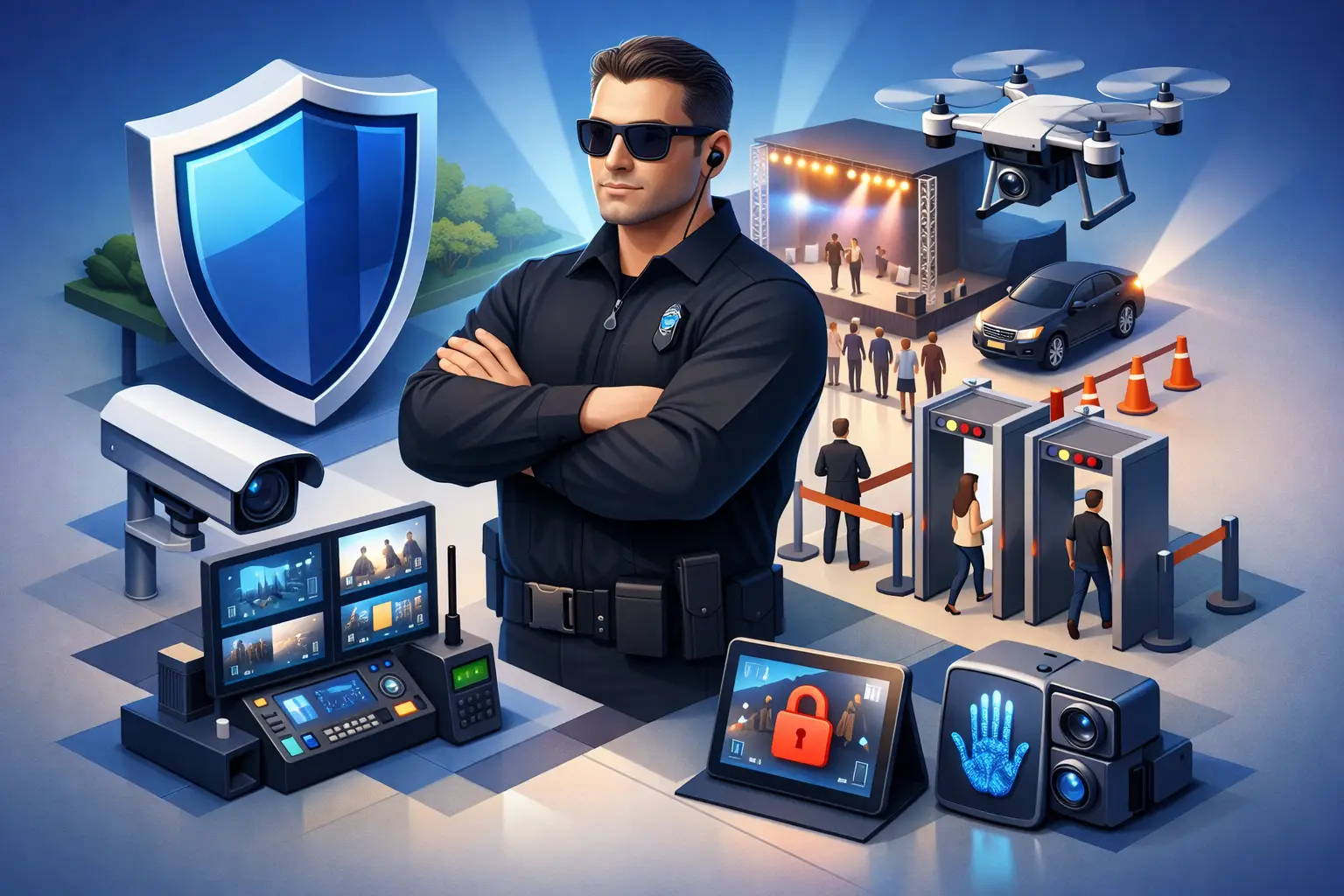
Event Security Services That Reduce Risk
A packed entry line, a last-minute VIP arrival, a guest who has had too much to drink, a delivery truck blocking access – event risk rarely announces itself politely. That is why event security services matter long before the first guest arrives. For organizers, venue operators, and operations teams, the real value is not just having guards on site. It is having a security partner that can plan ahead, control access, manage crowds, and respond decisively when conditions change.
What strong event security services actually cover
Effective event security starts with the operating reality of the event itself. A corporate function has different exposure than a music performance. A hotel ballroom requires a different posture than a stadium concourse. A private VIP appearance calls for tighter access control than a public community event. Good planning accounts for attendance, layout, alcohol service, guest profile, timing, and how people move through the space.
That is why event security services should never be treated as a standard headcount exercise. Two guards at one event may be enough. The same number at another event may leave blind spots at entrances, exits, backstage areas, loading zones, or parking lots. Security planning needs to match the venue, the schedule, and the likely pressure points.
In practice, that often includes access control, bag checks where appropriate, guest screening, perimeter monitoring, crowd control, asset protection, incident response, and coordination with venue teams. Some events also require personal protection for executives, artists, or public figures. Others need a visible deterrent presence that supports staff and reassures attendees without making the environment feel heavy-handed.
Why event risk changes from one venue to the next
The most common mistake in event planning is assuming risk is tied only to crowd size. Attendance matters, but it is only one variable. The real picture includes the type of audience, the event format, the timing of arrivals and departures, the availability of alcohol, and the physical limits of the site.
A 300-person networking event in a controlled corporate setting may present lower risk than a 150-person late-night hospitality event with limited entry points and street exposure. A daytime family event may seem straightforward until vehicle access, lost children, or unmanaged contractor movement becomes an issue. Outdoor events add weather, fencing, lighting, and emergency access concerns that indoor sites may not face.
This is where experienced event security teams add value. They look at the environment as it is, not as it appears on paper. They identify pinch points, define response protocols, and make sure the security posture aligns with both safety and the guest experience.
Event security services and crowd control
Crowd control is one of the clearest tests of security quality. It is not just about stopping disorder. It is about directing movement, reducing friction, and keeping people calm when demand outpaces space.
Entry queues, ticket validation points, bar lines, stage-front crowding, and end-of-event exits all need active management. Without it, small delays become frustration, and frustration can become confrontation. The best security personnel do not wait for a problem to escalate. They read the room, position themselves well, communicate clearly, and intervene early.
That takes training and judgment. An overly aggressive approach can damage the tone of the event and create unnecessary complaints. A passive approach can leave staff exposed and allow avoidable issues to grow. Professional crowd control sits in the middle – visible, calm, alert, and ready to act when needed.
The value of visible deterrence
A trained, licensed security presence changes behavior. Guests feel safer. Staff feel supported. Individuals looking to test boundaries often think twice when security is clearly active at access points and throughout the venue.
Visible deterrence is especially important at concerts, hospitality venues, nightlife environments, and public events where high foot traffic can create opportunities for theft, trespassing, or disorderly conduct. The goal is not intimidation. It is order, reassurance, and rapid intervention when standards are breached.
Planning matters as much as staffing
Security problems often begin before the event opens. Incomplete briefings, unclear post assignments, missing communication protocols, and poor coordination with organizers can leave even capable personnel reacting instead of controlling the situation.
A disciplined provider will begin with scope, layout, timing, and risk review. They will clarify who is attending, where restricted zones are located, how credentials will be checked, and what the escalation process looks like. They will also confirm reporting lines so venue management, event producers, and security supervisors are aligned from the start.
For larger or higher-profile events, this planning phase may include liaison with venue stakeholders, emergency services requirements, and contingency preparation for medical issues, disruptive patrons, weather changes, or unauthorized access attempts. Not every event needs the same level of detail. But every event benefits from a plan that is specific enough to guide real decisions on the ground.
What decision-makers should look for in a provider
If you are sourcing event security services, credentials matter. Licensing, insurance, and operational discipline are not marketing extras. They are basic risk controls. A provider should be able to demonstrate that its personnel are properly licensed, briefed for the assignment, and deployed under clear supervision.
Standards alignment also matters, especially for corporate buyers and procurement teams. Providers that operate with documented processes and strong safety practices are generally better equipped to deliver consistent service across different venues and event types. That consistency becomes especially important when you need recurring coverage or support across multiple sites.
There is also a practical question many buyers overlook: can the provider scale without compromising control? A company that can staff one small event may not be equipped to manage multiple zones, coordinate team leads, or support higher-risk assignments involving VIP movement, restricted access, or sensitive guest interactions.
Broadsafe Group approaches this with a protection-first mindset built around licensed personnel, professional presentation, and tailored coverage suited to each venue and operating environment. For clients managing reputation as closely as safety, that level of discipline matters.
Matching security presence to the event experience
Security should support the event, not compete with it. The right presence at a formal corporate reception is different from the right presence at a live performance or a late-night hospitality venue. Uniform style, officer positioning, tone of communication, and escalation style all influence how guests perceive the environment.
That is why a one-size-fits-all deployment rarely works well. Some clients need a discreet posture that protects executives and manages access quietly. Others need highly visible crowd control at gates, barriers, and perimeter lines. In many cases, the right answer is a blend of both.
The trade-off is simple. A lighter touch may preserve atmosphere, but it can reduce deterrence if the event profile calls for stronger control. A more visible posture can strengthen order, but it needs to be delivered professionally to avoid making guests feel unwelcome. Experienced teams know how to adjust without losing command of the site.
Common gaps that create avoidable exposure
Many event incidents come back to the same preventable issues. Access points are understaffed. Contractors move through restricted areas without proper checks. Security is posted at the front while side entries, parking areas, or service corridors receive little attention. Radio communication is inconsistent. Staff are unclear on who handles ejections, incidents, or emergency coordination.
These are not dramatic failures, but they create the conditions for larger problems. Good event security services reduce those gaps by building coverage around movement, visibility, and response authority. They make sure security is where risk actually lives, not just where it is easiest to see.
That approach is especially valuable for venues and organizers running repeat events. Once a provider understands your site, your guest profile, and your operating pressures, security becomes more efficient and more consistent over time. You spend less time re-explaining fundamentals and more time focusing on the event itself.
Security as part of business continuity
For many organizations, event security is about more than safety on the night. It is also about protecting brand reputation, staff confidence, and operational continuity. One poorly handled incident can lead to guest complaints, damaged relationships, social media fallout, or questions from stakeholders that linger long after the event ends.
Professional security helps reduce that exposure. It supports orderly operations, gives venue teams a clear escalation path, and helps decision-makers stay in control when the unexpected happens. That has real commercial value, particularly for businesses hosting clients, managing large audiences, or operating in competitive public-facing environments.
The best event outcomes often look uneventful from the outside. Guests move smoothly, staff stay focused, and issues are dealt with before they become disruptions. That kind of calm does not happen by accident. It is built through planning, presence, and a security team that understands its role from the first arrival to the final exit.
When you are choosing event security services, look beyond coverage numbers. Ask how the provider thinks, how they prepare, and how they protect both people and the experience you are trying to deliver. That is where dependable security stops being a cost line and starts becoming operational insurance.