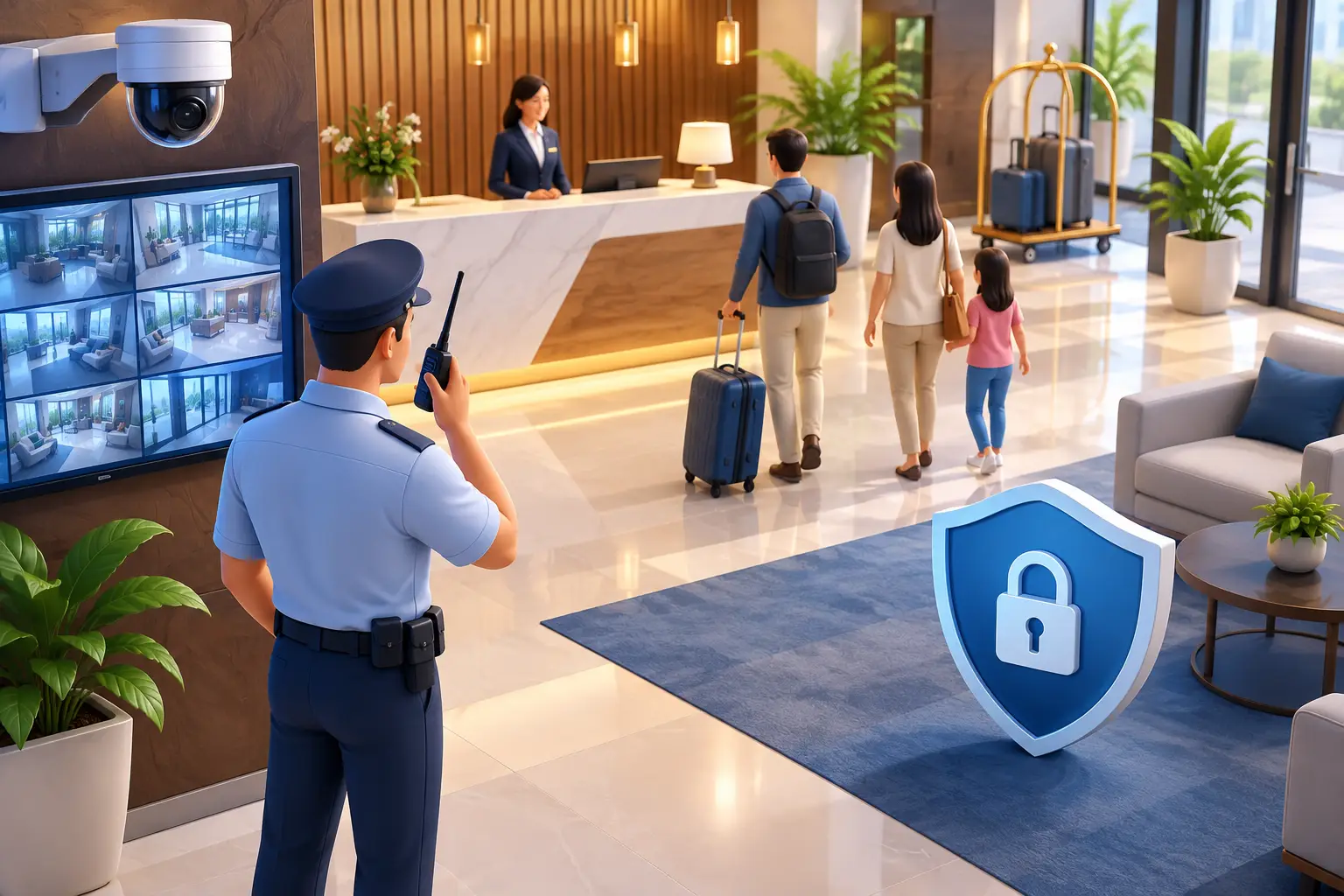
Hotel Security Planning for Safer Guest Stays
A guest should be able to enter a hotel lobby at midnight, check in without concern, and reach their room without encountering an unmanaged risk. That experience does not happen by accident. Effective hotel security planning gives managers a clear operating framework for protecting people, property, reputation, and continuity of service across every shift.
Hotels are uniquely exposed environments. They welcome the public while safeguarding private guest spaces, operate around the clock, host deliveries and contractors, serve alcohol in some areas, and may accommodate conferences, VIPs, or high-profile events. A security plan must support hospitality, not turn the property into a fortress. The right balance is visible enough to deter unacceptable behavior and discreet enough to preserve a welcoming guest experience.
Start Hotel Security Planning With Real Site Risks
A generic guard schedule is not a security plan. Before assigning personnel or selecting technology, assess how the property actually operates. The risks facing a limited-service airport hotel are different from those at a downtown luxury property, resort, convention hotel, or nightlife-focused venue.
Begin with a walkthrough that covers public, staff-only, and restricted areas. Review the lobby, reception desk, elevator banks, parking facilities, loading docks, guest corridors, stairwells, fitness areas, pools, restaurants, bars, meeting rooms, back offices, and waste collection points. Observe these locations at different times, particularly during evening arrivals, shift changes, events, checkout periods, and late-night food and beverage service.
The assessment should identify more than obvious theft or trespassing risks. Consider unauthorized access to guest floors, room key fraud, aggressive behavior, intoxication, domestic disputes, medical emergencies, lost children, suspicious packages, fire evacuation routes, staff safety during isolated work, and access by contractors. It should also account for operational weak points, such as poor sightlines, propped doors, inconsistent visitor procedures, or an unmonitored service entrance.
Risk is not fixed. A property hosting a large wedding, conference, sports team, or celebrity guest may need a different security posture for several days. Seasonal occupancy, nearby events, construction activity, and local crime trends can also change the required coverage. Review the plan routinely rather than treating the initial assessment as a one-time exercise.
Design Security Around Guest Flow
Good hotel security is built around how people move through the building. The objective is controlled access without unnecessary friction for legitimate guests, staff, and approved visitors.
The lobby and front desk are often the first point of detection. Reception teams should know how to recognize unusual behavior, manage requests for guest information, and escalate concerns without creating a public confrontation. Security officers should be positioned or patrolling where they can support front desk personnel quickly while maintaining awareness of entrances, elevator access, and gathering points.
Guest-floor access deserves particular attention. Key-controlled elevators, monitored stairwells, well-lit corridors, and clearly defined visitor expectations can reduce opportunities for unauthorized entry. However, technology only works when procedures are followed. A secure elevator system provides limited value if staff routinely allow unknown individuals to tailgate through controlled doors.
Parking areas require the same attention as the lobby. Clear lighting, camera coverage, patrol routes, emergency call points where appropriate, and prompt reporting of suspicious vehicles can improve both actual safety and guest confidence. For hotels with valet operations, key handling and vehicle release procedures should be documented and consistently supervised.
Set Clear Roles for Staff and Security Officers
Security planning fails when people are unsure who owns a decision. Hotel employees should not be expected to manage volatile behavior alone, and security officers should not operate without understanding the property’s service standards, emergency procedures, and escalation chain.
Define responsibilities for front desk staff, managers on duty, maintenance teams, housekeeping, food and beverage personnel, and security officers. Staff need simple instructions for common situations: who to call, what information to provide, where to direct guests, and when not to intervene. Security officers need site-specific post orders that explain patrol frequencies, access-control duties, reporting expectations, radio protocols, incident escalation, and the limits of their authority.
Training should include scenario-based practice. A team that has discussed a disruptive guest, suspected unauthorized person, medical event, fire alarm, or active threat is more likely to respond calmly under pressure. Training also reinforces the importance of accurate incident documentation. Reports should record facts, actions taken, times, witnesses, relevant descriptions, and follow-up requirements without speculation or inflammatory language.
For larger properties or properties with elevated risk, a dedicated security supervisor can provide consistency across shifts. This role can coordinate officer deployment, review incidents, liaise with management, conduct checks on access points, and make sure unresolved issues are handed over properly.
Build an Incident Response Plan That Works at 2 A.M.
An emergency plan must be usable during the most difficult moment of a shift, not just present in a binder. Keep procedures practical, concise, and available to the people expected to use them.
Your response framework should cover medical emergencies, fire and evacuation, severe weather, threats or suspicious items, aggressive conduct, missing persons, unauthorized access, theft, and incidents involving alcohol service. Each procedure should identify the immediate priority, internal contacts, emergency services escalation, assembly or isolation locations, communication responsibilities, and post-incident reporting steps.
Communication is often the difference between a contained event and a disruptive one. Establish primary and backup channels for security, managers, and key operational staff. Radios, phones, panic alarms, and messaging systems should be tested regularly. Staff must know the plain-language terms used for urgent assistance and understand when discretion is necessary to avoid alarming guests.
After any significant incident, conduct a timely review. Ask whether the response was fast enough, whether staff had the information and authority they needed, whether cameras or access systems supported the investigation, and what should change. This is where a security plan becomes stronger over time.
Use Technology as Support, Not a Substitute
Cameras, access-control systems, alarms, visitor records, and incident reporting platforms can give hotel teams valuable visibility. They can also create a false sense of security when poorly maintained or not monitored.
A practical technology review considers camera placement, image quality, retention periods, coverage of entrances and cash-handling areas, access-card management, alarm response, and cybersecurity for connected systems. Avoid placing cameras where guests have a reasonable expectation of privacy, and ensure policies align with applicable privacy requirements.
Technology decisions should be based on the assessed risk. A small boutique hotel may benefit most from upgraded lighting, reliable access controls, and scheduled patrols. A large convention hotel may need integrated camera coverage, controlled loading access, event credentialing, and an on-site security command structure during major functions. More equipment is not automatically better if nobody is accountable for monitoring, responding, and maintaining it.
Match Staffing to the Property and the Moment
The right security presence depends on occupancy, layout, trading hours, event activity, alcohol service, nearby conditions, and the risk profile of the site. Some hotels need mobile patrol support and on-call response. Others require trained static officers at key access points, overnight coverage, or additional teams during conferences and entertainment events.
Licensed, professional officers bring more than a visible deterrent. They can conduct patrols, manage access, assist with de-escalation, support emergency response, protect staff, and provide objective incident reporting. Their effectiveness depends on clear post orders, appropriate supervision, and a working relationship with hotel management.
When engaging a provider, look beyond hourly rates. Confirm licensing, insurance, training standards, supervision arrangements, reporting methods, scalability, and experience in hospitality environments. A provider should be able to tailor coverage to the site rather than applying the same approach to every venue. Broadsafe Group applies this disciplined, site-led approach to hospitality security assignments where professional presentation and responsive protection are equally important.
Make Security Part of the Guest Experience
Guests do not need to see every security measure to feel protected. They notice well-lit entrances, attentive staff, orderly public spaces, controlled access, and a calm response when something goes wrong. Those details influence reviews, repeat bookings, staff retention, and the hotel’s ability to protect its reputation during a difficult event.
The strongest plans also respect the service culture of the property. Security officers should communicate professionally, use proportionate responses, and understand when a situation calls for quiet assistance rather than a public display of authority. At the same time, hospitality should never require staff to tolerate threats, violence, harassment, or unsafe conduct.
Review the Plan Before the Next Pressure Point
Hotel security planning should be reviewed after incidents, before major events, when the property changes layout or operations, and at scheduled intervals throughout the year. Test the plan with drills, inspect vulnerable areas, verify staff contact lists, and check that post orders reflect current conditions.
A well-prepared hotel is not one that expects trouble at every door. It is one where staff know what to do when conditions change, guests can move through the property with confidence, and management has a reliable security partner ready to protect the operation when it matters most.