How to Secure Corporate Events Without Disruption
A corporate event can have a polished run sheet, impressive speakers, and a carefully selected venue, yet still be exposed to avoidable risk at the entrance, on the floor, or during a guest emergency. Knowing how to secure corporate events means protecting people, information, assets, and the organization’s reputation without making legitimate attendees feel like they are entering a restricted facility.
The right approach is not simply placing guards at every door. It starts with a risk-based security plan, then matches the people, procedures, and technology to the event’s size, profile, venue, and objectives. A board dinner for 30 executives requires a different posture from a 1,500-person product launch, annual general meeting, or conference featuring high-profile guests.
Start With a Corporate Event Risk Assessment
Security planning should begin well before invitations are sent. Meet with the event organizer, venue team, facilities representatives, and security provider to identify what could disrupt the event and how the team will respond.
Consider the event format, guest profile, location, timing, alcohol service, public visibility, parking arrangements, and proximity to public areas. A private leadership retreat may have a low crowd-management requirement but a heightened need for privacy and executive protection. A conference in a central business district may need stronger entry screening, traffic coordination, and management of unregistered visitors.
The assessment should also address operational risks that do not always look like security issues at first. These may include blocked fire exits, unplanned delivery access, crowding around registration, medical incidents, lost credentials, equipment theft, and unauthorized photography or recording.
Rather than using a generic checklist, assign a realistic likelihood and impact to each risk. That allows security resources to be focused where they will have the greatest effect. Over-securing a low-risk breakfast briefing can create unnecessary friction. Under-resourcing a high-attendance awards night can leave the venue team reacting under pressure.
How to Secure Corporate Events With Clear Access Control
Access control is the foundation of corporate event security. If the team cannot confidently identify who should be in the building, every other security measure becomes harder to manage.
Create defined access categories before the event. Guests, speakers, staff, contractors, vendors, media, VIPs, and venue personnel may each require different credentials and access permissions. Use registration lists that can be updated in real time, and make sure the front-of-house team knows who is authorized to approve exceptions.
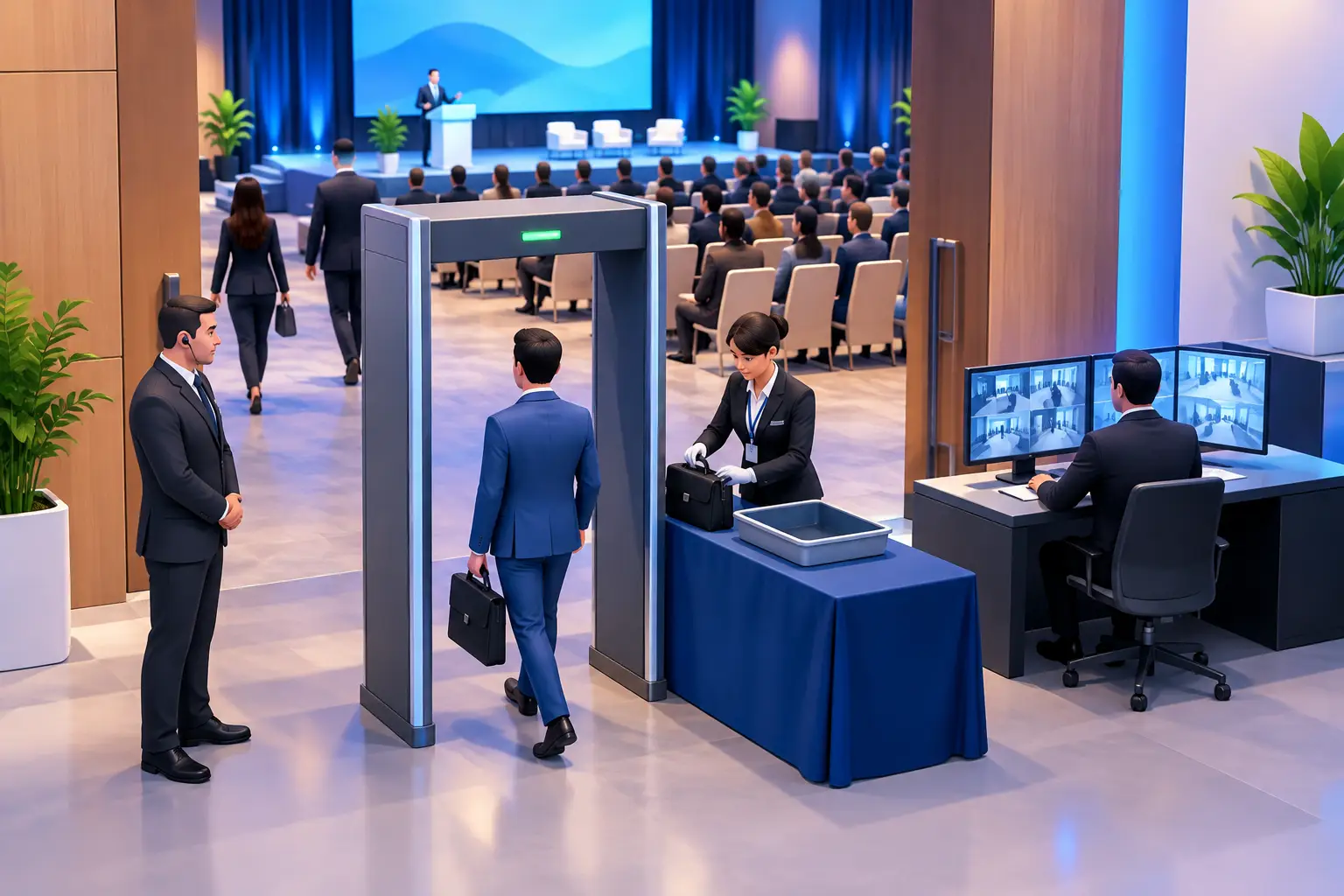
Credentialing does not need to feel excessive. For many events, a professional check-in desk, visible name badges, and trained security personnel at key entry points are sufficient. For events involving sensitive information, prominent executives, valuable equipment, or a known protest risk, consider photo identification checks, color-coded credentials, restricted zones, and controlled elevator or backstage access.
The key is consistency. A secure entrance loses value if a side door, loading dock, or parking garage gives unverified individuals a path inside. Walk the venue with the security lead before the event and identify every public, staff, emergency, and service entry. Decide which doors will remain open, who monitors them, and how emergency egress will be maintained at all times.
Keep Registration Secure and Welcoming
Registration is often the first point of contact, and it can become a bottleneck quickly. Separate the guest experience from security verification wherever possible. A clear queue, signage, and enough trained staff reduce frustration while allowing credentials to be checked properly.
Security personnel should be approachable but observant. Their role is to confirm access, notice unusual behavior, manage unauthorized arrivals calmly, and escalate concerns discreetly. A visible professional presence also discourages opportunistic theft and uninvited entry without dominating the atmosphere.
Build the Right Security Team for the Event
Corporate event security is most effective when every person knows their area of responsibility. This includes security officers, event managers, venue operations, medical personnel, and technical teams.
A well-structured deployment may include:
- A security supervisor who manages communications, briefings, incident decisions, and client liaison.
- Entry personnel responsible for credentials, bag policies where appropriate, and visitor management.
- Floor officers who provide visible reassurance, monitor crowd flow, and identify emerging issues.
- A rapid-response or close-protection presence for VIPs, speakers, or sensitive areas.
- A dedicated officer for loading docks, equipment rooms, service corridors, or other vulnerable access points.
The number of personnel depends on the risk assessment, not simply the attendee count. A smaller event with contentious stakeholders or senior executives may require more specialized coverage than a larger but routine internal conference.
Use licensed security professionals with relevant event, crowd-control, and customer-service experience. They must be able to make sound decisions in busy environments, communicate professionally with guests, and understand the limits of their authority. Insurance coverage, documented training, and quality and safety management practices also matter when selecting a provider.
Brief the Team on More Than Security Duties
An effective pre-event briefing gives the team enough context to act decisively without improvising. Security staff should know the event schedule, expected attendance, venue layout, VIP movements, restricted areas, emergency exits, key contacts, and escalation process.
They should also understand the client’s standards for guest interaction. Corporate events often require a lower-profile approach than public entertainment venues. Officers need to be alert without being confrontational, particularly when managing executives, sponsors, presenters, and customers.
Discuss likely scenarios in advance. What happens if an attendee becomes intoxicated? Who handles a person claiming to be on the guest list but cannot be verified? How will a medical emergency be communicated? Who has authority to pause a presentation, evacuate the space, or contact emergency services?
A short, disciplined briefing prevents mixed messages when time matters most.
Protect VIPs, Information, and High-Value Assets
Corporate events may involve more than physical attendance. They can include confidential presentations, product demonstrations, investor information, media-sensitive announcements, and high-value audiovisual equipment.
For VIPs and keynote speakers, plan arrival and departure routes, secure holding areas, and discreet movement through the venue. Personal protection should be proportional to the individual’s risk profile. High visibility can be appropriate for a public-facing figure, while a private executive dinner may benefit more from low-profile close protection and controlled access.
Protect information as carefully as property. Restrict access to speaker green rooms, presentation control areas, and registration data. Establish a clear photography and recording policy, then communicate it through invitations, signage, and staff instructions. If the event includes confidential material, work with the IT and audiovisual teams to control access to presentation files, networks, and equipment.
Equipment theft is a common and costly issue during setup and breakdown, when rooms are busy and access is less controlled. Secure storage, monitored loading zones, sign-out procedures, and a visible officer in service areas can reduce this risk substantially.
Prepare for Emergencies Without Creating Alarm
Every event needs an emergency response plan that fits the venue and local requirements. This should cover medical incidents, fire alarms, evacuations, severe weather, aggressive behavior, suspicious items, and communication failures.
Security should coordinate with venue management on evacuation routes, assembly points, emergency exits, and the location of first-aid resources. Do not assume all event staff understand the venue’s procedures. Confirm them during the site walkthrough and include them in the briefing.
Communication is central to a controlled response. Security personnel should have reliable radios or another agreed communication method, with clear call signs and an escalation chain. Keep messages concise and avoid broadcasting sensitive details where guests may overhear them.
For larger events, establish an incident log and a designated control point. Recording the time, location, people involved, action taken, and outcome supports accountability and helps the client review any follow-up required after the event.
Manage Crowd Flow and Guest Behavior Early
Most event disruptions are easier to resolve before they become major incidents. Watch for growing queues, congestion near bars or doors, arguments, unattended items, and guests attempting to access restricted areas. Early, respectful intervention is usually more effective than waiting for a situation to escalate.
Alcohol changes the risk profile. If drinks are served, coordinate with hospitality staff on responsible service, water availability, transport options, and a clear process for managing impaired guests. Security should support the venue team, not replace its responsibility for responsible service.
When a guest must be removed or denied entry, protect everyone’s dignity. Use calm language, move the conversation away from the main crowd where practical, and involve the event organizer when appropriate. A professional response can prevent one difficult interaction from becoming a reputational issue.
Review Performance After the Event
Security does not end when the last guest leaves. A short post-event review captures lessons while details are fresh. Discuss attendance, incidents, access-control issues, staffing levels, response times, and any changes needed for future events.
Ask whether the security presence felt proportionate to the event. Guests should leave feeling safe and well managed, not inconvenienced. At the same time, organizers should have confidence that concerns were identified, documented, and handled with discipline.
Broadsafe Group supports corporate event teams with tailored, licensed security coverage designed around venue conditions, guest experience, and operational risk. The strongest event security plan is the one that lets your people focus on the purpose of the event, while trained professionals quietly protect everything that makes it possible.