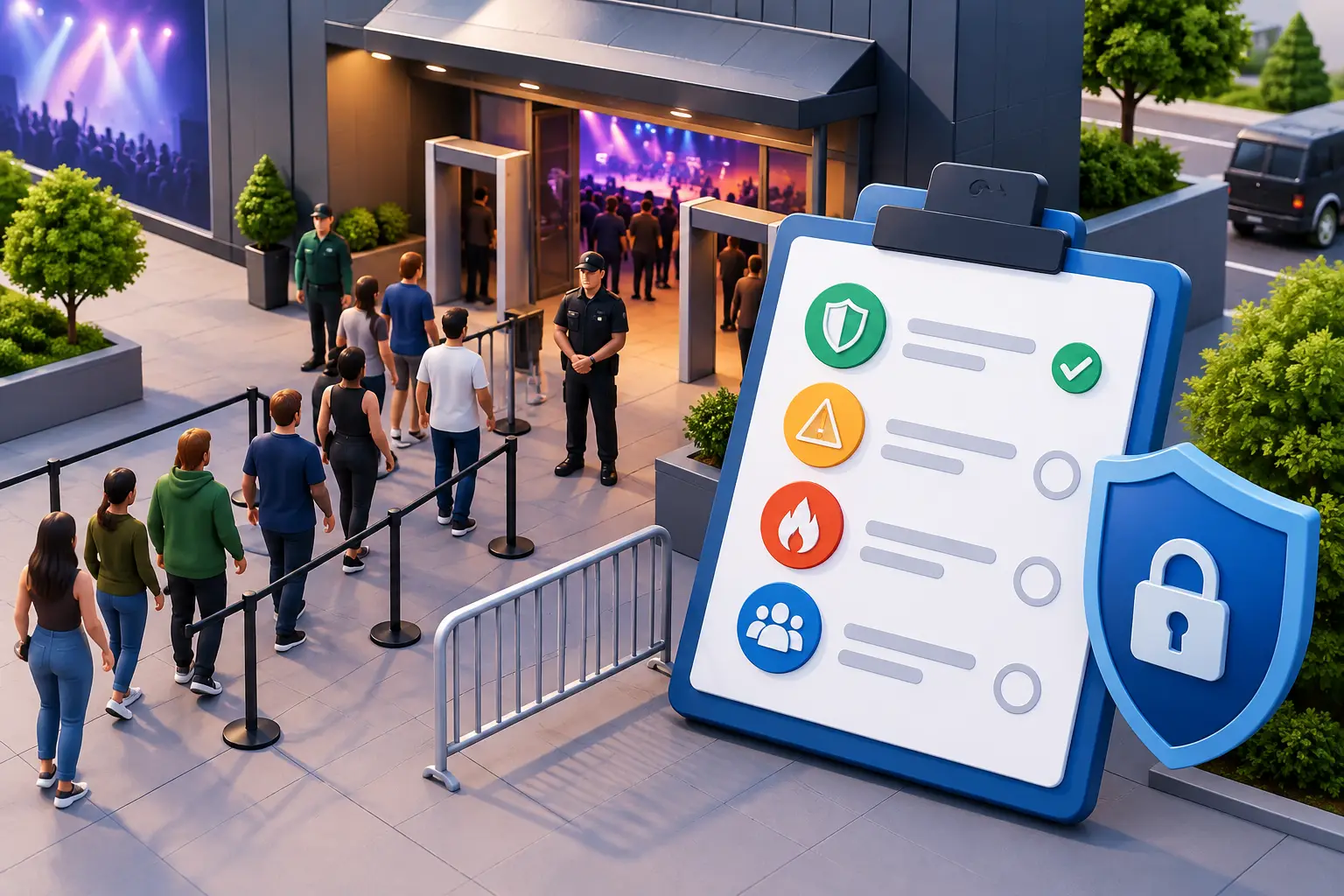
Do Venues Need Security? A Practical Risk Test
A busy entrance, a disagreement near the bar, an unattended bag, or a medical incident can change the tone of a venue in seconds. The question is not simply, do venues need security? It is whether your venue can identify, manage, and document foreseeable risks before they affect guests, staff, revenue, or reputation.
Security is not automatically necessary at the same level for every business. A small appointment-only showroom has different needs from a nightclub, live music space, hotel, restaurant, stadium, or corporate event venue. The right approach is proportionate to the risk, but it should never be an afterthought.
Do Venues Need Security? Start With Risk, Not Assumptions
Venue security is often treated as a response to high-profile incidents. That is too late. Effective security planning begins with the ordinary pressures that make incidents more likely: large crowds, alcohol service, cash handling, late operating hours, public access points, high-value equipment, competing guest expectations, and limited visibility across the premises.
A venue may need a visible security presence when staff are routinely expected to manage disputes, remove intoxicated patrons, monitor entry points, protect performers or VIPs, or respond to emergencies while continuing to serve customers. In these situations, relying solely on hospitality, operations, or event staff can create an unreasonable burden. Their primary job is to deliver the guest experience, not to physically intervene in a conflict or coordinate a serious incident.
Security personnel provide a defined layer of responsibility. They observe behavior, communicate early, apply venue procedures consistently, and escalate when required. Their presence also sends a clear message that the venue is professionally managed and that unsafe conduct will be addressed.
The Risk Factors That Change the Answer
The need for security usually becomes clearer when venue operators assess the environment honestly. Capacity matters, but it is not the only factor. A venue hosting 80 guests may need stronger coverage than a larger venue if the event involves alcohol, restricted access, celebrity attendance, sensitive equipment, or a history of disruptive behavior.
Crowd Size and Crowd Behavior
As guest numbers rise, so does the chance of congestion, confusion, and delayed response. Entry queues can become flashpoints, especially when tickets, identification checks, dress requirements, or wait times are involved. Inside the venue, bottlenecks near bars, restrooms, stages, exits, and smoking areas can make it difficult for staff to spot problems early.
A trained security team supports orderly movement without making guests feel policed. This may include managing lines, monitoring capacity, protecting emergency exits, and directing people during an evacuation. For concerts, festivals, and ticketed events, crowd control is a core operational function rather than an optional extra.
Alcohol, Late Hours, and Conflict Potential
Alcohol service changes a venue’s risk profile. It can lower inhibitions, increase misunderstandings, and make refusals of service more difficult. Late-night operations add fatigue, reduced public transport options, and a greater likelihood of conflict outside the venue.
Security officers can help staff intervene before a situation escalates. A calm, professional conversation at the first sign of aggressive behavior is often far more effective than a physical removal after a confrontation has developed. Clear procedures for refusals, removals, incident reporting, and emergency support give the entire team greater confidence.
Layout, Access, and Visibility
A venue’s physical design can either support safety or work against it. Multiple entrances, poorly lit parking areas, concealed corners, loading docks, rooftop spaces, and shared building access all create points that need attention. A single guard stationed at the front door may not be enough if the venue has public access from several directions.
Security planning should account for where people enter, where they gather, where valuables are stored, and how staff can call for help. For some locations, static guarding at a key entry point is appropriate. Others may need regular patrols, access control, bag checks where lawful and appropriate, or security coverage during opening and closing periods.
Reputation, Assets, and Special Guests
Not every security concern is about disorderly patrons. Venues may host executives, performers, speakers, public figures, or private functions where privacy and controlled access matter. They may also hold expensive audiovisual equipment, inventory, cash, or confidential materials.
In these settings, security protects both people and operations. Credential checks, restricted-area control, discreet personal protection, and coordinated arrival and departure procedures can reduce avoidable exposure. The level of visibility should match the occasion. A corporate function may benefit from a low-profile presence, while a large public event may require clearly identifiable officers at key points.
What Good Venue Security Looks Like
Good security is not defined by the number of guards at the door. It is defined by preparation, judgment, communication, and accountability. Security officers should understand the venue’s operating procedures, guest profile, emergency plans, escalation contacts, and service expectations before a shift begins.
Professional teams do more than react. They monitor changing conditions, identify emerging issues, maintain incident records, and communicate with venue management throughout the event or shift. If a concern arises, operators need timely information that supports a practical decision, not vague reassurance after the fact.
The best security presence is firm without being confrontational. Guests should see that entry standards are applied fairly, staff should know where to seek support, and management should have confidence that incidents are being handled within clear boundaries. This is particularly important in hospitality settings, where a heavy-handed approach can damage customer experience just as quickly as a lack of control can.
Match Coverage to the Venue, Not a Generic Roster
A common mistake is to book the same number of officers for every Friday night or every event, regardless of the actual circumstances. A better approach is to review each operating period based on expected attendance, event type, alcohol service, guest demographics, weather, parking arrangements, and known local conditions.
For example, a restaurant may only need a security officer during peak late-night trade or for special events. A hotel may require overnight patrols, lobby coverage, and support for conferences. A music venue may need dedicated door staff, floor coverage, backstage access control, and exit management. A corporate venue hosting a high-profile product launch may require discreet guest screening and VIP movement coordination.
This tailored model helps control costs while ensuring coverage is available where it has the greatest impact. Understaffing can expose a venue to avoidable incidents, while unnecessary coverage can strain the operating budget. The goal is not maximum security. It is appropriate security, delivered by properly licensed, insured, and trained personnel.
Security Supports Compliance and Business Continuity
Venue operators have obligations to provide a reasonably safe environment for employees, contractors, and guests. While security cannot eliminate every risk, it can demonstrate that foreseeable hazards have been considered and that practical controls are in place.
Documented procedures matter. Incident reports, shift briefings, access records, and clear escalation processes can help management review what happened, improve future operations, and respond appropriately if questions arise later. They also make handovers smoother when multiple teams, promoters, contractors, or facility managers are involved.
Security can also protect business continuity. An incident that disrupts one event may affect future bookings, staff retention, online reviews, insurance discussions, and relationships with nearby businesses. A prepared response limits disruption and helps the venue return to normal operations sooner.
Choosing a Security Partner for Your Venue
When assessing providers, look beyond availability. Ask whether personnel are appropriately licensed for the work, trained in de-escalation and venue procedures, and supported by clear supervision and reporting systems. Confirm insurance coverage, emergency response processes, and the provider’s ability to scale staffing for busy periods or special events.
It is also worth discussing how the provider will learn your venue. A capable team should ask practical questions about access points, floor plans, trading hours, crowd behavior, staff roles, emergency exits, and the type of guest experience you want to protect. Security works best when it operates as part of the venue team, not as an isolated presence at the door.
The right security plan should let your managers focus on running the venue, your staff focus on service, and your guests focus on why they came. Start with a clear assessment of your real risks, then put trained people and practical procedures in place before a small issue becomes the event everyone remembers.