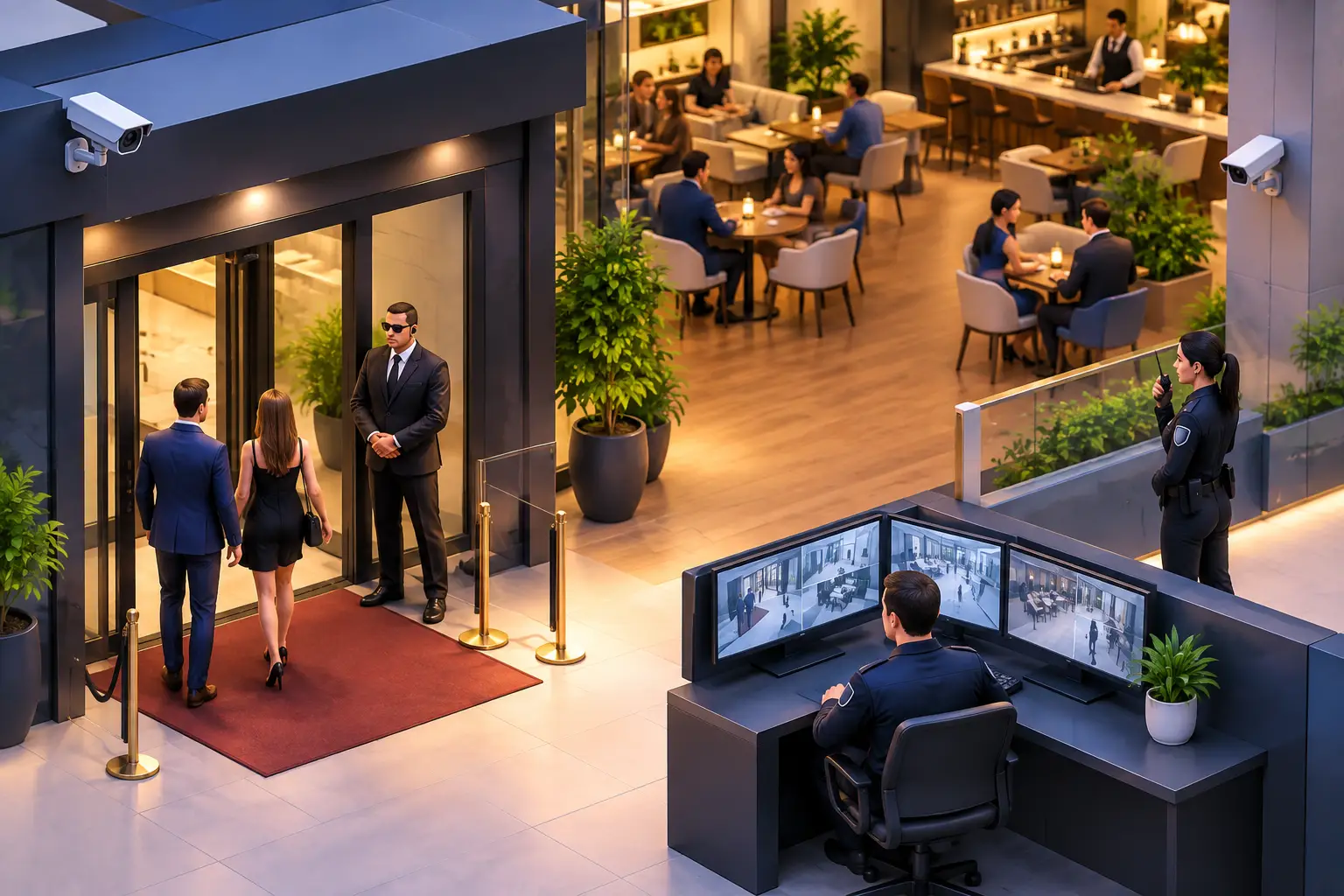
Hospitality Security Operations Guide for Venues
A busy Friday night can change character in minutes. A guest becomes unwell, a dispute develops near the bar, an unauthorized person enters a staff-only area, or a queue begins blocking an exit. A hospitality security operations guide gives venue leaders a clear way to respond before small disruptions affect guest safety, service quality, or reputation.
For hotels, restaurants, bars, and entertainment venues, effective security is not simply a matter of placing a guard at the door. It is a coordinated operating function that combines visible presence, trained judgment, staff communication, access control, incident reporting, and a measured response to risk. The goal is a venue where legitimate guests feel welcomed and supported while unacceptable behavior is identified early and handled professionally.
Start With the Venue’s Real Risk Profile
Every hospitality site has a different pressure point. A hotel may need to manage guest privacy, late-night access, luggage storage, contractor entry, and incidents involving intoxicated patrons. A restaurant may be more concerned with cash handling, aggressive behavior, staff safety at closing, and protecting outdoor dining areas. A high-volume bar or club must also account for queues, crowd density, ID checks, intoxication, fights, and emergency egress.
Security planning should begin with a practical walkthrough of the property and its operating hours. Review entrances, exits, reception areas, loading docks, elevators, parking areas, restrooms, cash points, kitchen access, storage rooms, and any spaces where staff work alone. Consider what changes between day service, peak periods, private functions, and closing time.
Risk assessment should also account for the local environment. Nearby transit hubs, sporting events, nightlife precincts, construction activity, or recurring neighborhood issues can change the level and type of coverage required. A quiet weekday restaurant does not need the same deployment as a venue hosting a ticketed event or major holiday celebration.
The right security model depends on those conditions. Overstaffing can create unnecessary cost and make a relaxed dining environment feel overly controlled. Understaffing leaves employees exposed and can delay intervention when it matters most. The best approach is tailored coverage that can scale for peak periods, special events, and identified risks.
Build a Hospitality Security Operations Guide Around Daily Control
A usable hospitality security operations guide must be specific enough for teams to follow under pressure. Broad statements such as “maintain safety” do not tell staff who is responsible, when to call for support, or what to document after an incident.
Start each shift with a short handover between venue management and security personnel. This should cover expected guest volume, reservations or VIP arrivals, private events, known exclusions, maintenance hazards, staffing gaps, deliveries, and any incidents from the previous shift. It also gives security officers an opportunity to confirm communication channels and clarify management expectations before the venue becomes busy.
Define posts, patrols, and responsibilities
Each officer should have a clear assignment, even when a small team must remain flexible. Front-of-house personnel may monitor guest entry, behavior, and lines. A roaming officer can conduct patrols of restrooms, corridors, outdoor areas, and emergency exits. Hotel coverage may include lobby presence, parking checks, and controlled access to guest floors.
Clear responsibilities prevent a common operational failure: everyone assumes someone else is watching a critical area. Post orders should explain not only where officers stand, but what they are expected to observe, when they should move, and who they report to.
Patrols should not be predictable. Varying routes and timing improves visibility across the site and reduces opportunities for theft, unauthorized access, or unsafe behavior to go unnoticed. Officers should pay attention to blocked exits, propped doors, damaged locks, overcrowded spaces, unattended bags, escalating disputes, and staff working in isolated locations.
Put communication before confrontation
In hospitality, the way an issue is handled is often as important as the outcome. Security personnel must be calm, respectful, and direct. Early engagement can prevent an intoxicated guest, frustrated customer, or unwanted visitor from becoming a larger problem.
Venue teams should agree on simple communication protocols. Staff need to know how to discreetly request help, when to involve a manager, and when an incident requires emergency services. Radios, panic buttons, mobile communication, and camera systems can all support response, but the tools are only useful when staff understand the process behind them.
A good rule is to use the least confrontational effective response. A polite request to move away from a restricted area may be enough. If behavior continues, the officer may involve a manager, direct the person to leave, or seek police assistance where there is a threat, assault, serious disorder, or refusal to comply. Security personnel should never be expected to solve every situation alone.
Protect access without disrupting service
Access control is a core hospitality security function, particularly in hotels and larger venues. Restricting staff-only areas protects people, keys, cash, inventory, personal information, and operational systems. It also reduces the chance of an unauthorized person reaching kitchens, offices, loading areas, or guest accommodation floors.
Physical controls may include keys, access cards, coded doors, visitor logs, and monitored entry points. Operational controls matter just as much. Contractors, delivery drivers, performers, temporary staff, and vendors should know where to enter, who will receive them, and which areas they may access.
There is a balance to maintain. Excessive checks can slow service and frustrate legitimate guests. Weak controls can expose the venue to theft, privacy breaches, and safety risks. Match the level of verification to the area being accessed and the risk attached to it.
Make Incident Reporting a Management Tool
An incident report is not paperwork for its own sake. It is the record that helps management identify patterns, investigate concerns, support insurance and legal obligations, and improve future deployment.
Reports should be completed promptly and stick to observable facts. Record the time, location, people involved, behavior observed, actions taken, witnesses, injuries, property damage, and whether police, medical responders, or management attended. Avoid speculation, personal opinions, and language that exaggerates or assigns blame without evidence.
Consistency is essential. If one officer documents a guest removal in detail while another writes only “issue resolved,” the venue loses the ability to assess repeat behavior and response quality. Managers should review reports regularly, not just after a serious incident. Repeated concerns in the same area or at the same time can show where patrol routes, lighting, staffing, or venue procedures need adjustment.
Train the Whole Venue Team
Security is strongest when front-of-house, management, kitchen staff, housekeeping, maintenance, and contractors understand their part in keeping the site safe. Security officers provide specialist coverage, but venue employees are often the first to notice a concern.
Staff should be confident recognizing warning signs such as escalating arguments, intoxication, harassment, suspicious access attempts, unattended property, and guests who appear distressed. They should also understand emergency exits, assembly points, medical response procedures, and the process for reporting hazards.
Training must reflect the venue’s operating reality. A luxury hotel may prioritize discretion and guest privacy. A late-night venue may place greater focus on intoxication management, crowd behavior, and safe removals. A family restaurant may need clear procedures for lost children, domestic disputes, and parking-lot safety. One generic briefing is rarely enough.
Measure What Is Working
Security performance should be reviewed through evidence, not just the absence of major incidents. Track response times, incident types, repeat locations, guest complaints, staff feedback, unauthorized-entry attempts, lost-property trends, and emergency procedure outcomes. These measures show whether coverage is preventing problems or only reacting after they occur.
Regular meetings between venue leadership and the security provider create accountability. Discuss staffing levels, changes in trade, upcoming events, report quality, training needs, and any recurring operational issue. A licensed, insured security partner should be able to adjust post orders and personnel deployment as the venue changes.
For hospitality operators, security should protect the guest experience rather than compete with it. When officers are professional, alert, and properly integrated with venue staff, guests see a well-managed environment: welcoming at the door, controlled behind the scenes, and ready to respond when the unexpected occurs.