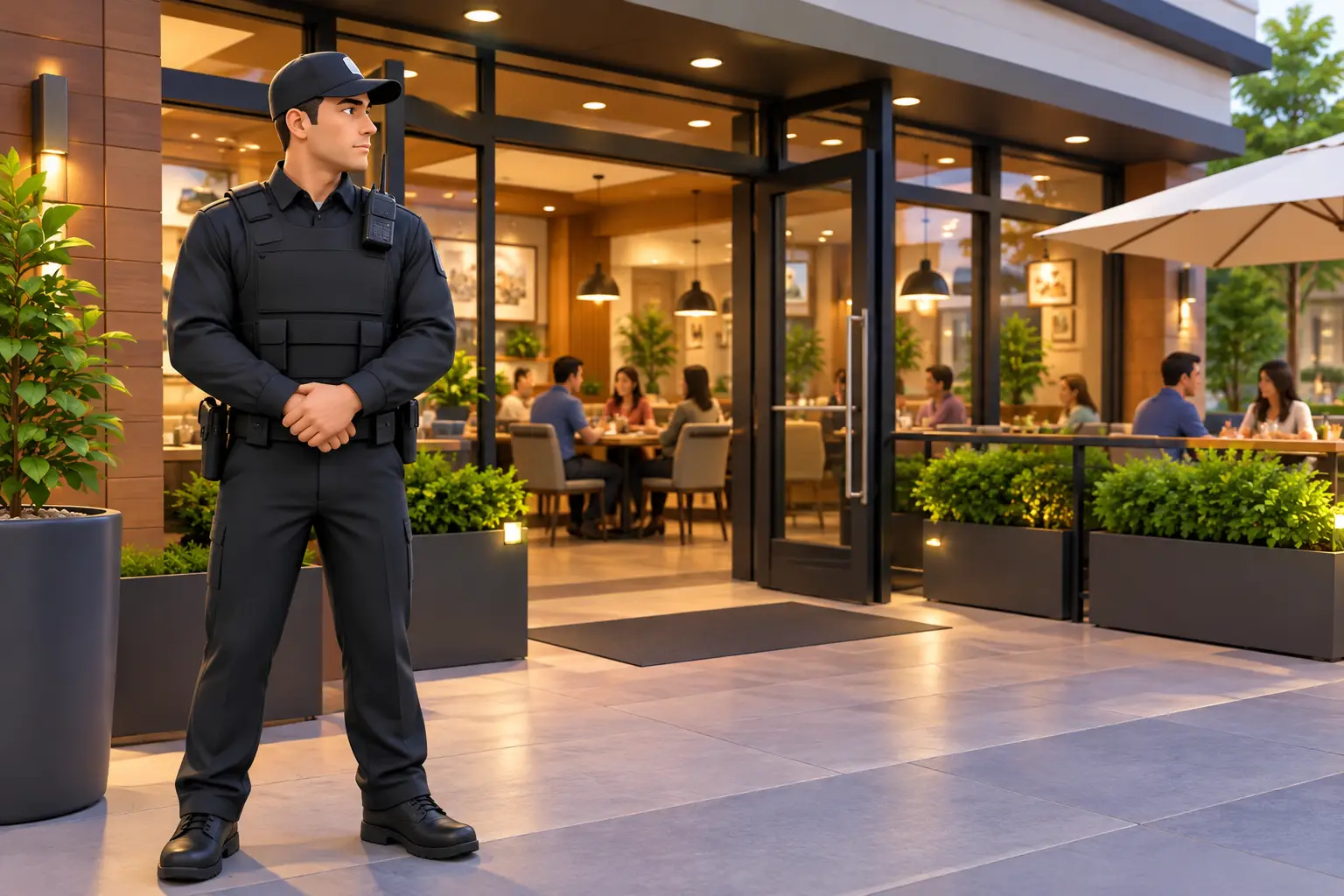
Restaurant Security Guard Services for Safer Dining
A busy Friday dinner service can change in minutes. A disagreement at the bar carries into the dining room, an intoxicated guest refuses to leave, or a staff member feels unsafe walking to their car after close. Restaurant security guard services give venue operators a trained, visible response before a single incident affects guest confidence, staff welfare, or the evening’s revenue.
For restaurants, security is not about making every guest feel watched. It is about setting a calm standard at the door, recognizing early warning signs, and handling difficult moments with professionalism. The right security presence protects the hospitality experience rather than interrupting it.
Why Restaurants Need a Security Plan
Restaurants manage several risk areas at once: public access, alcohol service, cash handling, deliveries, late-night closing procedures, and a workforce that may include younger or casual employees. A venue may run smoothly for months, then face an incident that tests whether managers, floor staff, and contractors know exactly what to do.
The risk profile changes by concept and operating hours. A family-focused restaurant with daytime trade may need discreet coverage for cash movement, staff safety, and occasional disruptive behavior. A high-volume venue with a bar, live entertainment, outdoor seating, or late-night service may need active entry management, age verification support, crowd control, and regular floor patrols.
Security also protects a restaurant’s reputation. Guests remember how a venue handled an uncomfortable situation. When staff are left to manage aggressive behavior alone, the result can be poor reviews, staff turnover, lost repeat business, and a higher chance of injury. A professional guard gives the manager a clear escalation point while allowing servers, hosts, and bartenders to keep their attention on service.
What Restaurant Security Guard Services Should Cover
Effective coverage begins with a site-specific assessment, not a generic guard schedule. Security personnel need to understand the venue layout, opening and closing routines, emergency exits, points of entry, alcohol-service policies, management contacts, and the expected customer mix.
A Welcoming, Controlled Entrance
The entrance sets the tone for the entire venue. Security staff can monitor guest flow, identify prohibited items where relevant, manage queues, and address concerns before they become a disruption inside. In venues that serve alcohol or operate later, trained personnel can support responsible entry practices without treating legitimate guests with unnecessary suspicion.
The best approach is firm but courteous. A guard should be capable of declining entry, managing a queue, or resolving a complaint without escalating the encounter. Communication skills matter as much as physical presence in a hospitality setting.
Visible Patrols Without Disrupting Service
Regular patrols across dining areas, restrooms, patios, parking areas, and back-of-house access points help deter theft, harassment, vandalism, and disorderly conduct. The patrol style should suit the environment. An upscale dining room may require a discreet, plainclothes option or low-profile patrol pattern, while a busy sports bar may benefit from clearly visible security staff.
There is a trade-off. Too little visibility can leave staff and guests uncertain about where to get help. Too much visibility can feel out of place in a refined or intimate venue. The right provider adjusts placement, uniform presentation, and patrol frequency to match the restaurant’s brand and operating conditions.
Incident De-escalation and Response
Most restaurant incidents do not require physical intervention. They require calm judgment, clear verbal direction, situational awareness, and a controlled response. Security professionals should know how to separate parties, protect nearby guests, call emergency services when needed, preserve a safe exit route, and document what occurred.
This is particularly important when dealing with intoxication, domestic disputes, harassment, theft allegations, or guests who refuse to comply with staff requests. Managers should never have to choose between protecting the dining room and confronting a potentially volatile situation alone.
Staff Safety at Opening and Close
Security coverage can be most valuable outside peak service. Early-morning deliveries, late-night cash procedures, and staff departures are common points of vulnerability. A guard can monitor access, escort team members to transportation or parking, observe cash transfers, and check that doors and restricted areas are secured.
For multi-location restaurant groups, consistent close-down procedures also make it easier to identify gaps. Documented security routines reduce reliance on individual managers and give operations leaders clearer accountability across sites.
Choosing the Right Security Model for Your Venue
Not every restaurant needs a full-time, uniformed guard. The appropriate model depends on location, service hours, alcohol sales, occupancy, prior incidents, physical layout, and the level of foot traffic outside the venue.
Some operators use security only during high-risk periods, such as Thursday through Saturday evenings, special events, holiday periods, or private functions. Others need daily static coverage at the entrance, particularly in entertainment precincts or high-traffic urban locations. A restaurant with recurring concerns in its parking lot may prioritize exterior patrols and closing escorts over indoor presence.
A flexible staffing plan is often the most practical option. It allows operators to increase coverage for live music, sporting events, promotions, VIP bookings, or large group reservations without paying for an unnecessary level of service during quieter periods.
Questions to Ask Before Hiring a Provider
Restaurant operators should look beyond hourly pricing. The lowest-cost quote can become expensive if guards arrive unfamiliar with the site, communicate poorly with staff, or fail to provide reliable incident reporting.
Ask whether personnel hold the licenses required in the applicable jurisdiction and whether the provider carries appropriate insurance. Confirm how the company vets, trains, and supervises its guards, especially around de-escalation, hospitality environments, emergency response, and alcohol-related incidents.
It is also worth asking how absences are covered and who is available when an urgent roster change is needed. A restaurant cannot simply leave the entrance or closing shift uncovered because a guard has called out. Reliable providers maintain operational support and clear escalation contacts.
Finally, request clarity on reporting. A useful incident report records the time, location, people involved, actions taken, witnesses, injuries, police or medical attendance, and recommended follow-up. This record helps management respond to complaints, identify recurring patterns, and demonstrate due diligence if an incident is later reviewed.
Integrating Security With Restaurant Operations
Security works best when it is treated as part of the venue team. Before coverage begins, the security lead should meet with the general manager and key supervisors to agree on house rules, escalation thresholds, communication channels, and the roles of managers versus guards.
Staff should know when to call security and what information to provide. A simple instruction such as, “A guest at table 14 is raising their voice and has been asked to stop,” gives the guard a starting point without alarming nearby customers. Security staff, in turn, should keep management informed before removing a guest or involving emergency services whenever circumstances allow.
Technology can support this coordination, but it does not replace trained people. Cameras, access control, panic buttons, and point-of-sale procedures all contribute to safety. A guard provides the judgment to interpret behavior, reassure staff, and respond appropriately in real time.
Broadsafe Group approaches hospitality security as a tailored operational service, with licensed personnel selected to support the venue’s safety requirements and customer experience. That distinction matters because a restaurant needs more than a person standing at a door. It needs a professional who understands that every response reflects on the business.
Security That Supports the Guest Experience
The goal is simple: guests should feel comfortable, staff should feel supported, and managers should be able to run service with confidence. Strong security presence is often noticed only when it is needed. When it is planned well, incidents are addressed early, disruptive behavior is contained, and the atmosphere remains welcoming for the people who came to enjoy the restaurant.
Before the next busy service, walk the venue as a guest and then as a closing staff member. The areas that feel uncertain, poorly observed, or difficult to manage are usually where a well-designed security plan can make the most immediate difference.