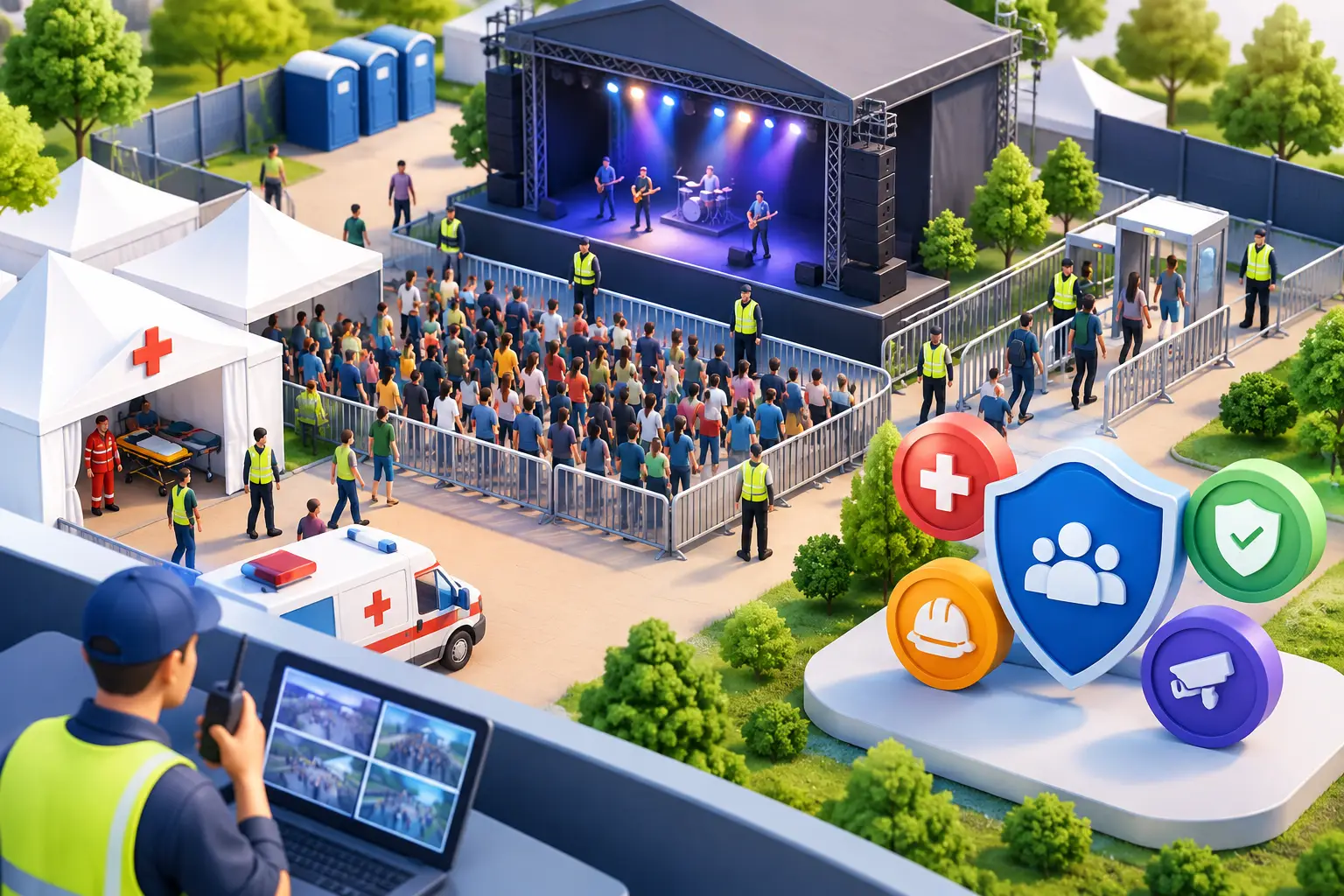
Top Risk Controls for Events That Protect People
A successful event can change in minutes. A queue begins to compress, an uncredentialed person reaches a restricted door, a medical incident occurs in a crowded area, or a weather warning forces a rapid change to the schedule. The top risk controls for events are the practical measures that help organizers protect people, preserve order, and make sound decisions before small problems become serious incidents.
For venue operators, corporate teams, hospitality groups, and event organizers, risk control is not simply about placing guards at entrances. It is a coordinated operating plan that connects security staffing, site design, crowd behavior, emergency response, communications, and accountability. The right approach depends on the event’s size, audience, venue layout, alcohol service, guest profile, and public visibility. A product launch for invited guests needs different controls than a music festival, sporting event, or late-night venue activation.
Top Risk Controls for Events Start Before Doors Open
The strongest event security outcomes are usually decided well before guests arrive. A written risk assessment should identify foreseeable threats, assess their likelihood and consequence, assign ownership, and set out the controls that will be used. This document should be specific to the site and event, not a generic checklist copied from a previous function.
Walk the venue with the event manager, facilities team, and security lead. Identify entrances, exits, emergency egress routes, loading areas, blind spots, first-aid points, cash-handling locations, backstage spaces, and any points where pedestrian and vehicle movements could conflict. Consider what changes after dark, during peak arrivals, at intermission, and when the program ends. These are often the periods when pressure on staff and infrastructure is highest.
A useful plan also defines decision thresholds. Who can delay entry because a queue is becoming unsafe? Who has authority to stop alcohol service in a particular area? Who communicates a partial evacuation? Clear authority reduces hesitation during an incident and prevents conflicting instructions from reaching staff or guests.
Match staffing to risk, not just attendance
Headcount is a starting point, not a security plan. Two events with the same attendance can require very different staffing levels. A seated conference with controlled registration may need a discreet presence focused on access control and executive protection. A high-energy concert, public festival, or event serving alcohol may require more personnel at entry points, within crowd zones, at exits, and around restricted areas.
Experienced, licensed personnel should be assigned according to their role and capability. Entry screening, crowd management, patrols, VIP movement, incident response, and control-room coordination each require a defined purpose. Supervisors need enough capacity to monitor conditions, support officers, and communicate with event leadership rather than being absorbed into a single post.
Brief every team member on the event objectives, site layout, escalation procedures, radio protocols, prohibited items, expected crowd profile, and welfare arrangements. A short, focused briefing is one of the most cost-effective controls available because it establishes consistency before pressure builds.
Control Access Without Creating Bottlenecks
Access control protects guests, staff, performers, equipment, and sensitive areas. It also sets the tone for the event. Entry procedures must be visible, fair, and efficient enough to avoid creating an unmanaged crowd outside the venue.
Use clearly marked lanes for ticket holders, guest lists, staff, vendors, and accessible entry where appropriate. Credentialing should be simple to recognize at a glance, with different access levels for public areas, operations spaces, backstage zones, and executive or VIP areas. Where bag checks or screening are necessary, communicate the requirements in advance and provide enough trained staff and space to process arrivals safely.
The trade-off is speed versus assurance. Excessive screening can create long queues and frustration, while minimal screening may expose the event to prohibited items, unauthorized entry, or theft. The practical answer is a proportionate process based on the known risk, supported by queue marshals, barriers, signage, and active monitoring of wait times.
Restricted doors deserve particular attention. Doors that are convenient for vendors, contractors, or performers can become weak points when access is not actively controlled. Keep delivery windows defined, verify contractors, and ensure temporary passes are collected or deactivated when work is complete.
Manage Crowds Through Observation and Early Action
Crowd incidents rarely begin without warning. Density increases near a stage, bar, merchandise point, transport pickup area, or narrow exit. People begin pushing, sightlines disappear, and staff cannot move freely through the area. The control is not simply reacting to a disturbance. It is recognizing the conditions that allow one to develop.
Position trained crowd-control personnel where they can observe movement patterns and intervene early. They should monitor queue compression, blocked walkways, aggressive behavior, intoxication, unattended property, and changes in mood after a performance, announcement, or service delay. A visible, professional security presence acts as both a deterrent and a source of assistance for guests who need direction.
Physical layout matters as much as staffing. Barriers should guide people without trapping them. Emergency routes must remain clear throughout the event, not only during setup. Furniture, promotional displays, cables, and temporary equipment can turn a compliant floor plan into a hazard once the venue is operational. Routine checks during the event are essential.
Alcohol-related risk requires a coordinated approach between security, venue management, and service staff. Security personnel should not be expected to manage intoxication alone. Early identification, respectful communication, safe removal from high-pressure areas, and a clear transport plan can prevent a difficult interaction from escalating at the door or in the parking area.
Build an Incident Response That Works Under Pressure
An incident plan is only useful if people understand it and can act on it quickly. Define how staff report concerns, who receives the report, who assesses the situation, and when external emergency services are contacted. Radios, phones, and backup methods of communication should be tested before opening, particularly in large venues where coverage can be inconsistent.
Security teams need practical response procedures for medical incidents, missing persons, aggressive behavior, suspicious items, fire alarms, evacuations, severe weather, and unauthorized access. The aim is not to predict every possible scenario. It is to establish a calm command structure that can adapt when conditions change.
Create a central point for incident logging and decision-making. Accurate records should capture the time, location, people involved, action taken, witnesses, and any handover to police, medical personnel, or venue management. This supports post-event review, insurance requirements, and any later investigation. It also protects organizers from relying on incomplete recollections after a long and demanding shift.
For high-profile guests or sensitive events, privacy should be treated as a control in its own right. Limit unnecessary disclosure of schedules, routes, room locations, and contact details. VIP security works best when it is planned around movement, access, and discretion rather than added visibly at the last minute.
Protect the Event After the Program Ends
The end of an event deserves the same level of planning as arrival. Guests may exit at once, transport demand may exceed capacity, and tired staff may be less alert. Security coverage should remain in place through the final departure of guests, vendors, equipment, and staff, especially where cash, valuable assets, or alcohol are involved.
Plan for rideshare and taxi pickup zones, pedestrian crossings, parking lots, and public transit access. These spaces may fall outside the immediate venue footprint, yet they strongly influence guest safety and the event’s reputation. A managed departure reduces conflict, confusion, and the risk of people gathering in unsafe locations.
Once the site is clear, conduct a short debrief while details are fresh. Record what worked, where queues formed, which posts were under pressure, whether communication channels held up, and what guests or staff reported. This is where event organizers turn operational experience into stronger controls for the next event.
Effective event risk control is visible in the confidence of the people on site: guests know where to go, staff know who to call, and leaders have clear information when a decision is needed. That confidence is built through planning, professional personnel, and a security partner prepared to tailor coverage to the realities of the event.