The Future of Venue Security Is Built on Readiness
A packed entry line, a guest who has had too much to drink, a medical emergency near the stage, or an unauthorized person attempting to access a staff-only area can change a venue’s risk profile in seconds. The future of venue security is not about replacing visible guards with devices. It is about building a prepared, connected operation that recognizes issues early, responds professionally, and keeps guests, staff, and business operations protected.
For venue operators, hospitality groups, event organizers, and facilities teams, security is increasingly tied to reputation. Guests expect to feel welcome as well as safe. Staff need clear support when handling difficult behavior. Management needs confidence that the security provider can protect people and assets without disrupting the experience that brings patrons through the door.
The Future of Venue Security Starts With People
Technology can improve awareness, but licensed security personnel remain the foundation of effective venue protection. A camera can capture activity. An access-control system can flag an unusual entry attempt. Neither can calmly de-escalate a confrontation, guide a crowd during an evacuation, assess a person in distress, or make sound decisions when conditions change quickly.
The security officer of the future needs more than a physical presence. They need situational awareness, strong communication skills, sound judgment, and a clear understanding of the venue’s operating standards. In a hotel, that may mean discreetly assisting guests while protecting executive areas. At a concert, it may involve identifying crowd pressure before it becomes dangerous. In a bar or club, it often means addressing inappropriate conduct early and respectfully, before it affects other patrons.
This is why venue security planning should begin with staffing quality, licensing, supervision, and role clarity. The right number of personnel matters, but so does where they are positioned, who they report to, and how they communicate with venue management. A security plan is only as effective as the people trusted to deliver it.
Security Technology Should Support Better Decisions
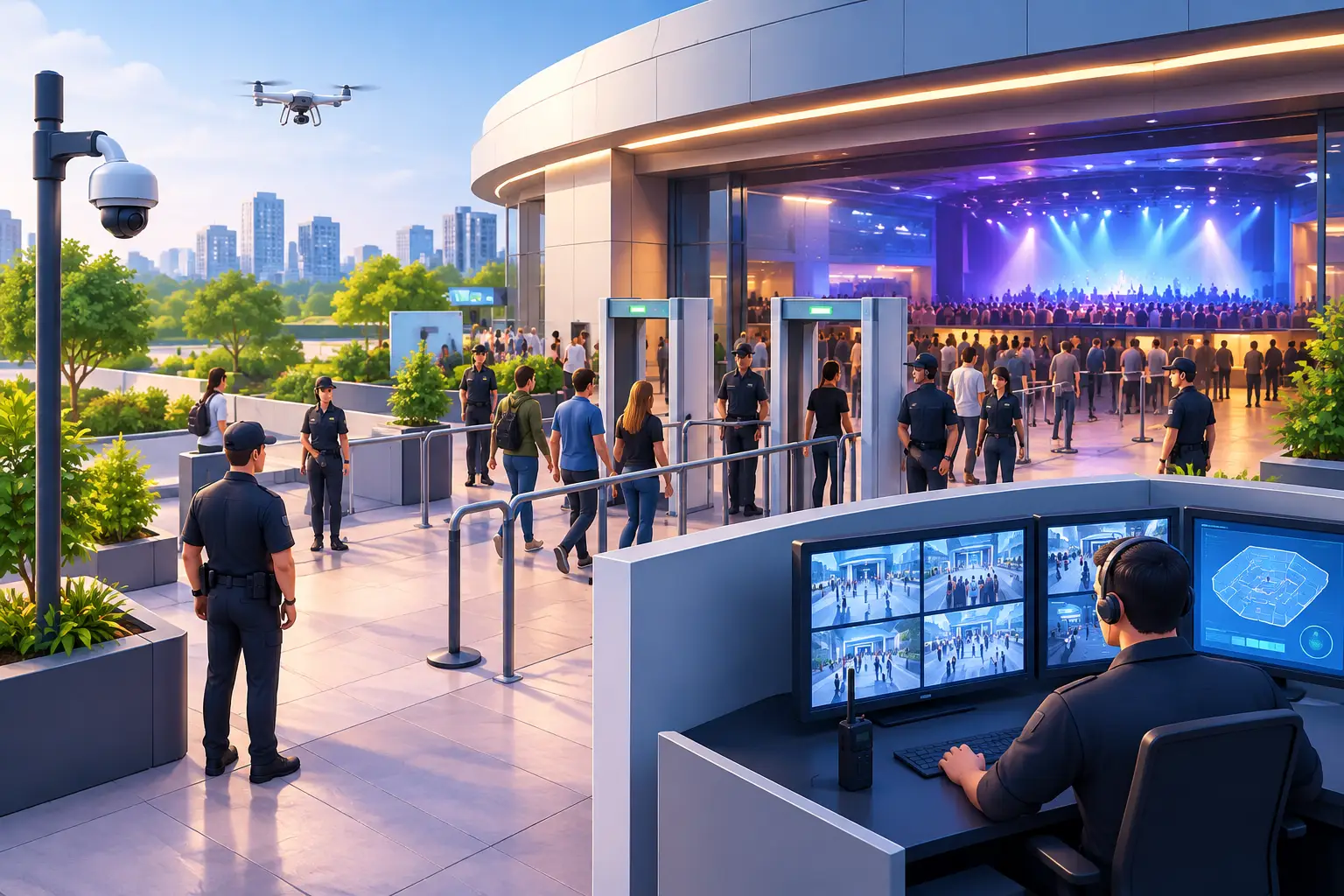
Modern venues have access to more security tools than ever: CCTV, access control, visitor systems, radio communications, incident-reporting platforms, perimeter alarms, and analytics that identify unusual movement or crowd density. Used well, these tools give security teams better visibility and a more reliable record of what occurred.
However, technology is not automatically the right answer for every site. A small hospitality venue may benefit most from upgraded lighting, a well-positioned camera system, and better communication between floor staff and security. A large entertainment precinct may need integrated access control, multiple control points, live monitoring, and a coordinated incident command structure.
The key is integration. Security teams need timely information that is relevant to the incident in front of them. If a door alarm is triggered, the response officer should know where it occurred, whether the area is restricted, and who else is nearby. If a guest is refused entry, staff should be able to communicate the decision consistently and record the incident appropriately.
Technology also creates responsibilities. Venue operators must consider privacy, data retention, system access, and the risk of relying too heavily on automated alerts. Human review remains essential, particularly when decisions may affect a guest’s access, safety, or reputation. The best systems help trained teams make better decisions rather than attempting to make every decision for them.
Better Information Means Earlier Intervention
Early intervention is one of the strongest risk controls available to any venue. It can prevent a minor disagreement from becoming a physical incident, a queue from blocking an emergency exit, or an access issue from escalating into a broader security breach.
This depends on information moving quickly between the people who need it. Front-of-house staff, security officers, managers, event producers, and maintenance teams should understand how to raise concerns and who takes responsibility next. Clear radio protocols, designated escalation points, and accurate incident reporting reduce confusion when time matters.
Crowd Management Will Become More Dynamic
Crowd control is no longer limited to managing a line at the entrance or monitoring the room after doors open. Venues are increasingly expected to understand how people move through a site, where bottlenecks form, and how an event’s schedule, weather, performers, alcohol service, and transportation arrangements affect behavior.
A strong crowd management plan accounts for the full guest journey. That includes arrival routes, bag checks where required, ticket scanning, queuing, entry screening, access to amenities, emergency exits, and safe dispersal at the end of the event. It also accounts for the people who may not follow the expected pattern, including late arrivals, intoxicated patrons, unauthorized vendors, or individuals seeking restricted access.
The future of venue security will place greater value on flexible deployment. Security teams must be able to shift resources as conditions develop. A quiet side entrance may need additional coverage after a schedule change. A popular activation area may require crowd-flow support. A weather event may create new risks around slips, shelter, transport, and frustrated guests.
Planning provides the framework, but professional judgment keeps the plan useful. Venue managers should expect security providers to brief teams before an event, monitor conditions during operations, and review incidents afterward to improve the next deployment.
A Welcoming Experience Is Part of Protection
Security does not need to feel confrontational to be effective. In many venues, the first security officer a guest sees also shapes their first impression of the business. Professional presentation, calm communication, and consistent enforcement of venue policies help create a secure environment without making respectful guests feel unwelcome.
This balance is particularly important in hospitality, corporate settings, and VIP-facing events. Security personnel may need to protect privacy while maintaining service standards. They must be able to communicate boundaries clearly, manage difficult conduct without unnecessary escalation, and work closely with customer-service teams.
Visible security remains an important deterrent, especially at busy events and late-night venues. Yet visibility should be purposeful. The right presence at entrances, near cash-handling areas, around stages, or at restricted access points can deter problems while giving staff and guests confidence that support is close by.
Compliance and Accountability Will Matter More
As expectations rise, venue operators will look beyond basic guard coverage. They will want providers that can demonstrate licensing, insurance, training standards, documented procedures, and accountable supervision. These are not administrative details. They are indicators of whether a provider can operate reliably under pressure.
A capable security partner should understand the venue’s legal and operational obligations, including emergency procedures, incident documentation, workplace safety, and applicable local requirements. For organizations managing multiple sites or frequent events, consistent reporting and clear service oversight make it easier to identify recurring risks and measure performance.
Broadsafe Group approaches venue protection with this operational mindset, combining licensed personnel with tailored deployment plans for events, hospitality environments, corporate sites, and public-facing venues. The objective is not simply to place guards on site. It is to provide dependable coverage that supports safe operations and protects the client’s reputation.
Questions to Ask Before Choosing a Security Partner
The future-ready provider is not necessarily the one offering the most technology or the lowest hourly rate. Venue operators should ask how the provider recruits and supervises personnel, how it manages incidents, what escalation procedures apply, and how it adapts coverage when the risk profile changes.
It is also reasonable to ask how officers will be briefed on the venue, how reports will be delivered, and who is available when an urgent issue arises. For major events, ask how the provider coordinates with event management, emergency services, and other contractors. Clear answers before an incident are far more valuable than explanations afterward.
Preparedness Is the Real Advantage
No venue can eliminate every risk. Public-facing environments are unpredictable because people are unpredictable. What a venue can control is its level of preparation: the quality of its team, the clarity of its procedures, the usefulness of its technology, and the speed at which it can respond.
The strongest security operations do more than react when something goes wrong. They create the conditions for staff to act early, guests to feel safe, and management to continue operating with confidence. That is the practical future of venue security: alert people, informed decisions, and protection that holds up when it is needed most.